|
[ Home ] [ About Us ] [ President's Corner ] [ Endorsment-Support ] [ Founding Members ] [ Management Team ] [ Collaboration Ptrs ] [ Members' Page ] [ Members' News ] [ Membership Info ] [ New Members ] [ Events Listing ] [ Speakers' Notes ] [ Trade Issues ] [ Technology ] [ Resource Center ] [ HK & China Biz ] [ Photo Album ] [ News Releases ] [ Reading Room ] [ Business Links ] [ Acknowledgement ] [ Alerts ] [ Job Opportunities ] [ Contact Us ] [ Site Map ]
Chinese business etiquette
Newsletter
Biz:
China
Hong
Kong Hawaii SF
Seminar Material



What people
said about us

China
Earthquake Relief
Tax &
Government
Hawaii Voter Registration
 Biz-Video
Hawaii's
China Connection


Doing Business in
Hong Kong & China
| |
Hong Kong, China & Hawaii Biz*


 Skype - FREE
Voice Over IP
View Hawaii's China Connection
Video Trailer Skype - FREE
Voice Over IP
View Hawaii's China Connection
Video Trailer
Do you know our dues
paying members attend events sponsored by our collaboration partners worldwide
at their membership rates - go to our event page to find out more!
After
attended a China/Hong Kong Business/Trade Seminar in Hawaii...still unsure what
to do next, contact us, our Officers, Directors and Founding Members are
actively engaged in China/Hong Kong/Asia trade - we can help!
Are you ready to export your product or
service? You will find out in 3 minutes with resources to help you -
enter
to give it a try

(approximate $ exchange rates: US$1 = HK$7.8, US$1 = RMB$6.3)
 China President Hu Jintao USA State Visit January 19 - 21 2011
http://www.b2bchinadirect.com/hujintaousavisit.htm China President Hu Jintao USA State Visit January 19 - 21 2011
http://www.b2bchinadirect.com/hujintaousavisit.htm
 Wine-Biz
- Hong Kong
Wine-Biz
- Hong Kong 
 Brand Hong Kong
Video
Brand Hong Kong
Video
Mainland and Hong
Kong Closer Economic Partnership Arrangement (CEPA)
http://www.tid.gov.hk/english/cepa/index.html
成功之道
武进制造 Wujin - Changzhou - Jiangsu Province - China
http://www.hkchcc.org/wujin.htm
  Year of the Snake - February 10
2013 - Dance w/ Firework
http://www.youtube.com/watch?v=-VoFfOglJuI
Year of the Snake - February 10
2013 - Dance w/ Firework
http://www.youtube.com/watch?v=-VoFfOglJuI
 President Obama's Lunar New Year Message - Year of the Dragon
http://www.youtube.com/watch?v=C6gfkYAo5gE President Obama's Lunar New Year Message - Year of the Dragon
http://www.youtube.com/watch?v=C6gfkYAo5gE
Under the Hawaii State Law
"Asian Lunar New Year Commemoration Week" The one week period following the day of the Chinese New Year shall be known and designated as the "Asian Lunar New Year Week of Commemoration in Hawaii". This week is not and shall not be construed as a state holiday. [L 2007, c 48, §2]
click for more details
The Hong Kong Advantages under One Country
Two Systems - when most of the world want to do business with
China, there is only one place that China gives 100% backing - that is Hong
Kong. Quoting the former Chief Executive of Hong Kong SAR Honorable Tung Chee-hwa
"背靠祖國 - 面向世界" "backed by China and engaged globally". Whether you are an international business wanting to do business
with China, or just wanting to get connected with Asia and the rest of the world -
Asia's World City: Hong Kong is the right and smart choice.
TED: Martin Jacques Understanding The Rise of China 马丁·雅克:了解中国的崛起
http://www.youtube.com/watch?v=DJiOXUHIOeA
Hong Kong Education Bureau (click on the links for details) 德育及國民教育指引
Moral and National Education Guidelines
Hong Kong Chief Executive Policy
Address, please visit www.policyaddress.gov.hk
The website contains all the documents and official video clips (including the recording of CE's presentation at the Legislative Council, press conference and TV forum, etc.).
Hong Kong*:
April
16 2013
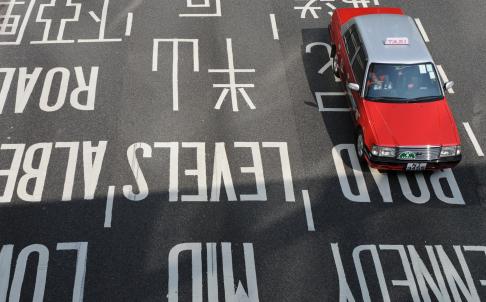
Grabbing a cab can put you on a road to ruin (By Pavan Shamdasani) Hong Kong is crawling with taxis, and although they're convenient, there are other ways to get around that won't burn a hole in your pocket - 'Discount taxis' may operate on the wrong side of the law, but they offer their customers a significant saving over cabbies that charge on the meter. Hong Kong may have one of the cheapest transport systems of any major, developed-world metropolis, but the temptation of another quick cab ride always beckons - and, added up, it can eat away at your bank account. You'd take a bus if only you could work out the convoluted routes. Well, now a number of free smartphone applications are here to help. Simply let your phone track your location, type in your destination, and an app will recommend a number of cheap public transit options. The Transport Department app is decent and works on iPhones, but it's somewhat unwieldy and offers only simplified bus and tram information. Android users get a couple of better options: StudioKuma Bus Info includes all major regular bus and tram services, as well as giving you detailed pricing and route-change information. But I much prefer HK Explorer. It uses Google Maps to pinpoint locations, offers detailed pricing and journey times, and is the only app to include the faster green minibus routes. Your Octopus card offers numerous savings, but there are always more advantages. You might have seen those stand-alone Octopus card machines around town - they're part of the MTR's fare saver programme. The one on the Mid-Levels escalator gives you a HK$2 saving every time you swipe your card on the machine. A number of major banks have partnered with the MTR to offer credit and ATM cards with Octopus capabilities, and signing up saves you money. Citibank's Octopus-linked credit card gives you HK$200 in Octopus cash as a welcome offer, and Dah Sing's cash card gives you a 2.5 per cent rebate on every top-up. But while using your Octopus is a good idea in most situations, it isn't when you travel to the airport. For the Airport Express, make sure you and your friends buy physical tickets together - a four-person one-way ticket from Hong Kong Station to the airport, for example, costs HK$250, saving you HK$150. For even bigger savings, try taking the bus - the journey from Tsim Sha Tsui costs as little as HK$23. And when you return to Hong Kong, if you're planning on buzzing around the city, there's no reason not to buy the tourist-friendly Travel Pass. For HK$220 you get a single Airport Express journey and three days of unlimited travel on all trains in the city. There are also means of transport that aren't strictly legal, but which I must mention in the interests of full disclosure. People travelling in groups often opt to call a "man with a van" instead of taking multiple taxis - each van can fit up to 10 people and costs as little as HK$50 for a cross-harbour journey. And finally, if you must take a cab, consider one of the popular "discount taxis" - drivers who charge fares reduced by up to 40 per cent if you hire them regularly for fixed journeys. Again, it's not legal, but the government is considering options to make it legitimate, so consider getting in your cabbie's good books before all the best spots are taken.

Hong Kong must stick with the Basic Law (By Regina Ip) Regina Ip says the Occupy Central movement is falsely promising a vision for Hong Kong that in fact contravenes both the letter and spirit of the constitution that has served us so well. Rev Chu Yiu-ming, one of the organisers of Occupy Central. Almost 30 years after the signing of the Sino-British Joint Declaration on the future of Hong Kong, and more than 15 years after the implementation of the Basic Law, Hong Kong's development appears to have reached a crossroads. As 2017, the promised date for electing Hong Kong's chief executive by universal suffrage, draws near, calls to "occupy Central" as a means of putting pressure on Beijing to embrace a democratic selection method threaten to derail the implementation of the Basic Law. On the face of it, who can decry the siren calls of seemingly righteous intellectuals dedicated to fighting for Hong Kong people's right to choose their chief? On deeper analysis, however, the Occupy Central movement is fraught with danger. First and foremost, the movement amounts to a rejection of the Basic Law and the political reality underlying Hong Kong's status as a special administrative region of China. For more than 100 years under British rule, Hong Kong was governed using the classic colonial model, with executive and legislative powers concentrated in the hands of the governor and appointed officials. Hong Kong people never had any say in the choice of their leader. The advent of 1997 forced the British to introduce democratic reform, albeit belatedly in the 1980s, as a check on Beijing's power. In the course of the Sino-British negotiations on the future of Hong Kong, Beijing agreed that the chief executive shall be "selected by election or through consultations held locally and be appointed by the Central People's Government". Later on, after listening to the representations of Hong Kong people, Beijing further agreed to cast in stone, in the fine print of article 45 of the Basic Law, its commitment that the "ultimate aim is the selection of the chief executive by universal suffrage upon nomination by a broadly representative nominating committee in accordance with democratic procedures". Granted, in the eyes of the British negotiators, the provisions for selecting the chief executive fell short of the British wish to turn Hong Kong's political structure into a parliamentary government, as in other former colonies. Yet, given Hong Kong's constitutional and historical status as an inalienable part of China, the arrangements in the Basic Law, if successfully implemented in an orderly manner, would give Hong Kong people the greatest say in choosing their chief and the most democratic system they have ever enjoyed. Turning now to the Occupy Central movement, under the mantra of "Let Love and Peace Occupy Central", the organisers plan to formulate proposals for electing the chief executive in accordance with international standards and on the basis of popular deliberations, without regard to the letter and spirit of the Basic Law. In so doing, they are effectively jettisoning the political arrangements that have been enshrined in the de facto constitution. The Basic Law has in the past 15 years ensured the continuation of the Hong Kong way of life under "one country": Hong Kong people have become more critical of their government and more ready to exercise their rights and freedoms than ever; Hong Kong's media, including many independent online forums, more irreverent and influential; and Hong Kong's political system, despite the government's best efforts to remain "executive-led" as in the colonial era, more decentralised than ever. The introduction of universal suffrage is no doubt the last missing piece of the jigsaw fulfilling the democratic method. In essence, thanks to the implementation of the Basic Law, Hong Kong has in the past 15 years evolved into a highly democratic society with strong rule of law, a feisty civil society and a highly competitive political culture, all being hallmark ingredients of democratic rule. Throw away the Basic Law and Hong Kong could end up losing the constitutional basis for its continuous, robust development under "one country". The reference to international standards is gratuitous in that the international covenant guaranteeing Hong Kong people's civil and political rights is already anchored in article 39 of the Basic Law. The call for a "deliberation day" to discuss and formulate electoral proposals, purportedly originating from the "deliberative polling" model pioneered by Stanford University professor James Fishkin, is misleading in that there will be no random selection of participants in the Hong Kong exercise, nor will "balanced reference materials" - prominently the Basic Law and related documents - be made available. The selection bias of the organisers would skew the discussions. As always, "Power to the People" has a seductive appeal to those who allow their emotions to take control, and such numbers could be legion. Yet reality and history tell us that anarchy could be let loose if the centre cannot hold. It is for good reason that, as early as in the 17th century, Thomas Hobbes saw the Leviathan state as the solution to anarchy, allowing people to secure private property and build a community. States and societies are built on constitutions, and our constitution provides the basis for a bright future for Hong Kong to materialise. Let us treasure that and not throw it away. Regina Ip Lau Suk-yee is a legislator and chair of the New People's Party
Hong Kong must stick with the Basic Law (By Regina Ip) Regina Ip says the Occupy Central movement is falsely promising a vision for Hong Kong that in fact contravenes both the letter and spirit of the constitution that has served us so well. Rev Chu Yiu-ming, one of the organisers of Occupy Central. Almost 30 years after the signing of the Sino-British Joint Declaration on the future of Hong Kong, and more than 15 years after the implementation of the Basic Law, Hong Kong's development appears to have reached a crossroads. As 2017, the promised date for electing Hong Kong's chief executive by universal suffrage, draws near, calls to "occupy Central" as a means of putting pressure on Beijing to embrace a democratic selection method threaten to derail the implementation of the Basic Law. On the face of it, who can decry the siren calls of seemingly righteous intellectuals dedicated to fighting for Hong Kong people's right to choose their chief? On deeper analysis, however, the Occupy Central movement is fraught with danger. First and foremost, the movement amounts to a rejection of the Basic Law and the political reality underlying Hong Kong's status as a special administrative region of China. For more than 100 years under British rule, Hong Kong was governed using the classic colonial model, with executive and legislative powers concentrated in the hands of the governor and appointed officials. Hong Kong people never had any say in the choice of their leader. The advent of 1997 forced the British to introduce democratic reform, albeit belatedly in the 1980s, as a check on Beijing's power. In the course of the Sino-British negotiations on the future of Hong Kong, Beijing agreed that the chief executive shall be "selected by election or through consultations held locally and be appointed by the Central People's Government". Later on, after listening to the representations of Hong Kong people, Beijing further agreed to cast in stone, in the fine print of article 45 of the Basic Law, its commitment that the "ultimate aim is the selection of the chief executive by universal suffrage upon nomination by a broadly representative nominating committee in accordance with democratic procedures". Granted, in the eyes of the British negotiators, the provisions for selecting the chief executive fell short of the British wish to turn Hong Kong's political structure into a parliamentary government, as in other former colonies. Yet, given Hong Kong's constitutional and historical status as an inalienable part of China, the arrangements in the Basic Law, if successfully implemented in an orderly manner, would give Hong Kong people the greatest say in choosing their chief and the most democratic system they have ever enjoyed. Turning now to the Occupy Central movement, under the mantra of "Let Love and Peace Occupy Central", the organisers plan to formulate proposals for electing the chief executive in accordance with international standards and on the basis of popular deliberations, without regard to the letter and spirit of the Basic Law. In so doing, they are effectively jettisoning the political arrangements that have been enshrined in the de facto constitution. The Basic Law has in the past 15 years ensured the continuation of the Hong Kong way of life under "one country": Hong Kong people have become more critical of their government and more ready to exercise their rights and freedoms than ever; Hong Kong's media, including many independent online forums, more irreverent and influential; and Hong Kong's political system, despite the government's best efforts to remain "executive-led" as in the colonial era, more decentralised than ever. The introduction of universal suffrage is no doubt the last missing piece of the jigsaw fulfilling the democratic method. In essence, thanks to the implementation of the Basic Law, Hong Kong has in the past 15 years evolved into a highly democratic society with strong rule of law, a feisty civil society and a highly competitive political culture, all being hallmark ingredients of democratic rule. Throw away the Basic Law and Hong Kong could end up losing the constitutional basis for its continuous, robust development under "one country". The reference to international standards is gratuitous in that the international covenant guaranteeing Hong Kong people's civil and political rights is already anchored in article 39 of the Basic Law. The call for a "deliberation day" to discuss and formulate electoral proposals, purportedly originating from the "deliberative polling" model pioneered by Stanford University professor James Fishkin, is misleading in that there will be no random selection of participants in the Hong Kong exercise, nor will "balanced reference materials" - prominently the Basic Law and related documents - be made available. The selection bias of the organisers would skew the discussions. As always, "Power to the People" has a seductive appeal to those who allow their emotions to take control, and such numbers could be legion. Yet reality and history tell us that anarchy could be let loose if the centre cannot hold. It is for good reason that, as early as in the 17th century, Thomas Hobbes saw the Leviathan state as the solution to anarchy, allowing people to secure private property and build a community. States and societies are built on constitutions, and our constitution provides the basis for a bright future for Hong Kong to materialise. Let us treasure that and not throw it away. Regina Ip Lau Suk-yee is a legislator and chair of the New People's Party
Canada's effort to lessen its trade reliance on the United States - Canada looks east with professional services expo in Hong Kong (By Charlotte So charlotte.so@scmp.com) Ottawa seeks to grow trade ties with China in market for professional services such as IT. Canada's effort to lessen its trade reliance on the United States by expanding into China has found an effective launching pad in Hong Kong, says Canadian International Trade Minister Ed Fast. Fast, who was speaking yesterday on the sidelines of the International Information and Communications Technology Expo in Wan Chai, said Hong Kong was now Canada's seventh largest export market for professional services, worth US$1.2 billion last year. "Regardless [of] the global economic crisis, the trade relationship between Canada and China has grown quite tremendously," said Fast, who leads Ottawa's Asia-Pacific Gateway and Corridor Initiative. "Hong Kong and Canada can grow the relationship in the area of services because much of the value in trade now is in services." Fast said that services - including architectural, cultural and engineering services - now represented 15 per cent of Canada's external trade. Trade involving information technology was also on the rise. Some 22 Canadian IT firms participated in the four-day expo, which began yesterday at the Hong Kong Convention and Exhibition Centre. Participants said they were eager to build partnerships in Hong Kong as part of their efforts to tap the fast-growing markets in Asia. Behzad Behroozan, co-founder of Muprime Technology, a Vancouver-based mobile marketing firm which focuses on QR code (a type of matrix barcode) design, said remote data storage and access - or "cloud" - technology was a promising area of business opportunity in the region. Another IT firm, I Think Security, which provides data protection and cloud security technology, was seeking partners in the banking and telecommunications sectors. "A security-enabled cloud service could be seen as a value-added service for the banks or telecom operators," said Cedric Jeannot, the firm's CEO.
 
Adelson's comment on triads hits nerve in Macau (By Reuters in Macau) Las Vegas Sands chief executive Sheldon Adelson testifies in Las Vegas on April 4. Casino magnate Sheldon Adelson’s reference to triad organised crime gangs in testimony in a lawsuit has hit a raw nerve in Macau, the Chinese boomtown that his Las Vegas Sands helped transform from a gangland haven into a US$38 billion gambling capital. The lawsuit against Sands was brought by Hong Kong businessman Richard Suen, who is seeking US$328 million he says he is owed for helping the US firm obtain one of three coveted casino licenses in Macau, now the world’s biggest gambling market with annual revenues more than six times of Las Vegas. Adelson’s comments about triads reverberated across Macau this week and prompted a former Sands partner, casino operator Galaxy Entertainment, to post a regulatory filing with the Hong Kong stock exchange objecting to “certain inaccurate statements”. Adelson’s comments have so many underlying meanings that are embarrassing. Talking about triads... implies the government didn’t do a good job at cleaning up Macau casino executive. Sands and Galaxy jointly won a Macau casino license in 2002, but they failed to reach an operational agreement and split up. Adelson, 79, when asked in a Las Vegas court why the two firms could not work together, responded that Galaxy “had expressed their judgment they were going to do business with either reputed or triad people and we couldn’t do that”. That comment, which drew little attention in Las Vegas, was front-page news in Macau because it suggested China had failed to clean up the violent gangs that dominated the gambling scene a decade ago. Triads involved in Macau’s VIP gaming rooms were notorious for their heavy-handed methods of collecting on gambling debt. Macau’s VIP segment, where wealthy Chinese wager millions, accounts for about 70 per cent of total revenues. A Galaxy spokesman said the company was seeking legal advice and could not comment further. Interviews with seven Macau gaming executives, including four former Sands employees, revealed a sense of dismay that the trial, watched locally online and tracked closely in the daily papers, was drawing attention to a seedier side of Macau that China has sought to scrub. The city wants to position itself as a transparent and reputable tourist destination. China cracked down on triads after it took formal control of the former Portuguese colony in 1999. Back then, mobsters like the infamous Wan “Broken Tooth” Kuok-koi gave Macau a name for violence as much as gambling. Macau’s casino revenue hit US$38 billion last year, dwarfing Las Vegas’ US$6 billion. Unlike Vegas, where fun-seekers can dine, see showbiz legends and go nightclubbing without laying a dollar on the tables, Macau’s visitors tend to focus intently on betting in its massive, packed gambling halls.
 China*:
April 16 2013
China*:
April 16 2013
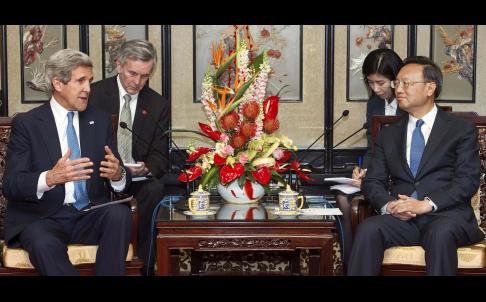
More concrete results will emerge from upcoming Sino-US dialogue, analysts say (By Cary Huang in Beijing caryhuang@scmp.com) Closer co-operation on Korean nuclear threats and growing mutual economic reliance will produce results, analysts say - US Secretary of State John Kerry speaks with State Councillor Yang Jiechi during their meeting in Beijing on Saturday. The next high-level meeting will be in July. The closer co-operation between China and the United States over North Korea's continuing nuclear threats will provide new momentum in the upcoming China-US strategic and economic dialogue, analysts say. That is also in view of the increasingly mutual reliance between the world's two largest economies and the need to revive their economic dynamism amid the global uncertainty, according to analysts. The US Treasury Department said on Saturday that the fifth meeting of the US-China Strategic and Economic Dialogue (S&ED) would be held in Washington from July 8 to 12. Vice-Premier Wang Yang and State Councillor Yang Jiechi will head the Chinese delegation meeting their US counterparts led by Treasury Secretary Jack Lew and Secretary of State John Kerry. This will be the first high-level and comprehensive dialogue between Beijing and Washington after both sides underwent major reshuffles of cabinets this year. "From the closer co-operation on the Korean issue as a result of frequent consultations, including telephone conversation between President Obama and Xi Jinping and the visits by US Treasury Secretary Jack Lew and Secretary of State John Kerry, one can expect the new momentum in the upcoming dialogue," said Shi Yinhong , director of the Centre for American Studies at Renmin University. Hao Hong, managing director and head of research at Bank of Communications (International), said Beijing's co-operation with Washington on Pyongyang's nuclear belligerence would help boost co-operation in the upcoming dialogue. "I can speculate that the upcoming economic and strategic dialogue will produce more concrete results than any previous dialogues for two reasons," said Hong. "First, the closer co-operation between the two powers over the Korean nuclear threats will provide new momentum for closer co-operation in other areas. "Second, both economies need each other more than ever in recent memory given the current global uncertainty." Hong said while Obama saw boosting US exports as a way of reviving America's economy, China was also under unprecedented pressure to explore new export markets in the US and elsewhere for investment opportunities amid Europe's protracted downturn. Tao Wenzhao , a research fellow at the Chinese Academy of Social Sciences' Institute of American Studies, said that while long-existing strategic and economic issues - such as regional and global security, trade deficits and intellectual copyrights - will continue to be on the agenda, he expected two major issues - cyberspace security and access to Chinese markets - to top the US agenda in the upcoming dialogue. Tao said there were also two major issues that top China's concerns. "Beijing will press Washington to ease its restriction on high-tech exports to China, as well as Chinese investment in the US," Tao said. Chinese leaders, Tao said, were particularly upset by Washington's rejection of China National Offshore Oil Corporation's 2005 bid for Unocal Corp, and Huawei Technologies' failed attempt in 2011 to acquire 3Leaf Systems. According to Chinese data, the US has overtaken Europe to become China's No1 export market last year, with bilateral trade hitting a record US$484.68 billion. Hong said the once-hotly debated issue about the yuan's relative undervaluation appeared to be waning recently following the currency's recent fast pace of appreciation.
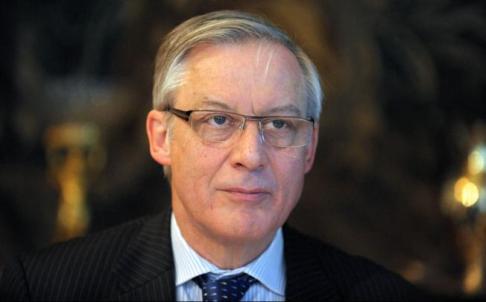
France plans yuan swap line, report says (By Reuters in Beijing) France intends to set up a currency-swap line to make Paris a major offshore yuan-trading hub in Europe, competing against London, China Daily yesterday cited Bank of France governor Christian Noyer as saying. Yuan deposits in Paris amount to 10 billion yuan (HK$12.4 billion), making it the second-largest pool for the currency in Europe after London. Almost 10 per cent of Sino-French trade is settled in renminbi, according to French data cited by the newspaper. "The Bank of France has been working on ways to develop an RMB liquidity safety net in the euro area with due consideration of a supporting currency-swap agreement with the People's Bank of China," Noyer said. French Foreign Minister Laurent Fabius announced that President Francois Hollande would visit Beijing by the end of this month. Fabius wrapped up his own two-day visit to Beijing yesterday. The yuan's internationalisation and bilateral financial cooperation could be among the main topics during Hollande's visit, the paper said. The planned swap line would be the latest in a string of bilateral currency agreements that China has signed in the past three years to promote use of the yuan in trade and investment. It follows a similar step by the Bank of England to set up a reciprocal three-year yuan-sterling swap line.

Iceland PM Johanna Sigurdardottir arrives in Beijing (By SCMP) Iceland's Prime Minister Johanna Sigurdardottir arrived in Beijing yesterday at the start of a five-day official visit to China. Sigurdardottir is expected to meet with Premier Li Keqiang and sign a historic free trade agreement between the two countries. "I am very optimistic and expect that the free trade agreement can be signed during my visit," Sigurdardottir said in a written interview with Xinhua on Friday. She added that most of the major sticking points had been resolved by the sixth round of bilateral talks in Beijing in January. The Chinese economy could provide multiple opportunities for Iceland's exporters and service providers, whereas prices of Chinese products to Icelandic consumers could also be lowered, she added. "Meanwhile, China would benefit from such 'added value' from Iceland including the geothermal utilisation and research know-how, and energy efficiency in transport." In addition to finalising the FTA, a business conference would be held by the two delegations, Xinhua said. In 2012, bilateral trade value reached US$180 million, up 21.1 per cent year on year. Overall, China's exports to Iceland amounted to US$953 million US dollars, up 24.6 per cent, while its imports from Iceland stood at US$889 million US dollars, up 17.7 per cent. Iceland is the first European state to recognise China's full market economy status.
 
How mainland Chinese immigrants are transforming Vancouver (By Ian Young in Vancouver ian.young@scmp.com) A wave of wealthy immigrants from mainland China is transforming Vancouver in Canada, but the influx has seen property prices soar and most are reluctant to give up Chinese citizenship. Life is good for Wei Fuqiang and Chen Qianhong. Sitting on their 10-metre cruiser in Vancouver's exclusive Coal Harbour marina, the married mechanical engineers recount an unlikely trajectory from wartime China, to Tsinghua University at the height of the Cultural Revolution, to elite careers building particle accelerators in Europe at a time when few of their countrymen were even allowed to leave China. Little about this remarkable couple is typical - yet as mainlanders they now typify a vast wave of immigration that is rapidly transforming Vancouver. Wei, 70, and Chen, 68, retired to the west Canadian city from their most recent home, Switzerland, in 2010. Chen said: "They are very different, Europe and Canada. Canada has opened its arms to all people. It's very multicultural. But in Europe, they are always pushing you, they try to integrate you into their culture. "In Canada, they respect your background, you feel you are the padrone," she said, lapsing into Italian for "master of the house". "You are not anymore a guest. This is really your home." The scale and impact of the mainland Chinese influx to Vancouver was laid bare this month in a report for Canada's immigration department, titled "A New Residential Order?" Author Daniel Hiebert, a social geographer with the University of British Columbia (UBC), projected how mainland migration would fuel the creation of "a social geography entirely new to Canada". Ethnic Chinese numbers in the city of 2.2 million were set to double to 800,000 by 2031, about a quarter of the projected total population, with the city increasingly divided into racial enclaves, and white residents becoming a minority group. In Richmond, a city of 200,000 in greater Vancouver, mainland Chinese migration has already helped create what is probably the first majority-Chinese city outside Asia. The mainland Chinese wave has fuelled a property boom that makes Vancouver the second least affordable city in the world - behind only Hong Kong. There have also been major social shifts, with families divided between a wife and children in Vancouver and a husband working in China. The phenomenon of returnees and part-time residents means thousands of houses and flats are vacant. Hiebert said there had been relatively little focus on the issue, given the scale of the city's unfolding Chinese transformation. "Are we fully reflective on these changes? No, I don't think we are," he said "But I think Canadians, more maybe than anyone else, have decided to trust the government and immigration policy to decide immigration issues. In Vancouver, we have come to a consensus that a global cosmopolitan society is what we are going to be." There are both similarities and contrasts to the pre-handover wave of Hong Kong migration to Vancouver in the 1980s and 1990s, Hiebert said. According to immigration data, mainland Chinese arrivals in Vancouver outstripped those from Hong Kong by 7,872 to 286 in 2012. But even this 27-to-one disparity does not adequately portray the scale of the demographic shift that is taking place, because while the mainlander population is soaring in Vancouver, the number of Hong Kong immigrants actually present in the city has been falling sharply. Mainlander numbers in Vancouver increased 88 per cent to 137,245 between 1996 and 2006, according to the most recent full census data. But Hong Kong immigrants present in the city fell 12 per cent, to 75,780, with nearly all of those losses occurring in the latter five years. Although 18,890 new Hong Kong immigrants arrived in Vancouver in the decade to 2006, the fall in the number of such immigrants present in the city suggests that 29,325 left Vancouver in the same period. Overall, Hongkongers seem to be leaving Vancouver by the thousands, just as mainlanders are arriving by the tens of thousands. Real estate agent Julia Lau was part of the Hong Kong wave who stayed, and she now estimates that 80 per cent of her buyers are mainlanders. "I've been a real estate agent for eight years. In the beginning we had a lot of buyers from Hong Kong and Taiwan, but I think maybe they all went home. Now, they are all from [mainland] China," said Lau, at an open house for a home in the Oakridge neighbourhood, where potential buyers whispered in Putonghua as they inspected the luxury fittings. Canada does not keep records on foreign ownership, but a Landcor Data analysis of all 164 homes sold for more than C$3 million (HK$23 million) in Vancouver's core Westside neighbourhood in 2010 showed that 74 per cent were sold to buyers whose names were mainland Chinese spelling variants and who did not have any Western legal name. At C$3.58 million, Lau considered the new 4,458 sq ft home she was showing on a nondescript suburban street to be "quite affordable". "Right now, a lot of mainland buyers just want brand new homes or they want land so they can build … Usually, in Shaughnessy, or South Granville, or Point Grey, a house like this will be four or five million," said Lau, reeling off suburbs favoured by Chinese buyers. Lau sold a string of homes worth eight figures to mainland buyers last year. With the benchmark price for a detached home on the Westside now more than C$2 million, why would a mainlander choose Vancouver? "They like the fresh air, it's a very beautiful environment, and the education system for their children," said Lau, of Homeland Realty. "Lots of buyers, the wife and children will stay in Vancouver, but the husband will still live and work in China." That common scenario reflects the difference between Hong Kong and mainland government attitudes towards Canadian citizenship. David Ley, author of the book Millionaire Migrants about modern East Asian migration patterns, said China's prohibition on dual citizenship made it less attractive for a mainland Chinese migrant than for a Hongkonger to go "all the way" and seek Canadian citizenship, a process he termed "passport insurance". "For a mainland Chinese, if they want to go back to China with a Canadian passport, they are at a disadvantage, unlike people from Hong Kong who are able to hold both [Canadian citizenship and Hong Kong permanent residency]," Ley said. "The stakes are much higher. If they ... get a Canadian passport then they are taking a much bigger risk." Anecdotal evidence suggests mainland Chinese wives commonly stay in Vancouver to provide a citizenship toehold for their absentee husbands. Ley, also of UBC, added: "Around 2000 there was an almost complete transition in migration, switching to the PRC instead of Hong Kong and Taiwan. In other words, everyone [from Hong Kong or Taiwan] who wanted a passport got one." Another key difference between the Hong Kong and mainland Chinese waves is their potential scale and duration. "We know for sure there is very deep wealth in the mainland, whose holders want to diversify. [A recent study suggests] that 20 per cent of those very rich wanted to come to Canada," Ley said. "We are talking about a substantial body of wealth that won't run out in the way that Hong Kong [migration] did. Over the years we are looking at an ongoing presence, depending on a variety of factors." Mainlanders outnumbered Hongkongers in Vancouver some time between the 1996 and 2001 censuses. In that period there were 85,756 mainland arrivals to the city. But that only reflected the speed with which Canada's immigration authorities could process their applications. There is a vast backlog. When asked whether she saw any downside to the mainland Chinese influx, real estate agent Lau agreed that local first-home buyers were struggling. But she added: "I see a lot of people here who bought in West Vancouver a long time ago. They can sell for a lot of money and move somewhere else. It's very good for them." Hiebert said that when the Globe and Mail newspaper used the alarmist term "white flight" to describe what was happening in Vancouver's suburbs "they got hammered for it". "I'd use a different term to white flight," Hiebert said with a laugh. "I'd call it 'cashing in'." There have been some tensions, in addition to grumbling about property prices. In Richmond, where the proliferation of Chinese-only business signage has upset some long-time residents, the city council was presented with a 1,000-name petition demanding an English component to all signage. "It [Chinese-only signage] has got progressively more noticeable," said Richmond resident Kerry Starchuk, who helped organise the petition. Richmond's council rejected the petition's demands. Back in Coal Harbour, Wei said he saw no problem with the influx of his countrymen. "I'm happy if they come. These are not low-level people, they are very high-level in China, they are very educated." After almost 30 years in Europe, Wei, one of nine children, said he once hoped to retire in China. "I wanted to come back. In China we have many friends, many relatives, and the food is good too. With our money, China would be very comfortable." Chen shook her head: "He is crazy! Not many would agree with him." Chen wants to apply for Canadian citizenship - "Chinese should involve themselves more in the community," she said - although her husband, reluctant to give up Chinese citizenship, does not. They agree, however, that their new city was the right choice. With their son, daughter-in-law and three-year-old granddaughter living nearby, Vancouver is their home. "Now, this is perfect," said Wei, waving an arm over the marina. "I never want to have regrets."
Hong Kong*:
April
15 2013

New Hong Kong flat supply set for 8-year high (By Sandy Li and Paggie Leung) New flat supply in the city is projected to climb to an eight-year high next year, easing the upward pressure on home prices. Preliminary figures from the Rating and Valuation Department's "Hong Kong Property Review 2013" report shows that 15,820 new flats will go on the market next year, 16.8 per cent more than this year's expected total of 13,550 units. "The projection for completion of new flats next year will be the highest since 2006," said Patrick Chow Moon-kit, head of research at Ricacorp Properties. In 2006, 16,579 new flats went on the market. The projection for completion of new flats next year will be the highest since 2006 Patrick Chow Moon-Kit, Head of Research at Ricacorp Properties. With the government moving to increase the land supply, Chow expects developers to be under pressure to speed up marketing of their new projects. Midland Realty chief analyst Buggle Lau Ka-fai said up to 16,000 new flats could go on the market this year, up 42.85 per cent from last year's 11,200. According to the government's report, nearly 83 per cent of completed flats will be in the New Territories this year, with Tseung Kwan O and Yuen Long each providing a quarter of the fresh supply. With competition from the primary market, Chow said the rise in prices in the secondary residential market would also ease. The Centa-City Leading Index, which tracks sales at 100 major housing estates in the city, fell for two consecutive weeks to March 31 to 123.01, down 0.52 per cent, after reaching a record 123.66 for the week to March 17. Overall home sales also fell 30 per cent last month, reflecting a drop in buying interest following the new stamp duty. On February 22, the government doubled the stamp duty on properties worth more than HK$2 million, and last month some of the city's biggest banks raised their mortgage rates. The government announced yesterday that two residential sites would be put out for tender next month. Surveyors expect them to fetch between HK$3.7 billion and HK$3.97 billion in total. One of them is a 283,112 square feet site situated in Tseung Kwan O, which can yield a maximum gross floor area of 821,028 sq ft. The government has stipulated the winning bidder has to build at least 840 flats on the site. Midland Surveyors director Alvin Lam Tsz-pun said he expected this site to attract keen interest from developers and fetch HK$3.8 billion, or HK$4,600 per buildable square foot. The estimate is higher than HK$4,301 per square foot Wheelock Properties paid for a neighbouring site on Wednesday. Centaline Surveyors estimated the Tseung Kwan O site would sell for HK$4,300 per square foot, or HK$3.53 billion. Another smaller site, in Tuen Mun's So Kwun Wat, is 37,211 sq ft and can yield up to 48,374 sq ft of gross floor area. It is expected to sell for HK$170 million to HK$193.5 million, or HK$3,500 to HK$4,000 per square foot. The tender for the two sites will open on May 10 and close on June 21.

High profile Hong Kong corruption case takes new twist (By Austin Chiu) Hong Kong’s biggest ever corruption case involving a former chief secretary and the billionaire Kwok brothers – who head Sun Hung Kai Properties – took an interesting new twist on Saturday. A man, insisting on anonymity, filed a legal bid seeking to stop the prosecutors from disclosing materials seized from him to the defendants. In a writ filed in the High Court, the man - identified only as “Mr A” - is seeking a judicial review of a decision by Secretary for Justice Rimsky Yuen Kwok-keung to disclose the materials, which “Mr A” says imply he informed on the defendants. The man, who is not a defendant or a witness in the criminal case, says disclosure of the materials will exacerbate “already difficult family relations”, the writ says. The application stems from the prosecution of former chief secretary Rafael Hui Si-yan, 64, SHKP co-charimen Thomas Kwok Ping-kwong, 61, and Raymond Kwok Ping-luen, 59, and two others. The charges allege that between 2000 and 2009 Hui received about HK$28.8 million in cash, HK$5.4 million in loans and the rent-free use of two luxury flats at Leighton Hill, Happy Valley. In return, Hui allegedly favoured the Kwoks. The three were arrested in March last year. According to Mr A’s application for permission to lodge a judicial review, the materials in question included items seized by the graft busters from his home on May 2 last year. The seized materials include a service agreement relating to Hui and records of emails dated March 19 and 20, 2008 relating to the Leighton Hill property, according to the filings. They also include two letters dated October 10 and 14 last year from law firm Philip W.I. Li & Co. Solicitors and an ICAC’s acknowledgement of receipt of one of the letters. The man claims in the writ the letters should not be handed over to the accused because “taken together they wrongly carrying with them the implication that [Mr A] was the informer or an informer in these proceedings because the source of the materials…came from [his] office”. “Mr A” took the legal action after he was told by the prosecutors earlier this month that materials in questioned would be disclosed to the defendants as “unused materials”. Records show that in a court hearing in March, lawyers for Thomas and Raymond Kwok urged the prosecution to hand over some “unused materials” expeditiously. The man claims that disclosing the materials will violate the protection of informers under section 30A of the Prevention of Bribery Ordinance. The man also wants to stop the prosecutors from handing over seven records of interview of him conducted by the Independent Commission Against Corruption, in which he referred to materials sized from him. He says only a redacted version of the records which have no reference to the materials seized from his home can be disclosed. The man had written to the secretary for justice, requesting that the materials not be disclosed because they did not meet the criteria for disclosure as unused material, filings showed. He claims the materials are private property and it is not in public interest to disclose them. Whether the materials should be disclosed should not be a decision “exclusively” made by the secretary for justice and should be determined by the court, he says in the writ The man is asking the High Court to impose an order restraining the secretary for justice from disclosing the materials. He also asks for an order that his identity remained as anonymous and the application to be heard behind closed-door. The application will be heard on Thursday, which is expected to last three hours. No date has been fixed for criminal case after the Magistrates’ Court in March forwarded the case to High Court.
China*:
April 15 2013

$17b trade target 'to be met soon' (By Li Jiabao) China, New Zealand to strengthen industry ties, with dairy as key sector - Baby formula produced in New Zealand on display at a trade fair in Beijing in October. New Zealand has become a major source of China's imports of dairy products. The 2015 annual trade target between China and New Zealand, at NZ$20 billion ($17.24 billion), will be realized at least one year earlier, with officials from both countries emphasizing mutual investment in various industries, but most notably dairy. Speaking at the inaugural New Zealand-China Partnership Forum on Friday, Vice-Premier Wang Yang said the southern hemisphere nation had become China's "stable supplier of agricultural and animal husbandry products". He added the two countries had great potential for cooperating in mechanical and electrical products, animal husbandry, environmental protection technology and bio-medicine. "Enterprises from both countries can seek new cooperation models and jointly explore third markets," he said. Bilateral trade has increased from $4.4 billion in 2008 to $9.7 billion in 2012, representing annual growth of 22 percent over the five years. China has become New Zealand's second-largest trading partner, its second-largest export destination and its biggest import source, according to the Ministry of Commerce. This year marks the fifth anniversary of the China-New Zealand free-trade agreement, China's first FTA. The pact has played an important role in strengthening two-way economic ties and in resisting the impact of the global financial crisis, while actively boosting free-trade development in the Asia-Pacific region, Wang said. New Zealand's Prime Minister John Key told the forum his country is "open for business, and we want to do business with China". He added: "My government launched its New Zealand-China strategy last year with a strong trade and economic focus. "In the years ahead, New Zealand's relationship with China will grow stronger as we build mutual prosperity and well-being." Wei Jianguo, vice-chairman and secretary-general of the China Center for International Economic Exchanges, said that "the trade goal (of NZ$20 billion) will probably be achieved this year, or by the end of next year at the latest", in view of the growth in trade in recent years. He added: "Our mutual investments are not enough, and we may set investment goals for the next few years, alongside bilateral trade growth."
New Zealand made investments worth $119 million in China in 2012, a rise of 60.2 percent year-on-year, bringing its total investment in the country to $1.24 billion. There was $78.84 million worth of Chinese investment made in New Zealand in 2012, bringing the cumulative value to $343 million, according to the National Development and Reform Commission, China's top economic planning agency. "Mutual investment is picking up momentum," said Zhang Xiaoqiang, deputy head of the commission. "China's industrialization and urbanization drives, its progress at information and agricultural modernization will unleash huge demand for investment and consumption, providing strong support for China-New Zealand investment cooperation." He said he expected demand for high-quality dairy products from New Zealand to continue, along with other lifestyle products the country is famous for. Zhang Jianqiu, executive president of the dairy giant, Inner Mongolia Yili Industrial Group Co Ltd, said: "New Zealand has become the top destination for Chinese dairy enterprises, and we will have a win-win result by combining China's advantages of capital and market with New Zealand's technology." In late 2012, the group announced it was investing 1.1 billion yuan ($177.65 million) in a New Zealand-based infant formula manufacturing plant with annual output of 47,000 metric tons, which is expected to be fully operational by June 2014.
China's deep-sea center 'open to the whole world' (By WANG QIAN and XIE CHUANJIAO in Qingdao) Shandong province marine facility expected to start operating next year
The China National Deep Sea Center, expected to start operating next year, will be open to China and the world to explore the ocean depths, according to a senior official.
Liu Feng, director of the center, said that by drawing on ideas from the Woods Hole Oceanographic Institution in the United States, a well-known ocean research, engineering and educational organization, the center will act as a bridge connecting scientists' demands with technical research and development. With building expected to start in May, the center will cover about 26 hectares of land and 62.7 hectares of sea in Jimo county, off the east coast of Shandong province, serving as a support station for deep-sea facilities, including Jiaolong, China's manned submersible. The center's design plan includes a construction and maintenance workshop, a scientific research building, a large pool for experimental dives, and training facilities. It will feature five berths to accommodate two vessels weighing 6,000 metric tons and three of 3,000 tons. Xinhua News Agency reported that the center will cost an estimated 495 million yuan ($78.6 million) for initial construction, but Liu said the cost can only be disclosed after the feasibility report is approved by the National Development and Reform Commission. Scientists can apply to use the deep-sea equipment managed by the center, Liu said. Liu also said an expert assessment committee should be set up to assess applications, and arrange them according to urgency and feasibility, as the Woods Hole Oceanographic Institution does. But regulations and detailed operating rules, such as how to levy charges, are still being considered. The deep-sea base program is the fifth of its kind in the world, following those in the US, Russia, France and Japan. Center: Many countries have set goals to explore ocean "Besides Jiaolong, other ocean research facilities will be managed by the center, including a 4,000 ton mother ship for submersible and ocean scientific research vessels and automatic underwater vehicles," Liu said. Ren Zhengang, director of the construction office at the Qingdao Blue Economic Zone, said the center's land construction project will start later this year. The deep-sea base program is also on the schedule of the China Ocean Mineral Resource Research and Development Association this year, said Jin Jiancai, secretary-general of the association. He said the center will provide maintenance and technical support for deep-sea equipment, such as Jiaolong. With attention focusing on construction of the deep-sea center, China is accelerating its oceanic exploration efforts. At the 18th National Congress of the Communist Party of China in November, Hu Jintao, former general secretary of the CPC Central Committee, said building China into a maritime power has strategic importance. Oceans cover about 70 percent of the Earth's surface, influencing the climate, producing half the planet's oxygen and providing huge economic value. "It is not enough to just explore our three million-square-kilometer seawater area for China. The deep sea, as an important part of the ocean, should be covered in our scientific research and exploration, which is also a part of building China into a maritime power," Liu said, adding it is also the reason for establishing the center. Scientists believe the sea at depths of 4,000 to 6,000 meters holds abundant deposits of rare metals and methane hydrate, a form of natural gas bound in ice that could serve as a new energy source. Besides China, many countries are accelerating efforts to explore the ocean for undersea resources and energy. China sent Jiaolong below 7,000 meters in June 2012. It will be sent to the South China Sea and the Pacific Ocean from June to September for scientific research. Liu said a plan for the center's deep-sea equipment development for the next five to 10 years will be drawn up this year.
Chinese president meets US secretary of state (Xinhua) Chinese President Xi Jinping on Saturday met with visiting US Secretary of State John Kerry on bilateral ties and issues of common concern. Earlier, Chinese Foreign Minister Wang Yi held talks with Kerry, who is on his first visit to China since taking office in February. China is the second leg of Kerry's four-day East Asia tour, which has taken him to the Republic of Korea. He will fly to Japan on Sunday. U.S. Secretary of State John Kerry expressed interest in creating a roadmap to facilitate the development of bilateral ties while meeting with Foreign Minister Wang Yi on Saturday. Wang said bilateral ties have had a good start, adding that he hopes both sides can create a roadmap that can promote dialogue and cooperation. "We hope both sides can continue to address differences based on the spirit of mutual respect," Wang said. Currently, the most important task in terms of boosting ties is converting the consensuses reached between both sides into specific policies and action, Wang said. President Xi Jinping had a telephone conversation with his U.S. counterpart Barack Obama on March 14. Both leaders agreed to continue to boost their partnership's development and find a path for a new type of relations between two major powers. Kerry said he hopes his visit will help provide a direction for the development of bilateral dialogue.
Hong Kong*:
April
14 2013

Tax haven to set up Asia headquarters in Hong Kong (By Toh Han Shih) British Virgin Islands eager to forge closer ties with Hong Kong and China - The British Virgin Islands, a haven of secrecy for those who don't want to disclose who owns businesses, is coming to Hong Kong. The British Virgin Islands (BVI) will set up its Asian headquarters in Hong Kong next month despite a worldwide outcry against tax havens after many of its rich clients’ information has been leaked by an investigative journalist group. In an exclusive interview with the South China Morning Post, Elise Donovan, the executive director of BVI International Finance Centre, which is a government body that promotes financial services, said the island’s Premier and Finance Minister Orlando Smith would personally come to Hong Kong to officiate at the opening. She said BVI was eager to forge closer ties with Hong Kong and China. The announcement comes a week after the US-based International Consortium of Investigative Journalists claimed to have obtained a trove of data detailing how rich people around the world were hiding their wealth through BVI accounts. It named many prominent figures in Europe, the US and Asia, triggering a worldwide furore. French president Francois Hollande – whose personal friend and campaign treasurer Jean-Jacques Augier was named by ICIJ as one of those holding secret accounts in BVI – had himself recently urged the adoption of tougher measures to combat tax evasion. The issue of tax evasion and havens will also be discussed at the two-day European Union finance ministers meeting starting in Dublin on Friday.
 
HK government allocates 3 new sites to boost international school places (By Dennis Chong and Ada Lee) Three new sites allocated, but legislators accuse the government of catering only to the wealthy. Three vacant school premises will be turned into international classrooms to create 1,700 places, the government said yesterday. This follows criticism from business chambers and other observers that a lack of school places for expatriate children is harming the city's reputation as an international commerce hub. However, some lawmakers have accused the government of catering only to the wealthy in its latest decision. One site in Stanley was granted to the International Montessori Education Foundation, which will be able to expand from its current site in Tin Hau. Carmel School, a Jewish school, will occupy a site in Shau Kei Wan, while Nord Anglia Education, a British company, will establish its first school in Hong Kong at a campus in Lam Tin. Education sector legislator Ip Kin-yuen said the government was transforming the sector for the "blue blood" without looking at problems in the local system. The Civic Party's Dr Kenneth Chan Ka-lok said schools must not cater for only 1 per cent of the population. Amanda Chapman, chairwoman of the NET teachers association in Hong Kong, said: "It is extremely disappointing that the government is only doing things for the very rich and is not helping the middle-class expatriate families." Under a government allocation scheme, land is offered to operators at a nominal premium along with interest-free loans for construction and development. The three sites were offered amid reports that the city is short of 4,200 international school places, based on preliminary findings of a survey commissioned by the government. The Education Bureau said it received 34 applications in the allocation exercise, which had also put a fourth site, at the Ping Shek Estate in Ngau Tau Kok, up for grabs. Officials were still identifying an eligible operator to run this site, the bureau said. Nord Anglia Education, a company controlled by investment firm Baring, said it was delighted to get the site. CEO Andrew Fitzmaurice said: "We are thrilled to receive such an endorsement from the Education Bureau. We recognise how important Hong Kong is as an education hub and our organisation's central office relocated here 18 months ago." The government has had several schemes to allocate government land for international school operators in recent years, to raise the provision of international school places to 38,000. But many places are taken by local and mainland children who hold foreign passports, making it increasingly hard for parents to find a place for their children. International Montessori co-founder Anne Sawyer said the Stanley site would provide 700 places, but added that the school had 800 pupils on its waiting list. The school earlier faced a threat of eviction from its Tin Hau campus when the government said it wanted to turn the site into flats for young people. Chan said he welcomed the decision to grant the Stanley site to Montessori because it was a well-established "home-grown school". But he urged officials to release full findings of the survey on place availability, adding that studies were needed on affordability of international schools. Ip criticised the government for building more schools for the private sector without looking at core problems in the local system. Such schools would be in more demand and increasingly cater for the wealthy, he said. A bureau spokeswoman said it considered all the applications on the advice of the School Allocation Committee.

H7N9 infected birds will migrate to Pearl River Delta, says microbiologist (By Lai Ying-kit yingkit.lai@scmp.com) University of Hong Kong microbiologist Professor Yuen Kwok-yung. Hong Kong has to be vigilant against the new H7N9 strain of avian flu later this year when migratory birds head south from northern parts of China for the winter, says a Hong Kong microbiologist. University of Hong Kong microbiologist Professor Yuen Kwok-yung said on Friday he believed a large number of wild birds had already contracted the virus in eastern China, where all the cases of human H7N9 had occurred. Some of them were migratory birds, which were now heading to northern parts of the mainland for summer but would return south to the Pearl River Delta for winter, he said. “This is when Hong Kong’s wild birds and poultry may get infected,” he said at a press conference on Friday afternoon. The H7N9 avian flu has killed 10 people in Shanghai and several provinces in eastern China since authorities announced the first infection about two weeks ago. So far, 38 human cases have been confirmed. Yuen, who earlier visited Shanghai and met health officials to learn more about the flu outbreak, said analysis of the virus’ genes suggested the chance of human-to-human transmission was low. He also said southern China and Hong Kong were now largely safe with no traces of the new bird flu virus reported so far. But he urged authorities and the public to remain vigilant. Dr Owen Tsang Tak-yin, a Hospital Authority official, said Hong Kong had 18 million doses of Tamiflu, a drug that has proven effective in the treatment of bird flu.
China*:
April 14 2013

Paris vies to be yuan hub (By LI XIANG in Paris) The French capital eyes currency swap agreement with China - Christian Noyer, governor of the Bank of France - Paris is vying to become a major offshore yuan trading hub in the eurozone with a view to setting up a currency swap agreement with China, according to the Governor of the Bank of France, Christian Noyer. "The Bank of France has been working on ways to develop a RMB liquidity safety net in the euro area with due consideration of a supporting currency swap agreement with the People's Bank of China," Noyer told China Daily in a written interview. Noyer said the launch of such a facility will encourage use of the yuan in the eurozone as a trade settlement currency as well as an investment currency. It will also boost market confidence in the Chinese currency by reassuring market participants that yuan liquidity will remain available, even in extreme situations, he said. Paris has been accelerating the race with London to become a leading yuan trading center for Europe after the Bank of England said in March it had signed a three-year currency swap agreement with China that will allow the British central bank to supply 400 billion yuan ($64.5 billion) to British banks. Yuan deposits in Paris amount to 10 billion yuan, making the French capital the second largest pool for the Chinese currency in Europe after London. Nearly 10 percent of Sino-French trade is settled in yuan, according to the French central bank. "The current level of offshore deposits and liquidity in Paris provides a good basis to foster growth in RMB products and services in the eurozone. The availability of a liquidity safety net in RMB in the euro area will further foster such growth," Noyer said. His comments come ahead of an expected visit by French President Francois Hollande to China in late April. Meanwhile, French Foreign Minister Laurent Fabius paid a two-day visit to Beijing on Friday. He called on President Xi Jinping and held talks with his Chinese counterpart Wang Yi to discuss preparations for Hollande's visit. Some analysts said the yuan's internationalization, and financial cooperation between China and France, could be among the main topics to be addressed during Hollande's visit. Noyer considers the yuan's internationalization initiated by China's top authorities to be the first step toward its full convertibility. "Such an evolution will make the RMB one of the three major international currencies, together with the dollar and euro," he said. Noyer said Paris has been committed to strengthening its position in corporate bonds and short-term negotiable debt securities markets as well as the associated trading infrastructure, to promote wider use of the yuan. French companies are among the most active European issuers of yuan-denominated bonds, which offers Paris an advantage to promote the yuan trading business, said Arnaud de Bresson, chief executive of Paris Europlace, a professional association that supports the French financial industry and promotes Paris as an international financial center. In 2011 and 2012, the total value of offshore yuan-denominated bonds issued by French corporates was nearly 7 billion yuan, twice the value of bonds issued by their British counterparts, according to a report by Paris Europlace. Paris: Growing interest in renminbi business - A survey by the association also showed that 50 percent of French companies have used yuan-denominated products and services. "France's historic relationship with Africa, and its favorable geographical location, also makes Paris a natural hub for RMB trading in the Sino-African business flows that are traded through Paris," De Bresson said. Chinese financial institutions in France have also been benefiting from the growing interest in yuan business in the French capital. The Paris branch of Bank of China has seen its cross-border yuan settlement reach 170 billion yuan, the largest amount of all BOC branches outside the Chinese mainland except Hong Kong. Yuan business now contributes almost half of the branch's total income, according to Phan Nhay, general manager of BOC's Paris branch. De Bresson added: "The internationalization of the yuan is a key opportunity for market players and international corporates in France. It is an irreversible trend that the demand for RMB-denominated products will increase at a faster pace in coming years." De Bresson said the main challenge for Paris to develop its yuan trading market is to widen the understanding and opportunities offered by internationalization of the currency, and full convertibility will help contribute to the process.
The U.S. Treasury Department on Friday refused to name China as a currency manipulator, saying it would closely monitor the pace of appreciation of Renminbi (RMB) , the Chinese currency. In the latest Semi-Annual Report to Congress on International Economic and Exchange Rate Policies, U.S. Treasury highlighted the need for greater exchange rate flexibility and transparency, most notably by China, but also by other major economies. "China's current account surplus has declined from a peak of 10. 1 percent of GDP in 2007 to 1.9 percent of GDP in 2011 and 2.3 percent in 2012. China has taken a series of steps to liberalize controls on capital movements, as part of a broader plan to move to a more flexible exchange rate regime," the Treasury said, adding that in light of these developments, it concluded that China did not meet the standards of a currency manipulator. The Treasury Department, however, insisted: "the process of exchange rate adjustment in China remains incomplete and more progress is needed." According to the report, the RMB appreciated by 16.2 percent from June 2010 through February 2013 in real terms. In addition to paying special attention to the pace of RMB appreciation, the Treasury Department said it would also press for further policy changes and would monitor closely exchange rate developments in all the economies covered in the report and push for concrete adherence to recent commitments made by the Group of seven industrially advanced nations, or G7, and by the Group of Twenty major economies, or commonly known as G20. The U.S. Omnibus Trade and Competitiveness Act of 1988 requires the Treasury to provide reports on whether its major trading partners manipulate the rate of exchange between their currencies and the United States dollar for purposes of preventing effective balance of payments adjustments or gaining unfair competitive advantage in international trade. The U.S. Treasury also said it will closely monitor Japan's policies and the extent to which they support the growth of domestic demand. "We will continue to press Japan to adhere to the commitments agreed to in the G-7 and G-20, to remain oriented towards meeting respective domestic objectives using domestic instruments and to refrain from competitive devaluation and targeting its exchange rate for competitive purposes," according to the report.

Direct yuan-A$ trade gets off to A$250m start (By Bloomberg in Canberra) Australian prime minister says transactions point to great promise in two countries' future - Australian Prime Minister Julia Gillard said direct trading between the yuan and the Australian dollar totalled A$250 million (HK$2.04 billion) on the first day. That is equivalent to about 70 per cent of daily commerce between China and Australia. "It just goes to show what a great boon this is going to be for the future," Gillard said yesterday after returning from a visit to Australia's biggest export destination. "I'm very pleased that we were able to secure a number of new agreements with China, which really do take our relationship to the next level." The Australian dollar became the third major currency to have direct trading links with the yuan on Wednesday after the US dollar and the Japanese yen. China took about a third of Australia's exports in February and is its major customer for iron ore and coal exports. Trade in goods and services between the two countries was valued at A$127.8 billion in the year to June 30, 2012, Australian government figures show. The People's Bank of China (PBOC) announces a daily reference rate for the yuan against the Australian dollar at about 9.15am in Shanghai on each trading day, based on market-maker prices. Direct trading means the fixing is computed without involving a cross rate with the dollar. The yuan weakened 0.2 per cent to 6.5466 per Australian dollar as of 5.57pm in Shanghai, according to Bloomberg data. The PBOC approved Australia and New Zealand Banking and Westpac Banking as market makers for the direct trading of the currencies, Gillard said in Shanghai on Monday. "That's a very successful start to trading, and the area where I see the most potential is the small to medium enterprise area," said Robert Rennie, chief currency strategist at Westpac. "Currently there's about A$120 billion in two-way trade between Australia and China, so obviously the potential is high, but it's not yet clear how much of that will be transacted in yuan." China surpassed the United States to become the world's biggest trading country last year, ending the US dominance in global commerce dating from the end of the second world war, according to the US Department of Commerce. Reserve Bank of Australia governor Glenn Stevens said the renminbi (RMB) - the official name for the yuan - is likely to become Asia's dominant medium of exchange. "There could be a profound adjustment for many countries in the region from membership of what is, at present, a de facto US dollar zone, to membership of an RMB zone," Stevens told a symposium on Asia-Pacific financial market development in Sydney, according to the RBA's website yesterday. "To some extent this has begun with the use of RMB for trade settlement, which is growing quickly."

Boost to China's money supply brightens outlook (By Jane Cai in Beijing xuejun.cai@scmp.com) New loans extended by mainland banks grew more than anticipated last month, suggesting there is ample liquidity available to support a recovery - Non-bank lenders are issuing loans hand over fist in China. New loans extended by mainland banks and non-bank entities grew more than anticipated last month, suggesting there is ample liquidity available to support a recovery in the world's second-largest economy. Banks doled out 1.06 trillion yuan (HK$1.31 trillion) of new local-currency loans in March, 51.5 billion yuan more than a year ago, the People's Bank of China said yesterday. M2, a broad measure of money supply, rose 15.7 per cent year on year last month, exceeding the official full-year target of 13 per cent. "Credit and monetary data were above market expectations, mainly reflecting the desire of the central bank to keep liquidity ample," said Song Yu, a China economist at Goldman Sachs. Mainland policymakers are walking a tightrope this year as they try to engineer a recovery from the slowest economic growth in 13 years and at the same time contain inflation and financial risk arising from rapidly developing non-bank lending. Aggregate financing, including bank and non-bank credit as well as bond and equity issuances - so-called total social financing - amounted to 2.54 trillion yuan in March, 673.9 billion yuan more than a year ago, the central bank said. In the first quarter, bank loans accounted for 44.7 per cent of aggregate financing, 18.6 percentage points lower than a year ago. The proportion of aggregate financing made up of trust loans increased by 8.8 percentage points to 13.4 per cent during the quarter, with the amount of new trust credit surging 360 per cent year on year. Lu Ting, an economist at Bank of America Merrill Lynch said: "The strong credit figures could once again trigger fears about inflation, property bubbles, government debt and shadow banking. Some moderate monetary tightening is expected in the second half." China's foreign exchange reserves rose to a record US$3.44 trillion from US$3.31 trillion over the first quarter, higher than market expectations. Zhu Haibin, an economist at JP Morgan Chase Bank, said that the capital outflow seen during most of last year, which had been associated with concerns over the country's economic slowdown and an end to expectations of one-sided yuan appreciation, "likely reversed course" early this year. Capital inflows are expected to add to pressure for the yuan to strengthen. The yuan has been trading at historic highs against the US dollar in the past few days, as investors flush with funds stemming from quantitative easing in developed countries bet on faster economic growth in emerging economies. However, Zhang Zhiwei, chief China economist at Nomura Securities said: "Despite the loose monetary stance, the economic recovery has been shallow and there are incipient signs that the growth momentum may have slowed last month, suggested by weak electricity consumption and freight traffic growth." China is due to release key figures on economic activity next week, including data showing industrial output, fixed-asset investment and retail sales.

Bird flu concerns threaten Yum's sales (By By Li Woke) A KFC restaurant in Shanghai. According to the US-based fast food giant, its same-store sales in March declined an estimated 13 percent in China. Yum Brands Inc, the owner of KFC and Pizza Hut restaurants, said sales in its largest overseas market will see a steep dive as a result of bird flu scares. According to the Louisville, Kentucky-based fast food giant, its same-store sales in March declined an estimated 13 percent in China. This included an estimated decline of 16 percent at KFC and 4 percent growth at Pizza Hut in the country. "Within the past week, publicity associated with avian flu in China has had a significant, negative impact on KFC sales," the world's largest restaurant company by number of outlets said in a filing to US Securities and Exchange Commission on Wednesday. "Yum is having a difficult time, which will undermine its decade-long robust sales and profit growth in China," said Feng Enyuan, secretary-general of China Cuisine Association. But Feng said the negative impact on Yum and its KFC stores will not last long as prevention and treatment measures improved. "Based on past experience, as bird flu has already hit twice in the country, the negative impact on the catering industry would last around six months," said Bian Jiang, assistant director of China Cuisine Association. But this was not the beginning of Yum's business decline in China. In February, Yum said its fourth-quarter profits dipped 5 percent to $337 million in the three months to Dec 29. Its same-store sales in China declined 6 percent in the quarter, following media reports that excessive amounts of antibiotics had been used by some of KFC's former chicken suppliers in China. China is Yum's most lucrative market. According to its third quarter report, China accounted for more than half of its overall revenue of $3.57 billion, and the country also generated around 40 percent of Yum's profit. Since opening its first KFC branch on the Chinese mainland in 1987, Yum has nearly 5,000 restaurants in more than 800 Chinese cities. "Historically in these situations, we have educated consumers that properly cooked chicken is perfectly safe to eat, and we will continue to do so," the fast-food giant said in the filing. Bian suggested that Yum "promote some localized food options in order to get through this difficult period, such as fried shrimps or mushroom dishes". Industry experts said some local restaurants are taking poultry dishes off the menu in response to the health scare, such as the famous baizhanji, sliced cold chicken, and kaoruge, roasted pigeon. "Canceling chicken-related dishes is not a one-size-fits-all solution for the bird flu outbreak," said Feng. "I suggest restaurants try to introduce more dishes with seafood or vegetables."

Main players adapt to slowing sales (By Wang Wen) A Louis Vuitton store in Wuxi, Jiangsu province. The French luxury brand opened its first flagship "Maison" outlet in China on July 21. After years of growth, public sector curbs bring halt to lavish spending The period of breakneck growth in demand for luxury brands in China appears to be over, with many of the world's top brands now working hard to consolidate their positions by improving their service to customers. Bernard Arnault, the CEO of LVMH, the world's largest luxury group by turnover, said it plans to adjust its expansion in China, and that might mean pulling back from some smaller cities. The head of the company, which owns a portfolio of more than 60 prestigious brands such as Louis Vuitton, said it had found that many people from smaller cities tend to go to bigger cities to shop for luxury items. Louis Vuitton has expanded rapidly in China, and has more than 40 stores throughout the Chinese mainland, including cities in central and western regions. Arnault said the brand's development in China will focus on quality, instead of store openings. And the company is not alone. In a statement sent to China Daily, Gucci also said it planned to slow its expansion in China this year. The Italian fashion and leather goods brand - which has developed its store network in China from five in 2004 to 72 by the end of 2012, spread across 34 cities - said it will develop "at a different pace than in past years", although it still plans to continue opening new stores in China this year. Zhou Ting, director of the Fortune Character Research Center, said that Gucci - one of the highest-profile international luxury brands in China- may even stop opening new stores in the nation. She added that the Chinese retail sector's slowdown and what has become the saturation of luxury brand names in some places, means a slowdown in openings is almost inevitable.
Hong Kong*:
April
13 2013

Gigi wants parents to accept partner (By Jolie Ho jolie.ho@scmp.com) Cecil Chao's daughter tells youth forum she hopes family will recognise her 'other half' and calls on minorities to 'make people like them' - Gigi Chao, the lesbian daughter of property tycoon Cecil Chao Sze-tsung, said she would never stop trying to get her parents to accept her partner. "I think it will be a great pity if I cannot make them accept my other half before I die," Chao told a Chinese University forum organised by the university's chapter of global youth network AIESEC last night. She said that the generation gap had always existed and she would just keep on communicating with her parents, although they had shown no sign of accepting her partner, Sean Eav, so far. Chao, a 33-year-old executive director of her father's Cheuk Nang property development company, came out of the closet last September in the middle of a global media frenzy, after her father promised HK$500 million to the man who would marry his daughter. She encouraged the city's sexual minorities to make themselves more attractive to improve society's view of difference. "We should think of ways to improve our mental wellbeing," Chao said. "It's difficult to be minorities in Hong Kong, as Hong Kong is very materialistic and superficial. We cannot change this, but we can make ourselves more attractive to make more people like us." She also acknowledged that discrimination existed even within LGBT groups, where, for example, transsexuals were the minority within the minorities. Lawmaker Cyd Ho Sau-lan and Equal Opportunities Commission chairperson Dr York Chow Yat-ngok, were also among the speakers at the forum. Ho told participants that gay couples who could not get married suffered financial losses as well as discrimination. "Gay couples cannot apply for public housing or get a married person's allowance, and this could add up to HK$3 million after 30 years. That would mean a lot when they retire," Ho said. She added that a gay person could not apply for their non-local partner to live in Hong Kong. Meanwhile, Chow encouraged more people to reveal their sexual orientation to encourage more public discussion. "Discussion about sexual minorities should not be only discussed with sexual minorities," he said. "Polarised discussion will not solve [social] problems." Speaking after the forum, 19-year-old accounting student Marco Cheung Po-lung said that eliminating discrimination against sexual minorities was all about social fairness. "Why can we enjoy certain rights, such as the right to get married, while gay couples do not have the same rights?" he said.

Martin Lee pulls plan for chief executive poll reform (By Joshua But joshua.but@scmp.com) Democrat apologises to his supporters as he withdraws controversial proposal to allow five candidates to run for chief executive in 2017 - Martin Lee explains his decision to withdraw his controversial proposal for the chief executive election in 2017. Martin Lee Chu-ming yesterday retracted a proposal for electoral change he put forward a day earlier and apologised to his critics in the pan-democratic camp, saying he had "let them down". The dramatic U-turn by the founding chairman of the Democratic Party underlined the gap between Beijing and the pan-democrats on political reform. It was also an indication of the dilemma facing pan-democrats - whether to open talks on practical issues, such as the rules for nominating chief executive candidates within the parameters set by Beijing; or stick to its call for "genuine universal suffrage". Lee had proposed that candidates for the 2017 chief executive election could be nominated via a screening process. But he conceded it was "a rash decision" to put forward the controversial plan for universal suffrage before seeking advice from fellow pan-democrats. "I believe this is the wrong time to post my opinion, particularly for what I said would be acceptable to me as the bottom line," Lee said. "After reflection, I have no hesitation that I should retract that proposal." I believe this is the wrong time to post my opinion, particularly for what I said would be acceptable to me as the bottom line. After reflection, I have no hesitation that I should retract that proposal - Lee said he was "under no pressure" to make the U-turn and added: "I apologise to all people concerned … particularly my long-time supporters. But my fight for democracy certainly will not end and I will continue to fight for a fair and open election." Lee had suggested at least five candidates be admitted into the 2017 race, allowing at least one pan-democrat to compete. But this would mean accepting the 1,200-strong nominating committee, with its formation based on the existing election committee, and that the candidates be nominated by the committee "as a whole", as suggested by Qiao Xiaoyang , chairman of the National People's Congress Law Committee. The idea got a warm welcome from government loyalists. Tai Kung Pao, a pro-Beijing newspaper, said Lee's proposal was "way better" than the action proposed by the Occupy Central movement. But the Alliance for True Democracy - a coalition of all 27 pan-democratic lawmakers - said it was unacceptable. Joseph Cheng Yu-shek, convenor of the alliance, said Lee had made a wise decision to withdraw the proposal. "Our bottom line - for the past 30 years - is genuine universal suffrage," he said. Democratic Party chairwoman Emily Lau Wai-hing said the lesson to be learned was that any idea should be discussed widely before being made public. Tam Yiu-chung, chairman of the Beijing-friendly Democratic Alliance for the Betterment and Progress of Hong Kong, was disappointed Lee retracted the idea so soon. He said: "It will add difficulties in reaching a consensus to achieve universal suffrage." Ma Ngok, of Chinese University, said Lee's proposal had accepted "too low" a standard for universal suffrage. "Lee should realise he is not helping the cause of the pursuit of democracy."
China*:
April 13 2013

Developing Hainan as int'l resort island: Xi (Xinua) Tourists walk along the road within the Boao Green Inn in Hainan province, March 26, 2013. Chinese President Xi Jinping has called for faster development of Hainan province as an international resort island. Xi, also general secretary of the Central Committee of the Communist Party of China and chairman of the Central Military Commission, made the remarks during an inspection tour from Monday through Wednesday of the island province in South China, where he chatted with fishermen returning from work in the South China Sea, visited a rose farm and a major cruise terminal, among other events. "Accelerating the development of Hainan as an international tourism island is a key decision made by central authorities and also offers the biggest opportunity and the biggest comparative advantage for Hainan," Xi stressed. He called on local authorities to make greater efforts in freeing up minds, and carrying out reform and opening-up to fully stimulate people's initiative to create a better future through hard work. As China's biggest special economic zone that was approved by China's top legislature in 1988, the island province enjoys late-comer advantage and has great development potential, according to Xi. He urged the island to make a leap in development by focusing on building Hainan into an international resort site, thus contributing to the development of a beautiful China.

China Premier aims to build new partnership with United States (By DING QINGFEN) Premier Li Keqiang meets visiting California Governor Jerry Brown in Beijing on Thursday. Li stresses trade in meeting with California group. Premier Li Keqiang called on Thursday for China's local governments and states in the US to join hands in enhancing cooperation to help promote bilateral economic and trade relations and build a new type of partnership. "China-US relations have entered into a new period, and the two nations should unremittingly strive for building up a new type of partnership by sticking to the principle of mutual trust and mutual benefit," said Li. "Cooperation between China's provinces and municipalities and the American states acts as a significant drive and social foundation of China-US relations," he added. He was speaking during a meeting with Jerry Brown, governor of California, who recently led a high-level delegation, including 75 American companies, to China to promote bilateral economic and trade ties. Li's remarks also came a day after California and six Chinese provinces and municipalities, including Shanghai, Chongqing, Jiangsu and Shandong, signed an understanding to establish the China Provinces and US California Joint Working Group on Trade and Investment Cooperation. The understanding is aimed at enhancing economic cooperation between the two sides.
California, which has the largest economy among US states, should "strengthen cooperation with China in sectors of high-tech, new energy and humanity", setting a good example for cooperation between China's provinces and US states and paving the way for bilateral relations to develop in a "smooth and right" way, Li said. China and the US, the world's top two economies, are each other's second-largest trade partner. In 2012, China-US trade reached $484.7 billion, close to 200 times the amount when the two nations first established diplomatic relations. Cumulative US direct investment in China stood at $70 billion by the end of 2012, and China's cumulative outbound direct investment in the non-financial sector in the US reached $10 billion. "During the past 40 years, China-US relations have witnessed remarkable achievements," said Li. But the two economies are encountering an economic slowdown due to the European debt crisis, and are committed to transforming their economic growth model. Bilateral economic ties have also been challenged by friction over investment and trade in a wide range of issues ranging from solar panels to telecoms. Li said the enhanced cooperation between local governments in China and states in the US will help stimulate economies of the two sides and promote two-way relations. During a visit to the US early last year as vice-president, Xi Jinping, now China's president, called for new ways to be explored to strengthen Sino-US relations. Vice-Minister of Commerce Wang Chao said on Wednesday during the signing of the trade and investment understanding that the Ministry of Commerce will help promote Chinese investment in the US — in infrastructure and new energy in particular — and business exchanges between China's local governments and states in the US. Li also said California has a solid foundation to enhance cooperation with China's provinces and municipalities. California enjoys strong advantages in innovation and education, he said. It is a big agricultural state, while its iconic Silicon Valley is considered the largest concentration of top technology companies in not only the country, but globally. Brown said during the signing ceremony for the understanding that China's local governments and California can enhance cooperation in sectors including infrastructure, energy, agriculture, manufacturing, biological medicine and tourism.
Despite various restrictions put in place by the United States federal government, China's investment into the country is expected to pick up in years to come, especially in the new energy and infrastructure sectors, after six Chinese local governments and California signed an agreement on Wednesday to increase trade and investment links. The Ministry of Commerce will help promote Chinese investment in the US, and business exchanges between China's local governments and the US states, said Vice-Minister of Commerce Wang Chao during a meeting in Beijing. The two countries have signed an understanding to establish the China Provinces and US California Joint Working Group on Trade and Investment Cooperation. The six Chinese provinces and municipalities involved in the working group include Shanghai, Jiangsu, Shandong, Guangdong and
Chongqing. According to the Asia Society of the US, Chinese cumulative investment in California is worth $1.4 billion, the highest of any state in the US. "California could get new investment worth hundreds of billions of US dollars from China by the end of 2020," said Wang. The two-way understanding is a direct result of an official visit last year to California — the biggest state economy in the US — by then Vice-President Xi Jinping, during which the two sides pledged to strengthen bilateral trade and investment and explore new ways to strengthen China-US relations. "It (the working group) is an important part of implementing the consensus that the two countries reached during that visit," Wang said. More than 70 US companies from California and around 100 Chinese entrepreneurs attended Wednesday's business exchange conference. But the new understanding also comes at a time when Chinese companies have been continuously challenged by investment barriers put up by the US federal government, for what it claims are political and national security reasons.
Hong Kong*:
April
12 2013

US art gallery offers internship (By Richard James Havis life@scmp.com) A top US gallery is offering a local student the chance to intern at its New York headquarters - New York gallery Lehmann Maupin is offering a month-long internship to a Hong Kong student. The experience will be a good foundation for a career in the arts, the gallery says. It's a simple idea, but a good one. New York's Lehmann Maupin Gallery, which opened in Hong Kong on Pedder Street on March 14, is offering a locally based student the chance to intern at its US location for the month of July. The internship is paid, and Lehmann Maupin will also offer a travel stipend. "It's a way for us to integrate in to the community that is not commercial," says partner and gallery director Courtney Plummer, who is now based in Hong Kong. "One thing we noticed when we moved here and hired the staff was that there were a lot of young people working in the arts, and there really needed to be some kind of professional training programme for them. We wondered what we could do to help with this. "Everyone at the gallery, all of my colleagues, have built a whole career on internships. So we thought this would be something that we could do that would be simple and encouraging, and would bridge the gap a little bit." Plummer says that the successful applicant will learn how a New York office and gallery runs: "It could be anything from doing basic things to helping some of the sales people. They will be in a gallery which is producing shows every six to eight weeks, so there is always lots of work to be done. The internship is really about getting involved at all the different levels of the work," she says. Lehmann Maupin is known as a progressive gallery, exhibiting works by British "bad girl" artist Tracey Emin, among others. "It will give the successful applicant the opportunity to get creative. Our New York gallery and our Hong Kong galleries are working together, and this will be a great opportunity for them to get to know the New York gallery and the New York art world," says Plummer. Hong Kong lacks art museums, so being in the proximity of great institutions such as the Metropolitan Museum of Art and the Museum of Modern Art will augment the successful candidate's knowledge of art history, Plummer says. "It will be interesting work experience, but also an interesting cultural experience, whereby they can take back some ideas to Hong Kong," she says. "It will be a good foundation for a career in the arts." Lehmann Maupin is an artist-focused gallery, so candidates should be prepared to work hard "and have a creative mind", says Plummer. The intern "should be someone who is really dedicated to working with artists during their career". Would Lehmann Maupin ever think about doing it the other way around, and bringing a US intern to Hong Kong? The Asian art market is developing at speed, and hands-on knowledge of its specific culture and practices could come in useful back in the United States. "This is just the first idea that we have had, and there is no reason that we couldn't develop it," says Plummer. "It's an exciting opportunity, not just for the applicant, but for us as well. It's such simple idea, I don't know why no one has done it before." Lehmann Maupin, founded by Rachel Lehmann and David Maupin, opened in New York in 1996. Applications can be made online at lehmannmaupin.com The deadline is April 26.

How calorie-counting and supermarkets are hitting Hong Kong's rice shops where it hurts
(By Xenia Chan and Hedy Bok) Wong Tak-kam says in the 1970s there were more rice shops in Hong Kong than banks. In this latest episode of our Uniquely Hong Kong series, a traditional rice shop owner laments how his business is declining in changing times, but argues it still has a vital role to play. Traditional rice shops are dying out in Hong Kong due to changing consumption habits among younger Chinese and competition from supermarkets, says Wong Tak-kam - owner of one of city's oldest rice shops. The 68-year-old, who runs Shing Hing Tai Rice Shop, has been in business since 1970 - five years after his father first opened the shop in Shek Kip Mei. Despite rice traditionally being the staple diet of southern China, rice shops in Hong Kong are struggling. Wong says the shops still perform an important role offering quality rice to customers. He explains that a bag of rice is as unique as a cup of tea - each bag has its own flavour and character. Wong also says his prices match those of supermarkets - although his shop has a wider selection. "They [supermarkets] sell pre-packaged bags of rice which taste bland, because manufacturers follow a one-recipe-fits-all formula. There are also artificial colourings." Consequently, Wong rarely visits supermarkets except to learn what his "competitors" are selling. He admits, however, that supermarkets are more convenient. He says another reason for the decline in rice consumption - perhaps more than the advent of supermarkets - is today's obsession with slimming. "Women are afraid of eating carbohydrates, getting fat, and contracting diabetes." Wong shakes his head. "Rice can't be substituted. Rice is what makes us Chinese; the rice "qi" (or spirit) can't be replaced by noodles or bread," he stresses. Preparing containers of rice for sale is something of an art. The rice "master" must understand how much old and new rice is to be mixed to maximise taste and quality. "Old" rice is more fragrant, and a year older than freshly harvested rice. "Old rice used to be the norm when people were poorer in the 1970s," explains Wong. "It expanded more, so it could fill people's stomachs better. But it was also very hard. So, now, we add in newer rice. New rice is smaller and has smoother texture, so together, it's filling, fragrant, and settles better in the stomach." There is also red, brown, and organic rice. Wong says these have become more popular in recent years, owing to today's increasingly health-conscious culture. The most popular brand comes from Thailand, but he also stocks rice from the United States, China and Vietnam. Other types include pearl and glutinous rice. Wong is meticulous about quality. "If it's yellow, and smells bad... it's no good. Too old, and it'll be a mess when cooking. You want white and fragrant rice." However, Wong says it has not been hard keeping up with trends. "I know people's tastes, so it's quite easy for me to know the proportions they want." He said this was true of all rice masters. They sit down with their customers and work out their preferences. Once the rice master establishes the proportions of each type for an individual bag, he puts it into a rice-sifting machine. Wong's machine is as old as the shop itself, but still does a remarkably good job - dirt, sand, silt and even bugs are separated into a bucket. After the rice is clean, it is bagged and stored until Wong makes home deliveries. He typically does this every 2-3 weeks, a far cry from the 1970s, when he made deliveries every other day. However, sometimes he gets more business. Recalling one incident 10 years ago, he says: "It was around the time of Leslie Cheung Kwok-wing's {death] and Sars. Everyone was scared there would be no more rice. So they stocked up." He adds: "You can't keep rice for so long - it will go bad. Weevils will get in, and the rice will be inedible. And besides, if there's no rice, you can always eat something else." Then he quickly adds that rice, when available, should always be the first priority in Chinese food. "Rice isn't very nutritious, but it gives me a lot of power. That's why we rice masters can do such heavy labour," says Wong. To demonstrate, he lifts three bags, in total 75kgs, onto his shoulders and jumps on his bike, to deliver his bags for the week. But Wong is pessimistic about the future. "Everyone is so old now," he says, referring to his contemporaries. "And no one wants to be in this business. It's physically taxing," he points to his hunched back, "And it doesn't pay well. When I retire, I'm just going to close my shop. No one is going to follow in my footsteps." His wife jokes. "And our rice-sifting machine will go to a museum." Then, gesturing towards her husband, she adds: "even he's old enough to be a relic."
China*:
April 12 2013

President pays visit to Hainan fishermen - China President Xi Jinping calls for faster development of island as an international resort (By An Baijie) President Xi Jinping puts on a bamboo hat, traditionally donned by ethnic Li people in Sanya on Tuesday, during his visit to the southernmost island province of Hainan. President Xi Jinping visited fishing villages and talked with the seamen and maritime militia in Tanmen township of Qionghai city in Hainan on Monday afternoon after the end of the Boao Forum for Asia Annual Conference 2013, China Central Television reported. The local people had been fishing in the South China Sea since ancient times, referring to it as the "ancestors' sea". Xi told the militia they needed to learn how to use modern equipment and improve their working capabilities. The maritime militia members should not only lead fishing activities, but also collect oceanic information and support the construction of islands and reefs, he said. Boarding a fishing boat that had just returned from a fishing expedition, Xi asked about the fishermen's income level and their work, including how long they spend at sea for each fishing trip, how many people are on a boat and which kinds of fish they catch most.
Xi extended wishes of a happy family and good life to the fishermen. "Congratulations for coming back safe and sound," he said. "May you get a catch every time you set sail."
Lu Chuanan, 43, whose fishing boat was boarded by Xi, said the president was deeply concerned about the fishermen's livelihoods during the visit. "He asked us whether it was safe or not to go to the South China Sea," he told the Changjiang Daily. "He shook hands with everyone on the boat." Xi said he loved sailing in the past, but he was too busy to set sail now, Lu said. Ding Zhile, head of the Tanmen Fishermen's Association, said that Xi asked how many permits the seamen must get before they are allowed to fish, according to a Hainan Daily report. "I told him that we fishermen feel safe as the country's safeguarding vessels are protecting us," Ding said. "Hearing this, the general secretary was happy and shook hands twice with me." During the trip, Xi also visited an agricultural industry park and encouraged the development of modern ecological agriculture. The Hainan provincial government should speed up efforts to build it into an international tourism destination by 2020, in keeping with a State Council guideline, he said. As China's biggest special economic zone that was approved by the top legislature in 1988, the island province enjoys late-comer advantages and has great potential for development, Xi said, according to a Xinhua report.

Car sales back on fast track (By LI FANGFANG) March purchases accelerate driven by demand for entry-level models - China's passenger vehicle sales returned to high-speed growth in March due to surging demand for entry-level cars, as well as the flurry of new models launched in the spring, the China Passenger Car Association said on Tuesday. The total sales of passenger cars, sport-utility vehicles, multi-purpose vehicles and minivans jumped 15 percent year-on-year to 1,459,095 units in March, the third-highest monthly growth in a year, the association said. The strong performance in March boosted first-quarter domestic passenger vehicle sales to 4.21 million units, up 19.2 percent year-on-year.
"Usually, automakers prefer to debut new or updated models in March and April. That way, they can use the Spring Festival holidays to prepare for the new product launches," said Rao Da, secretary-general of the association. "Also, the demand for passenger cars for family use on free-toll expressway trips during the three-day Tomb Sweeping Festival holidays also spurred sales. We saw higher growth in the entry-level segment," he added. Rao also predicted robust growth in April as the Shanghai International Auto Show, which will start on April 21, will further boost consumption enthusiasm with new models expected to be launched by nearly all the brands. "If the government doesn't implement measures to curb growth in the automotive industry, which has brought high pressure to traffic and the environment, passenger vehicle sales, excluding minivans, will surpass 1.2 million units in April," Rao said. In 2010, China had 90 million vehicles on its roads, and the figure surged to more than 120 million by the end of last year, according to the association. Rao said that the number of cars is expected to be between 260 and 330 million in 2020, with 70 percent of the vehicles in cities. "Take Beijing as an example. In four to seven years, the capital will face serious traffic jams, which will have a heavy impact on employees' efficiency and economic development," he said.
Guangzhou set to allow 72-hr visa-free visits (By Qiu Quanlin in Guangzhou) Guangzhou is expected to become the third Chinese city to allow foreign visitors to transit for 72 hours without a visa, according to Tan Wangen, general manager of China Southern Airlines. Tan said the policy will help boost tourism in Guangdong province and boost the local economy. "We are actively talking with the local airport and customs authorities to push the implementation of the visa-free transit policy as soon as possible," Tan said. Since Jan 1, travelers from 45 countries have been benefiting from 72-hour visa-free stays in Beijing and Shanghai, a move that is expected to boost consumption. Tourists holding third country visas and plane tickets are allowed to apply for a transit without visa at the Beijing Capital International Airport and Shanghai’s Hongqiao and Pudong airports. Foreign visitors are not permitted to leave the cities to travel to other Chinese cities during the 72 hours, and have to depart from the two cities. "If the negotiations go smoothly, the policy will be implemented in Guangzhou within this year," Tan was quoted as saying by Xinhua News Agency. "Optimizing the transit service is a priority for us this year to attract more foreign passengers", said Tan, adding that tourists would be able to travel to sites around the Pearl River Delta region within those 72 hours. Since the policy was introduced in January, Shanghai has registered more than 1,000 foreign passengers transiting from its Hongqiao and Pudong airports without visas, sources with the local immigration control authorities said. The number of inbound tourists to Beijing is expected to increase to 10 million passengers within the next three years, as a result of the policy, said Beijing Municipal Commission of Tourism Development. Tan was speaking after an agreement was signed on Monday between the airline and a delegation led by New Zealand Prime Minister John Key, who came to promote economic and trade ties between the two countries. The Guangzhou-based airline is the only domestic carrier that flies to New Zealand, following the opening of a Guangzhou-Auckland route in April 2011. Two more routes are due to be launched soon, connecting the southern city with Christchurch and Wellington.
Under the agreement, China Southern passengers can get visas without showing proof of property or employment. "The Guangzhou-Auckland daily flight has become a major route for the company and is in high demand by both Chinese and foreign travelers," said Tan, adding the service has boosted the number of Chinese tourists to New Zealand by almost 40 percent since it was launched. Sources with Guangdong tourism authorities said the number of inbound tourists decreased by 2.6 percent year-on-year to reach 107 million in 2012. But agencies in Guangzhou said they are already planning new services for foreign visitors staying for 72 hours. Lu Yujing, a sales manager with GZL International Travel Service, said: "A growing number of foreign business travelers have canceled their trips due to the global economic downturn. "The authorities should introduce some incentive measures, such as the visa-free transit policy, to attract more foreign visitors."

Internet spat with US gets high-level hearing in Beijing
(By Cao Yin in Beijing and Zhang Yuwei in New York caoyin@chinadaily.com.cn and yuweizhang@chinadailyusa.com) US Undersecretary of State for Economic Growth, Robert Hormats, shakes hands with Shang Bing, vice-minister of China's Ministry of Industry and Information Technology, during the 6th US-China Internet Industry forum in Beijing on Tuesday. The United States and China should cooperate in addressing Internet issues, especially in the area of online security, and deal jointly with the rapid development of cyberspace, officials and experts from both countries said at a forum in Beijing. Online security has become a source of friction between China and the US, though the nations have common interests and responsibilities, Qian Xiaoqian, vice-minister of the State Council Information Office, said at Tuesday's US-China Internet Industry Forum. It was the sixth such event since the forums began in Seattle in 2007. To maintain network security, the two countries should further establish trust and try to solve problems, because this will improve development of the Internet and have positive effects worldwide, Qian said. "The two countries should cooperate and reduce blame or accusations without evidence," he said. As the leader in global information technology, the United States has many advantages in cyberspace, while China, the biggest Internet market, has more than 564 million users. Robert Hormats, US undersecretary of state for economic growth, energy and the environment, said the countries need to cooperate. The US, he said, will increase the number of official discussions and the frequency of communication over thorny Internet issues with China in the future. "The long-term interest of the Chinese government is to investigate and halt these cyber intrusions wherever in this country they come from," Hormats said. In February, Virginia-based cybersecurity firm Mandiant Corp issued a detailed report accusing a secret Chinese military unit in Shanghai of being behind years of hacking attacks against more than 140 Western - mostly US - companies. Chinese officials have strongly denied the accusation. In late March, US President Barack Obama signed into law a ban on federal government purchases of information-technology systems made in China. Beijing immediately urged Washington to revoke that decision, saying the ban would impair trust between China and the US and harm trade relations. The ban, part of a spending package that will expire at the end of the US government's fiscal year in September, is seen by some analysts as a way for the US to express concerns over cybersecurity and protect its domestic information-technology industry. The US-China Business Council, which represents more than 200 US companies that do business in China, wrote a letter urging leaders in Washington from both parties to reject "country-specific restrictions" when the government attempts to make cyberspace more secure. That approach "creates a false sense of security if the goal is to improve our nation's cybersecurity," it added. "Cybersecurity is of increasing concern to US companies, regardless of the source, and it should be a priority for the US government to address," the council's president, John Frisbie, wrote in the letter, which was dated April 8 and addressed to Democratic and Republican leaders in the Senate and the House of Representatives. He said the US and Chinese governments should "cooperate to address cybersecurity issues as they impact the commercial relationship, starting with one fundamental premise: commercial espionage should not be tolerated and if it is not addressed, it could undermine a constructive commercial relationship". "The national security of the United States is critical, but it must not be used as a means of protectionism," Frisbie wrote. China's Premier Li Keqiang said on March 17 that all countries should do more to keep the Internet safe instead of making "groundless accusations". Li didn't deny there are differences in how online security is dealt with in China and the US, but if the two respect each other, he said, their common interests will outweigh disagreements. He also said cooperation should extend to the mobile Internet, considering advances in digital technology. The number of mobile users in China has reached 420 million, an increase of 18 percent from 2011, according to organizers of Tuesday's forum. "Mobile devices have become the biggest platform to surf the Internet, for white-collar workers and migrant workers alike," Vice-Minister Qian said. "It's also fashionable to post microblogs, and use the smartphone app WeChat on cellphones." WeChat is a digital application that lets users send free text messages domestically and internationally. The two countries need to cooperate on mobile Internet research, Qian said, adding that China will modify laws involving the Internet and welcome US companies to invest in its industry. "In addition, China and the US can create more channels for dialogue, such as governments, institutions and companies, and enhance investigation systems to crack down on online crimes," he said. Hu Qiheng, chairwoman of the Internet Society of China, said dialogue can improve communication, which in turn can help the two countries understand each other better. "Good understanding will be helpful to close the distance between China and the US on dealing with online issues," she said.
Hong Kong*:
April
11 2013

Thatcher the 'supreme realist' did her best for city, ex-governor Wilson says (Gary Cheung gary.cheung@scmp.com) Former governor recalls Thatcher's strong belief in the city's free market and her determination to preserve its way of life - Margaret Thatcher and Hong Kong's former governor David Wilson (far right) at a lunch to mark the 10th anniversary of Hong Kong's return to China. Margaret Thatcher would have preferred not to have been British prime minister when the future of Hong Kong had to be decided, former governor David Wilson says. But as a "supreme realist", she did her utmost to ensure that Hongkongers' way of life would continue after 1997, he says. In her 1993 memoirs, The Downing Street Years, Thatcher wrote that she "felt depressed" in 1983 when she told Beijing the British envisaged no link of authority or accountability between Britain and Hong Kong after 1997. It meant abandoning her original plan of exchanging Hong Kong's sovereignty for continued British administration after 1997. Wilson, governor from 1987 to 1992, said Thatcher had a great affection for Hong Kong. "She believed strongly in its free-market economy and she admired the energy and entrepreneurial spirit of the Hong Kong people," he wrote in an e-mail exchange with the South China Morning Post. She believed strongly in its free-market economy and she admired the energy and entrepreneurial spirit of the Hong Kong people - Former Hong Kong Governor David Wilson. "It is probably true to say that she would much have preferred not to have been the prime minister in whose time the issue of 1997 and the future of Hong Kong had to be decided," Wilson wrote. "But she was a supreme realist. Having accepted in the end that major changes had to come, she was determined to do her best to ensure that the way of life of the people of Hong Kong, and with it their economic prosperity, would continue. "Happily she lived long enough to see the Joint Declaration on the future of Hong Kong, which she had signed in 1984, put into effect and prove to be a success." In March 1979, Wilson, as a political adviser to then governor Murray MacLehose, joined the latter for a historic meeting in Beijing with then paramount leader Deng Xiaoping . Deng told MacLehose that China "might" take over Hong Kong by 1997, but it would respect the city's "special status", according to British government files declassified from the National Archives in London. Four years later, when Deng met Thatcher in September 1982, he told her that sovereignty was not a matter which could be discussed and Beijing would certainly regain sovereignty over the city in 1997. After the meeting, the "Iron Lady" stumbled on the stairs outside the Great Hall of the People where the historic talks were held. The slip-up was caught on camera and played many times in Hong Kong. Harvard scholar Ezra Vogel wrote in Deng Xiaoping and the Transformation of China that "the pictures conveyed the impression that Thatcher, shaken by Deng's tough stance, was kowtowing". Thatcher also met then premier Zhao Ziyang during her visit. According to her observations, Zhao's "moderation and reasonableness" proved to be a great handicap to him in his subsequent career. Zhao was ousted in 1989 because of his sympathy with the pro-democracy movement. In a meeting with ministers and Edward Youde, Hong Kong's then governor, in January 1983, Thatcher proposed that in the absence of progress in the talks with Beijing, London should develop the democratic structure in Hong Kong as though it was its aim to achieve independence or self-government within a short period, as it had done with Singapore. "This would involve building up a more Chinese government and administration in Hong Kong, with the Chinese members increasingly taking their own decisions. We might also consider using referenda as an accepted institution there," she wrote in her memoirs. "At that time, however, nobody else seemed much attracted by my ideas." Thatcher made another visit to Beijing in December 1984, during which she signed the Sino-British Joint Declaration to resolve Hong Kong's future. In her second meeting with Deng during that visit, Thatcher asked him about the rationale for setting the lifespan of "one country, two systems" at 50 years after 1997. "Mr Deng said China hoped to approach the level of advanced countries by the end of that time," she wrote, adding that "the Chinese belief that the benefits of a liberal economic system can be had without a liberal political system seems to me false in the long term".
http://www.youtube.com/watch?feature=player_embedded&v=SIySDyvmKo8

Chongqing showing Hong Kong it's back in business after Bo scandal (By George Chen george.chen@scmp.com) Western mega city sending biggest trade delegation yet to HK in wake of scandal - Chongqing mayor Huang Qifan will lead a large business delegation to Hong Kong early next week to attract new investment as the mainland city seeks to rebound from the scandal-tainted era of its former party boss Bo Xilai . People familiar with the matter said Huang would promote several sectors, including financial services, public housing, infrastructure and transport. The delegation, including top bosses from the city's finance office and the department overseeing state-owned assets, will meet several Hong Kong tycoons and major institutional investors. "It will be the largest-ever delegation from Chongqing to promote investment opportunities in Hong Kong," said one of the sources. "It's time for Chongqing to go out and restore its image as a hub city in western China to attract overseas investment." In recent years, Chongqing has been widely touted as an up-and-coming manufacturing centre - cheaper than the pricey coastal provinces but equally well known to the world. Investment in the municipality's factories and infrastructure surged and exports doubled. But the murky downfall last year of Bo, in one of the biggest scandals ever for the Communist Party, quickly soured business sentiment. Investors chose to steer clear of the city amid the ensuing political uncertainty. Some in Chongqing are grateful for Bo's efforts to polish its image and boost the economy, but during his tenure the local government's spending far outstripped its revenue. There has also been talk that massive lending by state banks to local-government-linked investment firms was collateralised with overvalued land. These debts are estimated at 40 to 100 per cent of Chongqing's gross domestic product. Huang managed to remain as the city's No2 leader following Bo's downfall, partly because he openly supported Beijing's decision to turn the heat on Bo. In Hong Kong, Huang is set to meet Charles Li Xiaojia, CEO of Hong Kong Exchanges and Clearing. A pact would be signed to jointly promote potential listings of Chongqing firms in Hong Kong, the sources said. One of the major upcoming listings is the Bank of Chongqing, which has hired Goldman Sachs and Morgan Stanley to help it prepare for its initial public offering to raise about US$600 million.

Close your eyes to the Adam Cheng effect at your peril (By Stephen Vines) Superstition plays a special role in Hong Kong investing. All it takes to anticipate stock market swings is to know what others believe is true - Adam Cheng Siu-chow stars as Ting Hai in TVB's The Greed of Man. Should investors be quaking in their boots in anticipation of the release of a new movie starring Adam Cheng Siu-chow? According to an article in this newspaper on March 30, the answer is yes. The Post reported that the actor is unwittingly responsible for what has become known as the "Ting Hai effect" that followed the 1992 release of TVB drama series The Greed of Man, in which Cheng played the role of Ting Hai, a derivatives trader who makes a killing shorting a bull market. And sure enough, while the series was screening, the Hang Seng Index dropped by as much as 13 per cent. Five years later, Cheng was back in another television series whose run coincided with another plunge in the market. In 1998 he was at it again, with a series that coincided with the Asian financial crisis, and then again in 2000, when the hi-tech stock bubble burst. So stock market wags are wondering whether the new series will have the same effect or whether it might just be an excuse for a market plunge. Superstition is no stranger to people's thinking in Hong Kong, and so an explanation for stock market movements based on seemingly illogical beliefs, folklore or whatever is not quite as absurd as it may sound. Indeed there is no need to confine this theory to the Hong Kong market, as superstitions and folklore looms large in markets across the world. My two favourite American examples are the so-called Super Bowl and hemline effects on stock market performance. The former holds that if the National Football Conference wins, the stock market will rise, and that if the American Football Conference prevails, it will fall. The hemline theory holds that as hemlines rise, so do stock prices, and that the reverse happens when they fall. How does this stack up against the historical evidence? Well, stocks boomed in the 1920s, when the short flapper funk was in vogue, and they famously crashed when hemlines fell. Prices remained in the doldrums until the 1950s, when high poodle skirts made an appearance, and so on. More compelling evidence appears to exist for a near-universal belief that October is a dangerous month for stock markets. Both the 1929 and 1987 crashes occurred in October. Yet the Stock Trader's Almanac tells us that, overall, September has been the worst month for stocks. Some so-called superstitions have a perfectly logical explanation. This includes the Presidential Election Cycle Theory developed by Yale Hirsch, which holds that US stocks are weakest in the year following an election of a new president, but that there should be an upturn the following year. This makes sense because markets dislike uncertainty and a change at the White House creates precisely that. When I first started covering markets in Britain, there was an old adage much beloved of stockbrokers: "Sell in May and go away". Those were the days when people took long summer holidays and trading was thin and volatile. It therefore made sense to clear the decks and come back later. There is even an algorithmic trading programme for stocks based on superstitions: "Sid the Superstitious Robot". Markets are moved by sentiment, even though most players pride themselves on sticking to the fundamentals. Therefore it makes sense to be aware of factors affecting sentiment. Superstition and folklore clearly play a part, so be careful before sniffing too loudly over Adam Cheng's impact on the local bourse.

Imperial bowl goes for record HK$74m (US$1m) at Sotheby's auction (Jolie Ho jolie.ho@scmp.com) A ruby-ground falangcai bowl sold for HK$74 million at a Sotheby's auction yesterday, setting a world record for porcelain made in the reign of Emperor Kangxi during the Qing dynasty (1644-1911). Ceramics dealer William Chak Kin-man was very happy to win the bowl in a strongly contested auction which attracted more than 10 bids. "Falangcai has the finest porcelain during the reign of Kangxi, Yongzheng and Qianlong. There are many falangcai … wares from the Kangxi period, but this one is more brightly coloured and the contrast and graduation [of the colours] is also very clear," he said. It was flawless, he added. Nicolas Chow, Sotheby's Asia deputy chairman and international head of Chinese ceramics, said: "This bowl is part of the exquisite group of wares that was enamelled within the imperial workshops in Beijing for the personal use of the emperor. This bowl is part of the exquisite group of wares that was enamelled within the imperial workshops in Beijing for the personal use of the emperor - "There were very few that came out on the market in recent years, and this is the only one that is in absolutely perfect condition," he said. Chak said that despite strong bids, the price was reasonable and he would consider selling it. He expects the value to double in five years. "If you buy a real piece, its price will never be a bubble … I've been in the market for 40 years," he said. The falangcai bowl, which was once owned by celebrated antique dealer and collector Robert Chang, was sold for HK$528,000 when it first appeared at auction at Sotheby's Hong Kong in 1983. Chak wanted to buy it in 1999 when it came on the market again, but the price of HK$12 million was more than he could afford then.

Occupy Central plan 'won't frighten Beijing' (Colleen Lee colleen.lee@scmp.com) A prominent academic, Horace Chin Wan-kan, has cautioned next year's Occupy Central plan lacks the "power to frighten" Beijing in talks over universal suffrage. Dr Chin, an assistant professor of Chinese language at Lingnan University and a backer of the Hong Kong City-State Autonomy Movement, said the "non-violent" road blockade was the wrong approach to take. "It lacks the power to frighten … Nor will it increase bargaining power in talks with Beijing," Chin said. [Occupy Central] lacks the power to frighten … Nor will it increase bargaining power in talks with Beijing. Dr Benny Tai Yiu-ting, an associate law professor, is the force behind the protest plan, in which he hopes to rally tens of thousands of people to block the roads in Central. Chin pointed to previous road blockades in Central by demonstrators in recent years, saying: "It is ridiculous to attempt to use the same method to threaten the Communist Party or press for negotiation." Chin said the plan could be dangerous as it was calling for an ineffective tactic to be retried only on a bigger scale. "Its failure will deal a blow to morale in the fight for democracy. Seeing such a mass movement, with so many participating, fail" might make people feel powerless against the Communist Party. The government could become even tougher with pro-democracy activists, he said, citing Beijing's heightened suppression of dissidents after the 1989 Tiananmen Square protests. He proposed pan-democrats, instead, make "more reasonable suggestions" for political reform for the 2017 chief executive race. He suggested all lawmakers should be made ex-officio members of the future nominating committee and that an aspirant who gained a certain number nominations, say 20, should be allowed to run. Tai has met more than a dozen pro-democracy groups and businessmen to lobby support for his plan. Tai says the blockade, planned for July next year, is merely the final step in a campaign to "cultivate a democratic process" for the city.
China*:
April 11 2013
Guangzhou set to allow 72-hr visa-free visits (By By Qiu Quanlin in Guangzhou) Guangzhou is expected to become the third Chinese city to allow foreign visitors to transit for 72 hours without a visa, according to Tan Wangen, general manager of China Southern Airlines. Tan said the policy will help boost tourism in Guangdong province and boost the local economy. "We are actively talking with the local airport and customs authorities to push the implementation of the visa-free transit policy as soon as possible," Tan said.
Since Jan 1, travelers from 45 countries have been benefiting from 72-hour visa-free stays in Beijing and Shanghai, a move that is expected to boost consumption. Tourists holding third country visas and plane tickets are allowed to apply for a transit without visa at the Beijing Capital International Airport and Shanghai’s Hongqiao and Pudong airports. Foreign visitors are not permitted to leave the cities to travel to other Chinese cities during the 72 hours, and have to depart from the two cities. "If the negotiations go smoothly, the policy will be implemented in Guangzhou within this year," Tan was quoted as saying by Xinhua News Agency. "Optimizing the transit service is a priority for us this year to attract more foreign passengers", said Tan, adding that tourists would be able to travel to sites around the Pearl River Delta region within those 72 hours. Since the policy was introduced in January, Shanghai has registered more than 1,000 foreign passengers transiting from its Hongqiao and Pudong airports without visas, sources with the local immigration control authorities said. The number of inbound tourists to Beijing is expected to increase to 10 million passengers within the next three years, as a result of the policy, said Beijing Municipal Commission of Tourism Development. Tan was speaking after an agreement was signed on Monday between the airline and a delegation led by New Zealand Prime Minister John Key, who came to promote economic and trade ties between the two countries. The Guangzhou-based airline is the only domestic carrier that flies to New Zealand, following the opening of a Guangzhou-Auckland route in April 2011. Two more routes are due to be launched soon, connecting the southern city with Christchurch and Wellington.
Under the agreement, China Southern passengers can get visas without showing proof of property or employment. "The Guangzhou-Auckland daily flight has become a major route for the company and is in high demand by both Chinese and foreign travelers," said Tan, adding the service has boosted the number of Chinese tourists to New Zealand by almost 40 percent since it was launched. Sources with Guangdong tourism authorities said the number of inbound tourists decreased by 2.6 percent year-on-year to reach 107 million in 2012. But agencies in Guangzhou said they are already planning new services for foreign visitors staying for 72 hours. Lu Yujing, a sales manager with GZL International Travel Service, said: "A growing number of foreign business travelers have canceled their trips due to the global economic downturn. "The authorities should introduce some incentive measures, such as the visa-free transit policy, to attract more foreign visitors."
 
Xi's fishermen visit seen as warning to sea neighbours (By Minnie Chan minnie.chan@scmp.com) President's surprise visit to fishing village and pledge of support for boat crews seen by analysts as strong warning to South China Sea neighbours - Xi Jinping shakes hands with fishermen in Tanmen. President Xi Jinping made an unprecedented visit to fishermen who spend most of their working lives in disputed waters in the South China Sea in what analysts said was a move aimed at sending a strong message to China's neighbours. Xi's visit to Tanmen, a fishing village in the city of Qionghai in Hainan, on Monday came a few days after the People's Liberation Army Navy's South Sea Fleet finished a 16-day drill and patrol mission in the South China Sea. The PLA Daily published an interview yesterday with fleet commander Rear Admiral Jiang Weilie who said naval training on the high seas would become routine for the navy. The visit was given wide coverage by state media outlets, including Xinhua, with Xi quoted as asking fishermen whether they felt safe going out into the South China Sea. Our government will make more efforts to take care of you guys … and I wish you all the best when you go fishing - have good harvests and catch more big fish - "I am very impressed [after hearing your stories]. You guys have done a good job!" Xinhua quoted Xi as saying when he boarded the Qiong-Qionghai 09045. The 30-metre deep-sea fishing boat was stopped by Palau police a year ago in an illegal fishing confrontation and one fisherman was shot dead. "The [Communist] party and our government will make more efforts to take care of you guys … and I wish you all the best when you go fishing - have good harvests and catch more big fish," said Xi. Wang Hanling , a maritime expert at the Chinese Academy of Social Sciences, said Xi's visit and his remarks were meant for the eyes and ears of China's neighbours that dispute its territorial claims in the South China Sea, including Vietnam, Malaysia and the Philippines. "China's maritime interests definitely include our fishermen's fishing rights and the safety of their lives in the South China Sea," Wang said. "Xi's visit and the PLA Navy's regular drill and patrol missions on the high seas are also an encouragement to Chinese fishermen to go to our sea territory in the South China Sea to declare our country's sovereignty by running their fishing business." A year ago today, a dozen Tanmen fishing boats were harassed by the Philippine navy near Huangyan Island, while in April 2007, 18 Tanmen fishermen were robbed by pirates near Malaysian waters. Xi visited the fishing village after leaving the Boao Forum for Asia, which was held just a few kilometres from Tanmen. Naval expert Li Jie said Beijing should make the South China Sea the primary strategic focus of the country's drive to become a real maritime power. "If the Chinese navy wants to be a true blue-water fleet, it could only make the breakthrough in the South China Sea because of its special geographic location," he said. During the 16-day mission, crews of four South Sea Fleet warships performed a high-profile oath-taking ceremony near James Shoal, or Zengmu Reef, near the outer limits of China's controversial "nine-dash line" - which encompasses territory also claimed by the Philippines, Vietnam, Malaysia and Brunei.

China, Australia establish strategic talks (By Li Xiaokun and Li Jiabao) China and Australia had the first of their planned annual meetings between premiers on Tuesday and agreed to set up a Strategic Economic Dialogue as well as another dialogue focusing on diplomacy and strategy. Premier Li Keqiang met with his Australian counterpart Julia Gillard in the Great Hall of the People in Beijing. Beijing and Canberra also announced that the Australian dollar will become the third major currency to have direct convertibility with the yuan, after the US dollar and the Japanese yen. Gillard's five-day visit to China, shortly after the new Chinese leadership took office, shows that Australia, which defines itself as an Asian country, has fully realized the importance of China, experts said. The two leaders talked casually in English while they waited for the welcoming ceremony and during the signing ceremony. "He is an outgoing person to talk to and has a sense of humor, I think. In Australian style, we enjoy that. We had warm conversations rather than old formalities. I did get a sense of warmth and engagement with him," Gillard said of Li when talking to reporters after the meeting. At the meeting, the two nations agreed to accelerate negotiations on the China-Australia free trade agreement, according to a statement from the Foreign Ministry. The leaders agreed to strengthen defense exchanges and have better cooperation in multilateral affairs. They also planned to push for cooperation in areas from mining and agriculture to infrastructure construction and tourism, and vowed to support young people to learn in each other's country. There are around 150,000 Chinese students studying in Australia. Mandarin is the second most common spoken language in Australia, after English. The Chinese community in Australia numbers more than 900,000. China is Australia's largest trade partner while Australia is China's seventh-largest trade partner. Bilateral trade hit $122.3 billion in 2012, up 4.9 percent year-on-year after a surge of 32.1 percent in 2011, according to the General Administration of Customs. "There are conditions, and (more important) there are demands, to deepen China-Australia cooperation," Li said. He called for the two sides to "direct the efforts toward the same goal". Gillard said her country wants to deepen mutual trust with China. Gillard arrived in Hainan province on April 5 to attend the Boao Forum for Asia Annual Conference. She told President Xi Jinping when they met on Sunday in Hainan that Australia wants to be a reliable and stable resource provider for China. Su Hao, a professor at China Foreign Affairs University, said the importance Gillard attaches to Beijing shows that "Australia is actively clearing up the obstacles in its relations with China". Su said that although Canberra has cooperated with Washington's pivot shift to the Asia-Pacific region, it has defined itself as an Asian country while realizing that China is an important nation in Asia. Gao Cheng, a researcher from the National Institute of International Strategy at the Chinese Academy of Social Sciences, said China-Australia trade will expand due to their complementary economies. "It's sure bilateral trade will keep expanding as China will demand more natural resources from Australia in the future. Meanwhile, Australia is eager to tap the huge Chinese market and benefit from China's fast economic growth," she said. "Gillard's high-profile visit and the direct trading of the two currencies are positive signs of improving political bilateral ties," Gao said.

Xi Jinping pledges level playing field for global investors (By Victoria Ruan in Boao, Hainan victoria.ruan@scmp.com) After hearing foreign business leaders' gripes, president says companies' rights to be protected - President Xi Jinping used an annual Asian economic forum to reassure global investors that China's economy - the world's second-biggest - would continue to expand and that it would ensure their lawful rights and business interests. At an hour-long meeting with 32 foreign and domestic business leaders on the sidelines of the Boao Forum for Asia in Hainan province yesterday, Xi pledged to provide a level playing field for all market players and make the domestic market more open and attractive. An ultra-high speed of growth won't be able to be sustained. We don't want it and we cannot do it either. But a fairly high speed of growth can be maintained - An ultra-high speed of growth won't be able to be sustained," Xi said. "We don't want it and we cannot do it either. But a fairly high speed of growth can be maintained. Xi also said China would "continue to open up wider to the outside world". Business leaders, including five from Japan, complained to Xi about red tape and restrictions on investment that favour Chinese state firms, and outright discrimination because of political problems. Xi told them: "China will endeavour to build a more favourable environment for investors … and will protect the lawful rights and interests of foreign-invested companies." Beijing faces rising regional tension on many fronts, including a territorial dispute with Japan over uninhabited islets in the East China Sea. Some foreign players have complained about a souring business environment and more investment barriers. Technology giant Apple was forced to apologise to mainland consumers for alleged problems in its service warranties. "The very important message he meant to send was that he wants to meet, hear views and learn first-hand the frustrations and needs" of multinationals, said Laurence Brahm, author of Zhu Rongji and the Transformation of Modern China. Leaders of state-owned enterprises, including Li Xiaolin , daughter of ex-premier Li Peng and head of China Power International Development, and the chiefs of shipping giant Cosco and distiller Kweichow Moutai, as well as foreign leaders attended the meeting. Pepsico president Zein Abdalla complained about limits on foreign investment in agriculture. He urged Beijing to promote transparency and fairness, encourage foreign investment in more sectors, reform administrative approval systems and grant more national treatment to multinational companies. "The better we understand the policy directions and the politics of decision-making in China, the better we can plan to commit resources and continue to build successful businesses and contribute to China's ongoing success," he said. Koji Miyahara, of Japanese shipping line Nippon Yusen Kabushiki Kaisha, mentioned "unpleasant episodes" last year, in an apparent reference to the East China Sea row, and said: "We need to forge closer relations." Japanese businesses stood ready to help achieve that, he said. Liu Ligang, an economist at Australia and New Zealand Banking Group, said: "Xi has differed from his predecessor Hu Jintao , who seldom met multinational industry leaders, in showing that he's more open to overseas investment."
Confucius schools prep for new sites (By Joseph Boris in Washington and Liu Yuhan in Boston josephboris@chinadailyusa.com and liuyuhan11@chinadailyusa.com) The opening of Confucius Institutes this week in New York and Washington brings a key part of China's "soft power" initiative to the United States. On Tuesday, administrators at Columbia University will cut the ribbon to inaugurate the Confucius Institute at the Ivy League school in Manhattan. A day later, it will be George Washington University that does the honors, on a campus within walking distance of the US State Department and blocks away from the White House and Capitol Hill. "We're very excited about this role for GW and our outreach around China," said Peg Barratt, dean of George Washington University's Columbian College of Arts and Sciences. "We have many faculties engaged in Chinese language and culture activities, and this will foster research ties with China." A priority for the Confucius Institute on her campus, Barratt said, will be to provide instruction in Chinese language and culture to Washington professionals working in diplomacy and international business. The capital is home to global institutions such as the World Bank and the International Monetary Fund, which are also near the campus. Xu Lin, director-general of Hanban, talked about the Confucius Institutes' changing priorities in a speech on Monday to the National Chinese Language Conference in Boston. "In past years, we and our partners focused more on opening up classes to teach Chinese language, but in the future, we hope we'll put more effort into introducing culture to each other for more cultural exchanges," she said. Xu said she hopes the cultural exchanges will enhance understanding between Chinese and people in the institutes' host countries. Although George Washington fits the standard university-based model for the Confucius Institute project financed by the Chinese government, it will depart from the usual mission of teaching beginner-level Mandarin. In the Washington area, that service is already being provided by the University of Maryland - where the first Confucius Institute in the US opened in 2005 - and George Mason University in Virginia. "This is really more about professionals - people who might need to refresh or update their Chinese-language skills," Barratt said. "We would certainly be open to offering, say, lunchtime classes for busy professionals, reaching out to people so they can be successful perhaps in terms of doing business in China or being engaged with Chinese culture." The dean also envisions the university's Chinese and Asian studies programs, which she oversees, as occasional presenters for events at the institute. She and other administrators, however, pointed out that classes won't provide academic credit and are meant to complement, not replace, university courses. At Columbia in New York, the focus of the new Confucius Institute will be research into the teaching of Chinese as a second language, said Liu Lening, a professor of East Asian languages and cultures who will be the institute's director. The city already has one Confucius Institute, at Pace University in downtown Manhattan, which caters to the broader community. Following the model endorsed by Hanban, Columbia and George Washington will run their programs through partnerships with Chinese universities that provide instructors, materials and support. Columbia's partner is Renmin University of China in Beijing, with which it already conducts cultural and research exchanges, organizes international conferences, and translates and publishes academic works. Liu said the two universities have co-hosted a conference at Columbia on country-specific Chinese language teaching materials; trained teaching assistants for Chinese-language classes through the university's graduate teaching school; and helped organize, with the Chinese consulate in New York, events around the Lincoln Center's Chinese Film Festival. Setting up a Confucius Institute takes time. Columbia's affiliation with Renmin dates back to 2008, when the university's school of public health began a program. For George Washington, a chief concern was the physical space needed to house the new institute. "The process is not easy - there are lots of things to accomplish," said Taoran Sun, a finance administrator at GW, who also serves on its organizing committee for the Confucius Institute. The university, with its partner Nanjing University, decided to apply to Hanban for accreditation in spring 2011 but the application wasn't submitted until that August, with approval granted some 18 months later. Sun said the insitute will receive direct support from the nearby Chinese embassy. She said the interest of top Chinese diplomats working in the US will provide the institute "synergy" in hosting conferences and assisting with exchange programs for high-level government officials. Eight years after the first one opened, there are now 92 university-level Confucius institutes in the US, along with 318 Confucius classrooms, mainly affiliated with public schools. Another speaker at the annual conference, Henrietta Fore, a business executive and co-chairwoman of Women Corporate Directors, said interest in Chinese-language education in the US is sure to increase. "As China has taken its place on the world stage, more and more Americans have been developing an interest in learning Chinese and connecting with China," she said. "By most estimates, the number of students in Chinese-language programs in the United States has increased by more than 200 percent over the past decade, and this growth is showing no signs of slowing.
Hong Kong*:
April
10 2013

Asking Beijing for legal interpretation will affect rule of law: chief justice (By Stuart Lau stuart.lau@scmp.com) Geoffrey Ma said seeking an interpretation every time a case is lost might cause some to say “that’s just not on”. Hong Kong's top judge says the rule of law will be affected if the government seeks a Basic Law interpretation from Beijing after the Court of Final Appeal turned down a request to seek one itself. Chief Justice Geoffrey Ma Tao-li made the remarks in a talk at the University of Hong Kong yesterday. It came a fortnight after the Court of Final Appeal rejected the government's application for an interpretation of the powers of the National People's Congress under Article 158 of the Basic Law to interpret the Law. The request was meant to clarify the binding effect of its 1999 interpretation on right of abode. The ruling thwarted the administration's attempt to resolve right-of-abode issues involving foreign domestic helpers and children born locally to mainlanders in a single case. The government has not ruled out seeking an interpretation from Beijing. Ma was asked yesterday if he agreed with the remarks of his colleague, Mr Justice Kemal Bokhary, that Hong Kong's rule of law was facing "a storm of unprecedented ferocity". He said: "I accept this point: if every time, let's say somebody - or the government - loses in the Court of Final Appeal, but then again goes off for an interpretation under [Article] 158, there comes a point when some people may say 'that's just not on'. Let's say somebody - or the government - loses in the Court of Final Appeal, but then again goes off for an interpretation under [Article] 158, there comes a point when some people may say 'that's just not on' "I don't disagree with him [if that was what he meant]." Ma said there was far less flexibility on the issue of children born to mainland parents in the city than on foreign domestic helpers seeking right of abode. The court, in its ruling last month, found helpers ineligible to apply for right of abode. Asked whether the top court could overturn its precedents - suggested as a possible way of tackling the issue of right of abode for mainlanders' children - Ma said: "The Court of Final Appeal … will not disturb the effect of a previous decision unless, quite simply, it's wrong." Ma said Article 158 must be invoked when necessary - requiring his court to refer certain matters to Beijing for interpretation - even if, as a student in the audience suggested, the latter's ruling could remove constitutional rights and freedoms. "Whether the court thinks that the interpretation made by the Standing Committee is so absurd or so unfair, would the court then follow it - well, that's a purely hypothetical question," Ma replied. "But I answer the question in the way that you asked it, which is that Article 158 states quite clearly what the role of the court is." Barrister Jat Sew-tong asked Ma if he thought any aspect of the Basic Law needed amendment, to which Ma swiftly replied: "From a personal point of view … all those provisions have caused me difficulties."

Jackie Chan gives last of his historic sandalwood houses to Singapore (By Ng Kang-chung kc.ng@scmp.com) Jackie Chan will give the last six of his collection of 10 historic Chinese sandalwood houses to a Singaporean university, after a decade of failed preservation talks with Hong Kong bureaucrats. The film star bought the houses - said to be between 200 and 400 years old - for an unknown sum in Anhui province in the 1990s. They include a stage and a pavilion in traditional Hui-style architecture. Chan reportedly had them renovated in Suzhou, Jiangsu province, and stored them in warehouses. He donated four to the Singaporean government in 2009, which gave them to the Singapore University of Technology and Design. Chan decided to give the university the remaining six after being impressed by its preservation plan during a recent visit. In an article posted on his official website on Thursday, Chan, a Hong Kong delegate to the Chinese People's Political Consultative Conference, said: "These historical buildings are the essence of traditional Chinese architecture and I think it's such a waste if they're not displayed for people to appreciate. "Ten years ago, I wanted to donate these buildings to the Hong Kong government so they could be displayed to the public … But after several years of discussions, and for whatever the reasons may be, we still haven't come up with any results." But he said the Singaporean government quickly made arrangements to accommodate the houses and eventually a deal was struck to put them on the new campus of the university, to be opened in 2015. Stephen Chan Chit-kwai, a member of Hong Kong's Antiquities Advisory Board, expressed regret that the city had missed an opportunity. But he added: "From the perspective of conservation, the buildings should stay in their original locations. An old building will lose its cultural and historical significance if it is moved away from its original location."
Smugglers cash in big on 'British' tobacco trafficked through Hong Kong (By Clifford Lo clifford.lo@scmp.com) With Hong Kong logistics firms as the unwitting conduit, gangs move tonnes from the mainland to Britain, where it's passed off as a top brand - Criminal syndicates are reaping huge profits by smuggling mainland tobacco through Hong Kong into Britain, where it is sold at a 5,000 per cent mark-up, a government source says. With the lure of such profit margins, the racket is thriving despite stringent enforcement action over the past two years, prompting Hong Kong customs to join forces with British and mainland agencies in an effort to stop it. "The low delivery cost in Hong Kong is one of the main reasons the illicit tobacco is smuggled from the mainland to Britain through Hong Kong," the source said. Intelligence shows the tobacco, made on the mainland, costs as little as HK$50 per kg on the wholesale market but commands HK$2,600 a kg in Britain. It is packaged as the British brand Golden Virginia, a rolling tobacco, and sells for about 30 to 40 per cent less than the genuine product. In an attempt to evade Hong Kong surveillance, counterfeiters have now turned to logistics companies to smuggle the parcels. They are stamped on the mainland with an address in Britain, smuggled into Hong Kong, where they are sent straight to the offices of the logistics companies. "The logistics companies are then ordered to mail the parcels out of Hong Kong within three hours to avoid being detected by local law enforcement," said Wan Hing-chuen, who heads customs' investigation division combating illicit tobacco. Previously, counterfeiters had to find places in the city where they could store the tobacco and package it in bags bearing the Golden Virginia name before mailing it to Britain through the postal service. Last month, customs officers confiscated scores of Britain-bound parcels containing 1.3 tonnes of the tobacco. The haul had an estimated street value of HK$5 million. In the first two months of the year, about 200kg of the rolling tobacco was seized. Customs officers confiscated nearly 1.3 tonnes in the first three months of last year. The parcels were declared as containing litter bins, clothes or household products. Wan said that most of the cases recorded last month were detected after receiving information from logistics companies. Customs officers at the airport's airmail centre seized more than 10 tonnes between December 2011 and January last year and smashed a major syndicate. Wan said counterfeiters usually laid low after a seizure then came back with new tactics to evade detection. "It's just a game of cat and mouse," he said.
 
British former PM Thatcher dies after stroke (By Xinhua) British former Prime Minister Margaret Thatcher has died at the age of 87 after suffering a stroke, her spokesman announced Monday. The spokesman Lord Bell said: "It is with great sadness that Mark and Carol Thatcher announced that their mother Baroness Thatcher died peacefully following a stroke this morning." Baroness Thatcher was Conservative prime minister from 1979 to 1990. She was the first woman to hold the post, renowned for the nickname of "Iron Lady" worldwide. Learning her death, British Prime Minister David Cameron expressed "great sadness," adding that "we have lost a great leader, a great prime minister and a great Briton." A further statement will be made later, according to the spokesman.
China*:
April 10 2013

China vows further cooperation with IMF (By Xinhua) China's President Xi Jinping speaks during a meeting with International Monetary Fund Managing Director Christine Lagarde during the annual Boao Forum for Asia conference in Boao town, Hainan province, April 8, 2013. Chinese President Xi Jinping on Monday said countries need to enhance coordination on macroeconomic policies while focusing on development issues amid lingering economic uncertainty. Xi made the remarks while meeting with Christine Lagarde, managing director of the International Monetary Fund, during the ongoing Boao Forum for Asia annual meeting. Xi called all countries to strengthen coordination on macroeconomic policies in order to sustain growth, maintain stability and promote employment. "All countries should work together in times of difficulty and seek win-win results through cooperation at a time when the world economy is experiencing turbulence and volatility," Xi said. The president stressed the importance of developing issues in order to help developing countries to eliminate poverty and realize sustainable development. Xi also urged focusing on pressing issues facing the world economy, advising relevant countries to strike the proper balance between current and long-term interests as well as national policies and international responsibilities. To boost emerging and developing countries' contributions to global economic recovery and growth, Xi expressed his hope that the IMF will improve its governance structure to increase the votes of these countries.
Xi said China will continue to work with the IMF to support and promote reform within the organization. China plays a crucial role in the world economy, as it has maintained rapid growth momentum, Lagarde said. She also said the IMF attaches great importance to China and expects further cooperation. She said that against a backdrop of volatile economic recovery, all countries and regions should promote economic growth. She added that international coordination and cooperation are also needed. The Boao Forum for Asia annual meeting is being held from April 6-8 in Boao, a coastal town in China's southern island province of Hainan.

Thatcher 'helped push ties with China' (By Qin Zhongwei and Pu Zhendong in Beijing, Zhang Chunyan in London and Andrea Deng in Hong Kong) Chinese leader Deng Xiaoping met with then-British prime minister Margaret Thatcher in Beijing on Sept 24, 1982. Margaret Thatcher, the Iron Lady of British politics who died on Monday at 87, played a key role in China's relationship with the United Kingdom, especially in the peaceful handover of Hong Kong, experts said. Britain's first and only female prime minister, Thatcher died peacefully at the age of 87 after suffering a stroke, her family announced. She governed Britain from 1979 to 1990. "Margaret Thatcher played an important role in the development of UK-China relations. During the discussions over the handover of Hong Kong in the early 1980s, she came to recognize that it was important that the transition from British to Chinese rule should be smooth, and the diplomatic process was positive and productive as a result," said Rana Mitter, professor of Modern China at Oxford University.
"Although she was always determined to stand up for what she regarded as British national interests, she also understood the importance of pragmatism, and of good relations with China," Mitter said. Tian Dewen, an expert on European studies at the Chinese Academy of Social Sciences, said Thatcher realized the importance of a rising China.
"Her visit to China and her decision to promote bilateral ties on economy and trade demonstrated to the Western world the necessity to communicate with China during the Cold War period, and Sino-UK relations have been on good terms since then," Tian said. "She called for dialogue instead of confrontation with China in resolving the Hong Kong question, showing her vision as an outstanding politician," he said. She was active in engaging with China and including it in the world system, which helped create a favorable international environment at a key period of China's reforms, he said. Feng Zhongping, an expert on European issues at the China Institutes of Contemporary International Relations, said Thatcher was a realist in terms of Sino-British ties. "Thatcher was very willing to develop relations with China," Feng said. "She had some concerns on settling the Hong Kong question at first, but after she visited China and talked to Deng Xiaoping, she changed her mind to facilitate a historic joint declaration between the two governments," Feng said. Thatcher visited China four times, the first in 1977 as leader of the opposition. During her subsequent visit in 1982, the first to China by a serving British prime minister, she met Chinese leader Deng Xiaoping and discussed the future of Hong Kong. Cheung Chi-kong, executive director of the One Country Two Systems Research Institute in Hong Kong, said Margaret Thatcher might have made a wrong judgment from day one — when she decided to negotiate with Beijing. She had underestimated China's persistence in sovereignty and national dignity, Cheung said. Beijing was determined to resume sovereignty over Hong Kong, Cheung said. After two years of negotiations, China and Britain released the Sino-British Joint Declaration in 1984, paving the way for Hong Kong's handover in 1997.

Chinese President Xi Jinping (4th R) meets with a delegation headed by Vincent C. Siew (rear L), honorary chairman of the Taiwan-based Cross-Straits Common Market Foundation, in Boao, south China's Hainan Province, April 8, 2013.

Xi meets with world political leaders on sidelines of Boao Forum - Chinese President Xi Jinping meets with political leaders from foreign countries on the sidelines of Boao Forum for Asia Annual Conference 2013 in Boao, April 7, 2013.
Hong Kong*:
April
9 2013

Myanmar's poor infrastructure holds it back but Hong Kong firms see opportunities (By Charlotte So charlotte.so@scmp.com) Deficiencies in infrastructure are holding back progress in realising the country's huge potential, but they're also golden opportunities - Myanmar's backward infrastructure threatens to create a bottleneck, holding back the country's rapid development. But for Hong Kong companies fresh from helping transform mainland China over the past 30 years, it adds up to opportunity. The 320-kilometre bus ride from the commercial centre of Yangon to Naypyidaw, the new capital carved out of the jungle by the junta in the past decade, takes 6-1/2 hours. But traffic jams are not to blame for the slow pace. On the contrary, traffic is only seen occasionally on the main route between the old and new capitals. Rather, substandard construction techniques are to blame for the slow, sometimes bumpy ride. "The road surface is the result of the uneven settlement of the building material and substandard construction skills," says Kuok Hoi-sang, vice-chairman and managing director of Chevalier Group, a Hong Kong-based international company with interests in Myanmar, including in construction. Naypyidaw is an oversized city with a handful of hotel resorts sitting alongside an eight-lane main road. The absence of traffic makes the road look even wider, and provides a stark contrast to the hustle and bustle of pedestrians and vehicles in Yangon. The sizeable hotels of Naypyidaw look beautiful from the outside - but take a closer look and you will discover a very primitive interior design, echoing the lack of building technique in the country, Kuok says. The military government relocated the administration from Yangon to Naypyidaw overnight in 2005, reportedly in an attempt to strengthen its control over the country, taking advantage of the new capital's central yet isolated location. It's not just the construction that is shoddy in Myanmar. A delegation from the Hong Kong Trade Development Council discovered first-hand the unreliability of the power supply when the lights went out on their first night in a five-star hotel in Yangon last month. Telecom services are also a headache for foreign visitors. Wi-fi internet service is limited to the five-star hotels in Yangon, leaving business travellers cut off from the world and their e-mail accounts for much of their trip. For some Hong Kong businesspeople, the state of Yangon and Naypyidaw is a reminder of their visits to Shenzhen in the early 1980s and Ho Chi Minh City in the 1990s "Having said that, Myanmar is in a better shape than Vietnam in terms of legal system, as Myanmar is practising the British legal system," Kuok says. People in Myanmar also seem more peaceful and compliant than the Vietnamese, he says. Dr Joseph Chow Ming-kuen, independent non-executive director of Hong Kong-based Road King Infrastructure, says the railway network in Myanmar is underdeveloped, given the population of 60 million and the large size of the country. "People in Myanmar prefer taking aeroplanes, even for journeys of less than several hundred kilometres, reflecting the backward development of toll roads or railways," Chow says. There would be great potential for Hong Kong's MTR Corporation to explore the railway market in Myanmar, he says. As for the power problem, Chow says Hongkong Electric is poised to invest in Myanmar. "Myanmar is rich in natural gas resources, which could be used for recouping the initial losses in power plants and grid construction," he says. Power Assets, the parent company of Hongkong Electric, said it was looking at many investment opportunities aboard. For Hong Kong companies of small to medium size, which lack government backing to help them compete with their Japanese and Korean rivals, Chow suggests that they bolster their chances by forming a consortium comprised of all the related professionals, from lawyers, accountants, bankers and architect to contractors and construction companies. "We could form a company, dubbed Hong Kong Inc, to leverage the expertise from every level, ranging from funding, legal advice to construction of the project," Chow says. And the Hong Kong government and the Trade Development Council should negotiate with the Myanmese government on its behalf, he says. However, architect Cheung Kwong-wing, director of Dennis Lau & Ng Chun Man Architects & Engineers (HK), is doubtful about the returns on infrastructure projects in Myanmar. He points to the charge levied for driving the 320-kilometre toll road between Yangon and Naypyidaw, which at US$10 per coach, or less than three US cents per kilometre, is far below the level charged in mainland China. Cheung says residential or hotel property and trade-related facilities such as logistics service centres and convention centres would have a better chance of paying their way. Kuok agrees that property development has great potential in Yangon. He is looking for a local partner to develop some upmarket residential projects with fewer than 100 flats in the city. The prices of flats at a newly built low-rise apartment building on the main road in Yangon are between US$120,000 and US$150,000. The area of the flats is 1,000 square feet, giving a price per square foot of between HK$936 and HK$1,170. "It is very promising," says Kuok, who estimates it costs about HK$700 per square foot to build such flats. Architecture, construction and building service companies in Hong Kong are in the process of diversifying their portfolios away from mainland China, since the cooling measures by Beijing have put some property projects there on hold. "We have to prepare for worse when things still look pleasant," Cheung says. Myanmar is a market with great opportunities compared with other countries in Southeast Asia, which are more mature and sophisticated and have less room for Hong Kong professionals, he says. A lack of urban planning, poor road-junction management and a shortage of roads, flyovers and tunnels in Yangon have fuelled traffic jams in the city, which is creating a drag on the economic growth of the country. "Myanmar is developing rapidly but the infrastructure facilities there fall short of demand and will curb its growth to a certain degree," says Otto Poon, chairman of Analogue Holdings, a Hong Kong building services company.

Elsie Leung warns against 'stupid' votes in 2017 chief executive race (By Joshua But and Stuart Lau) Ex-justice secretary thinks universal suffrage can be perfected after 2017. If Hongkongers are "stupid enough" to vote for a chief executive candidate who does not meet Beijing's criteria of "loving the country and loving Hong Kong", they should not blame Beijing for the consequences, former justice secretary Elsie Leung Oi-sie says. However, the veteran Beijing loyalist thinks such a vote unlikely. "Why would Hongkongers vote for someone [who does not fulfil the criteria]? If we are stupid enough to do so … something against common sense, we shall not blame the central government for the consequences," she said yesterday. "I believe doing so will just do harm to ourselves." She also said that achieving a perfect form of universal suffrage for the 2017 chief executive election would not be possible, nor would the vote mark the end of the city's political reforms. Leung, vice-chairwoman of the Basic Law Committee of the National People's Congress, urged those involved in the electoral reform debate to be peaceful and rational. "Democracy cannot be done overnight," she said on a Commercial Radio programme. "It is impossible for universal suffrage in 2017 to be perfect, but it does not mean it cannot be accepted. A vote for each Hongkonger in the chief executive poll is a step forward we should take." Leung also shed light on the possibility of further electoral reforms after 2017. "Like many other countries, the political system will not remain in the same stage forever. We can have universal suffrage in 2017, but it is not the final destination [for political reform]," she said. Leung said the criteria for the city's chief executive - which include not confronting the central government - set out by Qiao Xiaoyang , chairman of the NPC Law Committee last month were not new. She added that it was too early to judge whether whatever electoral reforms were proposed would violate the International Covenant on Civil and Political Rights. "There are age restrictions, for example, for chief executive candidates. The point is that these restrictions cannot be unreasonable," she said. Joseph Cheng Yu-shek, convenor of the Alliance for True Democracy, said Leung's remarks showed a lack of trust in Hongkongers. "[Her message] is clear, that you are stupid and I will fix everything for you. Isn't this a humiliation to the seven million Hongkongers?" Cheng said. Hongkongers were rational and trustworthy, he said, and would elect a chief executive who works for their interests. Cheng insisted that no primary election or vetting would be acceptable in the 2017 race. Civic Party leader Alan Leong Kah-kit also questioned Leung's view that 2017 need not be the end point in the development of universal suffrage. "It can be a starting point only in the sense that it already complies with the internationally recognised 'universal and equal suffrage' principles," Leong said.

Hong Kong workers rate job security higher than pay when joining a firm (By Lana Lam lana.lam@scmp.com) 65pc of 4,000 people polled say this is top reason for choosing to join a company - Most Hong Kong employees care more about long-term job security than pay or promotions when choosing to work for a new company, according to a new survey. Hong Kong was the only Asian city to rank job security higher than pay, with 65 per cent of about 4,000 employees making it the top factor when assessing a possible new role, recruitment and human resources firm Randstad found in its global survey. "Interestingly, Hong Kong was the only place in Asia where employees most frequently put long-term job security ahead of salary as the prime reason for joining a particular company," said Brien Keegan, director of Randstad Hong Kong. "Employers need to take heed of this when looking to recruit, as the commonly held belief that employees, in Hong Kong at least, are just interested in money has proven untrue." The survey sought to find out how attractive the city's 75 largest companies, based on staff size, were as potential employers. Salary was the second most important factor (63 per cent), followed by a pleasant working environment (53 per cent). Having a good work-life balance (45 per cent) and opportunities for promotion (44 per cent) rounded out the top five factors. More than two-fifths of Hong Kong employees, or 42 per cent, said location was important. Other factors included a firm's good financial health, interesting work and training. Men said they preferred firms with career opportunities, quality products and services, good training and strong management, while women wanted more job security, accessibility and a pleasant atmosphere. "This shows firms must consider broad factors when making decisions on how to stand out as a sought-out employer," Keegan said.

Feathers fly as annual pillow fight goes off in Central (By Lana Lam lana.lam@scmp.com) Hundreds of pyjama-clad fighters gathered at Chater Garden in Central yesterday for a massive pillow fight. An afternoon of sun welcomed the 400 or so participants at the annual event, which takes place around the world on the first Saturday of April. "It was perfect pillow-carnage weather," said Tom Grundy, 30, who has organised the event for the past three years. "It's quite refreshing seeing people get together for a reason that's not a protest. It's just so easy to grab a pillow and join in." The police were notified of the event the day before. No official approval was given. "It's spontaneous," Grundy said. No one was injured during the hour-long fight and everyone helped clean up. Many people came dressed in costumes. "So there was a Winnie-the-Pooh fighting Spiderman, which was pretty funny to see," Grundy said.
China*:
April 9 2013

China looking at direct yuan trade with aussie dollar (By Sophie Yu sophie.yu@scmp.com) Yuan move would lower transaction costs, deepen ties with vital commodities supplier - Australia's Prime Minister Julia Gillard (second left) speaks during a meeting with China's President Xi Jinping (second right) on the sidelines of the Boao Forum. China may soon allow its currency to trade directly with the Australian dollar, according to officials from the central bank and a top government think tank. The official at the People's Bank of China, who did not want to be identified, said moves were afoot to allow direct trade settlement between Australia and China, rather than through the US dollar, lowering transaction costs. He said the possibility was under discussion at the Boao Forum, on Hainan, but refused to provide a time frame. There has been speculation that direct offshore trade settlement is high on Australian Prime Minister Julia Gillard's agenda on her current trip to China. Zhang Ming, a deputy director of the Department of International Finance at the Institute of World Economics and Politics of the Chinese Academy of Social Sciences, said the two governments might move in that direction "quite soon". Zhang said direct trading would promote internationalisation of the yuan and boost its circulation. "It will make yuan more attractive overseas," he said. Xiang Songzuo, deputy chief of the Institute of International Currency at the People's University, also said Beijing has been weighing the idea for some time and although he would not guess when the policy will be formally announced, said: "It could be quite soon." Direct settlement will allow the two currencies to sidestep the US dollar as a means of exchange, lowering exchange-rate risks for traders in addition to reducing transaction costs. It will also help the two countries cement financial ties. China is Australia's No 1 trading partner. In January, Australia imported goods worth A$3.8 billion (HK$30.6 billion) from China, and its exports to China amounted to A$6.2 billion - nearly a third of its total exports. Beijing says it wants about a third of its foreign trade settled in yuan by 2015. China already allows direct trading between its currency and that of Japan, one of its biggest trading partners. Another person with knowledge of the matter, who also declined to be named, said Beijing will appoint around 10 banks as market makers for yuan-aussie trades, including several major Chinese banks and counterparts from Australia and elsewhere. Zhang said the move would not affect the value of the Australian dollar and should have no impact on Hong Kong investors in the currency.

Most charming parts of celebrities - Take a look at the photo collection of the most beautiful celebrities. Which parts of them is your favorite?

Traffic policewomen in China's Sichuan - Traffic policewomen are seen on duty in Neijiang City, southwest China's Sichuan Province, April 2, 2013.

California Governor Jerry Brown looks to sell China on his state (By Reuters in Los Angeles) California Governor Jerry Brown said on Saturday he was aiming for a big win as he sets off for China to pitch the Golden State’s wine, produce and technology and open a trade office in Shanghai. Chinese consumers have “hundreds of billions in savings”, Brown said in an interview, saying he was determined to persuade at least some of them to spend it by purchasing goods from California and investing in the state’s businesses. The foreign trade and investment office would be California’s first such effort in China since 2004, when the state abruptly shut down such operations in a dozen countries. At the time, California was deep in a budget crisis brought on by the dot-com bust of the early 2000s. Then-governor Gray Davis closed the offices to save the state US$6 million a year. The new trade office, Brown said, would not be publicly funded. “This one is going to be paid for privately and operated privately,” he said. “It’s going to be shaped by business.” Brown is bringing about 75 business leaders with him on the trip, along with numerous members of his staff and his wife, businesswoman and attorney Anne Gust Brown. He plans to make stops in a number of cities during the six-day tour, including Beijing, Nanjing, Shanghai, Guangzhou and Shenzhen. The tour is the second stage in the governor’s efforts to develop commercial ties with China. Last year, Chinese leader Xi Jimping, then China’s vice-president and now its president, visited California. The two leaders discussed setting up a joint task force on commercial development. Brown said he looked forward to seeing the tremendous changes that have taken place in China since the last time he visited, during his first stint as California’s governor, in 1977. “I can see Chinese manufacturing here,” Brown said. “How we pull that off with all our regulations and tax issues I don’t know. But I take a very individual view.” He’s less interested, Brown said, of looking into concerns about conditions or other issues with factories that are actually in China. He’s looking to convince the Chinese to send their money here. “I’m not looking to find cheap factories to make goods to sell back to California – I’m looking to sell them,” Brown said. “I want their surplus to go into building California goods, and I want their surplus to go into building factories and other investments in California.”
 
Xi calls for zero tolerance of any troublemakers in Asia (By Agence France-Presse in Boao) Chinese President Xi Jinping said on Sunday that Asia faced “new challenges” to its stability and warned no one could be allowed to throw the region into chaos as tensions mounted over North Korea. Xi, delivering a speech at an annual international forum on the southern Chinese island of Hainan, did not mention the crisis on the Korean Peninsula or China’s territorial disputes with Japan and Southeast Asian nations. But he said there should be no tolerance for those who foster “chaos for selfish gains”. Tensions have soared in recent weeks with North Korea threatening nuclear war after the United Nations imposed fresh sanctions over its latest atomic test and the US and South Korea launched war games. “We need to make concerted efforts to resolve major difficulties to ensure stability in Asia,” Xi said. “Stability in Asia now faces new challenges as hot spot issues keep emerging and both traditional and non-traditional security threats exist,” he added. China has traditionally been North Korea’s closest political ally since they fought together in the 1950-1953 Korean War and is Pyongyang’s biggest trading partner. Speaking more broadly, Xi called on the international community to push for a “vision of comprehensive security, common security and cooperative security”. Xi said that was necessary so the world could become a stage for the pursuit of “common development”, as opposed to one “where gladiators fight each other”. “And no one should be allowed to throw a region, even the whole world, into chaos for selfish gains,” he added. It was Xi’s first attendance at the Boao Forum for Asia since becoming China’s president last month. He took over as head of the ruling Communist Party in November and now holds the country’s two most powerful positions. The three-day gathering has brought together leaders in government, business and academia in Asia and other continents every year since 2001 to discuss pressing issues in the region and the rest of the world. Among political and financial leaders at this year’s event are Myanmar President Thein Sein, Australian Prime Minister Julia Gillard, International Monetary Fund managing director Christine Lagarde and Yasuo Fukuda, a former Japanese prime minister. Fukuda is chairman of the forum, touted as an Asian version of the World Economic Forum (WEF), which draws global leaders to its annual meeting in the Swiss ski resort of Davos. The WEF also holds a separate annual forum in China.
Hong Kong*:
April
8 2013

Hong Kong on standby as new bird flu cases revealed in Shanghai (By Daniel Ren in Shanghai, He Huifeng in Nanjing and Johnny Tam) Government says it cannot rule out possibility of outbreak in city; Shanghai confirms two new H7N9 cases and Nanjing bans live poultry sales - Shanghai confirmed two more cases of H7N9 bird flu yesterday, while Nanjing become the second mainland city to ban live poultry sales. The latest cases in Shanghai brought the total number of confirmed H7N9 cases across the nation to 18 - eight in Shanghai, six in Jiangsu, three in Zhejiang and one in Anhui. Four patients in Shanghai and two in Zhejiang have died. The government provided few details about the two new patients in Shanghai, aged 74 and 66, and did not say whether they had been in contact with poultry. Hong Kong's government said it could not rule out the possibility of an outbreak in the city. Local governments in the Yangtze river delta stepped up efforts to contain the virus as it was found in more live poultry. Authorities in Nanjing, the Jiangsu capital, closed all wholesale markets at dawn yesterday. All remaining live poultry was culled in Shanghai after 20,000 birds were killed on Friday. In Hangzhou, authorities closed a farmers' market after the virus was detected in live quails. One of the current patients had eaten quail sold there. The National Health and Family Planning Commission said the cases so far were isolated and there was no evidence of human-to-human transmission. The China Food and Drug Administration fast-tracked approval for the intravenous anti-influenza drug Peramivir. Mao Qunan, director of the China Health Education Centre, said on the sidelines of the Boao Forum for Asia in Hainan that although there was no evidence of human-to-human transmission, the possibility should not be ruled out. Leaders including President Xi Jinping and Premier Li Keqiang promised transparency in reporting of the virus. The Hong Kong government said precautions were in place to cope with an outbreak. Secretary for Food and Health Dr Ko Wing-man said yesterday: "We have to be prepared that H7N9, no matter if it's in poultry or humans, may appear in Hong Kong. The possibility can't be excluded." Ko said the Hospital Authority could handle a reasonably large- scale outbreak and had 1,400 isolation beds available - in line with the government's strategy to identify and isolate suspected sufferers early. Chief Executive Leung Chun-ying said the city had sufficient "disease prevention supplies" and there was "no need for panic buying". About 30 pupils from Sheung Shui Wai Chow Public School left for Shanghai yesterday for a scheduled four-day study tour. School principal Chan Siu-hung said the tour was planned three months ago and could not be cancelled. But in light of the bird flu outbreak, they would cancel visits to crowded places. In Nanjing, residents posted pictures of dozens of dead sparrows found on Friday, which circulated widely online.
High-spending charities in the firing line (Hong Kong Standard) Some charitable organizations use almost as much money on paying their staff as on charitable work.
But the chairman of the charities sub-committee in the Law Reform Commission said it will be difficult to set a percentage limit on how much of a charity's revenue should be spent on administrative costs. Questions arose when it was found that the Save the Children Fund, which set up a branch in Hong Kong in 2009, spent HK$18.5 million of the HK$39 million it raised in 2011 on administrative costs. The Law Reform Commission earlier recommended establishing a charities commission to take charge of the registration and regulation of charitable organizations in Hong Kong. Bernard Charnwut Chan, chairman of the charities sub- committee of the Law Reform Commission, said while he understands public concern over high administrative fees, it is hard to set a limit as there is no objective standard. "While the services of some organizations are mainly people- oriented in that they have high labor costs, some do not need to hire many people as their costs are low," Chan said. He added that some organizations are international and part of the administrative fees are shared by their headquarters abroad. The Law Reform Commission received more than 200 submissions during consultation and most said there is a need to raise transparency. But the welfare sector feared that setting up a charity commission would only complicate matters. Watoto, an international charity organization that helps African children, had to borrow offices from which to work when it moved into Hong Kong in 2008. Later it received sponsorship and moved into an industrial unit in Kwun Tong at low rent. Its revenue last year was more than HK$13 million and administrative costs were about HK$1.4 million. Sunny Cheng, country director of Watoto Asia, said it cut its administrative costs by reducing advertisements and increasing the use of street booths and its website for promotion.

Hong Kong Want better kids? Teach them to do the housework (By Winnie Chong) Some children as old as 12 are unable to bathe and dress themselves, according to a recent survey of 500 parents. It found that 76percent of kids between four and 12, cannot change themselves, and 61 percent are unable to bathe alone. Furthermore, 57percent cannot tidy up their rooms, 42percent are unable to eat without supervision, and 35percent fail to do their homework independently. But while 13percent said their children are relatively lazy when it comes to housework, 10percent said it is because doing housework is relatively dangerous, and 9 percent said children should focus on studying. However, 35percent of parents agree that doing housework may cultivate a sense of responsibility in children, with 17percent saying it will enhance concentration as well as help the youngsters learn to take care of themselves. To encourage children to do housework, 37percent of parents said they often use money as an incentive. Thirty-five percent buy gifts, and only 15percent issue instructions. Nine percent share the housework with their children, but only 6percent express their gratitude for help received. Gemini Cheung Ming-lai, a child and educational psychologist, said children will become dependent on others and lack responsibility if they do not do any housework. "It will also adversely affect their social lives in the future, as other people may not take care of them," Cheung said. She advises parents to change their perceptions and to see doing the housework as important as studying for children. She also warns parents against using monetary or materialistic rewards to encourage youngsters to do housework. "It will not cultivate their sense of responsibility," Cheung said. Parents should set housework timetables for their children, and praise them in order to build a sense of satisfaction. Separately, in Taiwan, an eight-year-old girl complained to police that she was "abused" by her father when he bought her a cup noodle that she did not like from a local shop. On April 1, the girl asked her father to purchase a seafood cup noodle for dinner, but her father purchased a mutton-flavored product instead. When her father scolded her, she called the police, reporting that she was "abused" by her father.
Bankcomm, HSBC partner on cross-border RMB business (By China Daily) Bank of Communications Co, Ltd (Bankcomm) announced on Wednesday it has signed a memorandum with its strategic partner, the Hong Kong and Shanghai Banking Corporation Limited (HSBC), to consolidate mutual cooperation on cross-border renminbi business.
According to the memorandum, the banks will cooperate on cross-border RMB business, including trade finance, remittance, lending, offshore investment and finance, asset custody and fund management, retail banking, cash management and capital markets business. More efforts will be made to facilitate information exchanges between Bankcomm and HSBC to improve competence for both parties. The strengthened cross-boarder RMB-related cooperation between Chinese and foreign banks comes in line with the accelerating internationalization of the yuan in recent years. Bankcomm, China's fifth largest lender by market value, has also appointed Ng Siu On, a seasoned banker with international banking expertise at HSBC, as a HSBC-Bankcomm strategic cooperation consultant. He joins Bankcomm's senior management team. The two banks also vowed to continue to collaborate closely in supporting Chinese enterprises to go global, credit cards, international trade financing, custody and fund distribution.0 HSBC owns a 19.9 percent stake in Bankcomm.
China*:
April 8 2013

Xisha Islands to open to tourism before May (By Xinhua) China is scheduled to let tourists visit the Xisha Islands in the South China Sea ahead of the forthcoming May Day holiday, said Tan Li, executive vice governor of the southern-most province of Hainan, on Saturday. People will be allowed to visit the islands on cruise tours, said Tan at the 2013 Boao Forum for Asia Annual Conference, which will open on Sunday. Details on the tour routes, capacity of tourist reception and cruise ships will be released on a later date, he said.
The Xisha Islands are a cluster of close to 40 islets, sandbanks and reefs. Tourists will eat and sleep on the cruise ships and can land on the islands for sightseeing, the official said. Cruise tours are the choice as hotels and other facilities to accommodate tourists are inadequate, he said. There is only one hotel with 56 rooms in the 2.13-square-kilometer Yongxing Island, the largest island among the Xisha Islands group and home to the government offices of Sansha city. In addition, there is no fresh water and all supplies have to be transported from outside. The city was established last summer to administer more than 200 islets, sandbanks and reefs in the Xisha, Zhongsha and Nansha islands and 2 million square kilometers of surrounding waters. A cruise ship with a gross registered tonnage of 47,000 tons that can accommodate 1,965 passengers is ready for sailing, according to the ship owner Haihang Group Corp Ltd. Hainan Harbor and Shipping Holdings Co is building another one. "The tour prices will be relatively high due to the high costs of tourism infrastructure construction," said Huang Huaru, general manager of a tourism agency in Hainan. However, experts said Sansha could only receive a small number of visitors provided the fragile environment there. The founding of Sansha City will improve China's management of the region and help coordinate efforts to develop the islands and protect the marine environment, said Zhao Zhongshe, director of the Hainan Provincial Department of Ocean and Fisheries. Tan said local authorities will build more supply ships, ports as well as water supply and sewage treatment facilities to improve infrastructure in Sansha. Meanwhile, authorities will also beef up ecological protection to protect island and marine resources and preserve the local biodiversity, he said.

Japan stimulus will start currency war, say Chinese economists (By Ray Chan ray.utchan@scmp.com) Plan to buy bonds will open liquidity floodgates and spells doom for other nations, observers say - The Bank of Japan will double its monetary base to 270 trillion yen (HK$22.1 trillion) by March 2015. Many of China's top economists are livid at what they view as an effective currency devaluation by Japan and are calling on the People's Bank of China to retaliate by weakening the yuan to defend itself in what they see as a new currency war. These economists, including Tsinghua University professor Li Daokui and ANZ Bank's Liu Ligang, see Japan's plan to double its monetary base within two years as "blackmail" and have criticised the Japanese central bank's decision to open the liquidity floodgates to bump up the economy. Liu said Japan's unprecedented easing programme, aimed at ending more than two decades of deflation, was "a monetary blackmail" targeted at other export-driven Asian countries such as China and that the central bank should sell more yuan and buy the US dollar to push down the yuan. He also called on authorities to guard against a fresh wave of hot money into China's fragile financial markets, warning that Japan's move would reignite the so-called carry trade, under which investors borrow in low-interest yen and invest in high- interest markets. "The massive monetary stimulus by the Japanese central bank could spell doom for other nations in the region," said Tsinghua's Li, a former adviser to the People's Bank of China. "China could accelerate the freeing up of its capital account by boosting outbound investment in overseas equities markets, which could be an effective way of coping with the latest round of the global currency war." Under a plan announced on Thursday, the Bank of Japan (BoJ) will double its monetary base to 270 trillion yen (HK$22.1 trillion) by March 2015 by purchasing 7.5 trillion yen of government bonds every month. Haruhiko Kuroda, the newly appointed BoJ governor, has vowed to do whatever it needs to break Japan's deflationary slump, but the extent of the latest monetary boost came as a surprise, beating all estimates. "What Japan is doing is actually quite dangerous because they are doing it after 25 years of just simply accumulating deficits and not getting the economy going," billionaire investor George Soros said on CNBC. Soros, who has made almost US$1 billion since November from bets that the yen would tumble, added: "If the yen starts to fall, which it has done, and people in Japan realise that it is liable to continue, and want to put their money abroad, then the fall may become like an avalanche." The dollar has gone up more than 12 per cent against the Japanese yen this year. The yen sank to a three-and-a-half year low against the dollar yesterday following the new measure. Chang Jian, a China economist at Barclays, forecast the aggressive easing policy might not do much to boost Japan's economy and inflation, adding that the measure would hurt Korea's exports more than China's.

Chinese President meets with his Mexican counterpart in Sanya (by Xinhua) Chinese President Xi Jinping (2nd R) and his wife Peng Liyuan (1st R), together with visiting Mexican President Enrique Pena Nieto (2nd L) and his wife Angelica Rivera, pose for a photo in Sanya, south China's Hainan Province, April 6, 2013. Xi on Saturday held talks with his Mexican counterpart Pena Nieto in Sanya. Pena Nieto is paying a state visit to China. He will also attend this year's Boao Forum for Asia, which will open on Sunday in Hainan.
China 'more transparent' in handling epidemics (by Xinhua) Experts have praised China for its increased transparency in handling public health incidents, after the emergence of the lesser-known H7N9 bird flu, which has killed six people since the deadly strain was exposed a week ago. The Chinese government has been credited with timely releases of information about the H7N9 bird flu, whereas in 2003, authorities were criticized for initially trying to cover up an epidemic of Severe Acute Respiratory Syndrome (SARS) which claimed the lives of several hundred people on the Chinese mainland, Hong Kong and Taiwan. "China has learned a lesson from the past in dealing with public health emergencies," said Prof Wang Yukai of the Chinese Academy of Governance. "The government's response to the disease is completely different from 10 years ago, when information disclosure systems were not established." The reported 16 human infections, all in East China's Yangtze River Delta, have touched a raw nerve in society, but there has not been excessive panic. Information about H7N9 was made public by the National Health and Family Planning Commission the day after the first infection was confirmed on March 30, though the determination process took days. Since then, the commission has kept updating information on new infections on its official website, detailing the patients' ages, location and medical measures adopted. It has also given the public tips on prevention. "Over the past decade, the Chinese government has formulated a series of plans for handling infectious diseases and food safety incidents," according to Wang. A regulation for dealing with public health emergencies came out in May 2003, when the country was at a critical stage in combating SARS. It led to the promulgation of China's Emergency Handling Law in August 2007. Moreover, a regulation concerning government information disclosure took effect in 2008, requiring the government to be more transparent in releasing information, Wang noted. "The government drew lessons from the handling of SARS," said Ma Huaide, vice-president of the China University of Political Science and Law. If the government covers up epidemic information, rumors will spread quickly, which is not conducive to social stability and epidemic control, Ma said. The government's increased urgency in making timely releases of information following public health incidents has also been attributed by experts to the increasing awareness of the public and their demand for the rights of knowledge, expression and supervision. The Internet has also sped up the spread of information.

Chinese president meets with Myanmar counterpart (By Xinhua) Chinese President Xi Jinping (R) shakes hands with Myanmar's President U Thein Sein during a welcoming ceremony held by President Xi Jinping for President U Thein Sein in Sanya, South China's Hainan province, April 5, 2013.
BOAO sub-forum debates China's innovation (By Xinhua) Hainan - Economists and entrepreneurs attending a sub-forum of the 2013 Boao Forum for Asia Annual Conference have discussed how Chinese firms, faced with rising costs and shrinking returns, must innovate to survive the global economic slowdown. But the country's longstanding weakness in innovation remains the most pressing issue facing Chinese society, they acknowledged, at a sub-forum ahead of the opening of the annual conference in South China's Hainan province. The question is, why? At this sub-forum, senior economists more accustomed to the role of instructors turned their ears to what enterprises have to say. Edmund Phelps and Ronald Coase, both Nobel Prize winners for economics, and Chinese economist Zhang Weiying were among those taking part in the event on Friday. Coase, who was not present at the scene, sent a question to the event, asking about Chinese entrepreneurs' views of the evaluation that China lagged behind its Western counterparts in technological innovation in both the 18th and 19th century's industrial revolution and what are the reasons behind the restricted innovation? Chen Feng, chairman of Hainan Airlines, said the current situation in China is different from during the Industrial Revolution, when European countries and the United States rose to dominate the world by dint of technical and institutional innovation. Yet three decades since the reform and opening-up policy rejuvenated China's innovation process, it is still impeded by the country's historical burdens, huge population and economic backwardness, Chen said. "Over the past three decades we have made a remarkable progress in innovation, but don't forget the fact that we are still in the primary stage of socialism," Chen said. Chen believes it will take time for innovation-friendly mechanism and culture and a group of talents capable of innovating to be nurtured in China, which will aid its rise to a heavyweight in innovation. Although efforts by entrepreneurs like Chen have taken China far from its sweatshop image in recent decades, industrial giants are conscious of the uneven road ahead, with many such operations lacking pedigree in innovation as well as capital support. The main results of China's industrialization were not breakthroughs in technology but environmental constraints and overcapacity brought by unlimited exploration, Xu Lejiang, CEO of Shanghai-based Baosteel Group, said at the forum. Innovations have not been effectively encouraged in this environment, he added. However, Hu Zuliu, CEO of investment firm Primavera Capital Group, said there is "no need to reinvent the wheel." Considering China's current situation, according to Hu, it will be enough for its businesses to merely put twists on existing technology, rather than come up with independent innovations. "Chinese enterprises can draw lessons from Western counterparts' experiences and technological advancement," he said. Edmund Phelps seemed to disagree, saying innovation means to stand up to be different, to leave one's own mark, not to simply imitate to secure recognition. The three-day Boao Forum for Asia Annual Conference started on Saturday in Boao, a scenic town in southernmost China's island province of Hainan. It adopted the theme of "Asia Seeking Development for All: Restructuring, Responsibility and Cooperation."
Hong Kong*:
April
7 2013

Hong Kong tightens surveillance on bird flu risk areas (By Amy Nip and Stuart Lau) Authorities keep closer eye on people and poultry coming into city, while speeding up testing processes as cases mount across the border - Food and Environmental Hygiene Department workers clean a chicken stall at Bowrington Road Market, Wan Chai. The government will step up surveillance of travellers and poultry in the face of a worsening outbreak of the fatal H7N9 bird flu virus on the mainland. Authorities will intensify the monitoring of poultry supply, including inspecting local chicken farms, wholesale and retail markets. There will be more patrols, testing of samples and cleaning at the sites, Secretary for Food and Health Ko Wing-man said yesterday after a cross-department meeting. During the next few days, preparations will be made to reduce the testing time needed to identify the H7N9 virus from a few days to 24 hours. From next week, officers will also be able to carry out the speedier tests on live chickens at the Man Kam To control point. Should any poultry be found to be infected, importing of mainland poultry would stop and local birds would be culled. During the past three years, no poultry or wild birds have been detected with the virus. "Eastern China [where the virus broke out] does not export poultry products to Hong Kong," Ko said, adding that the city's imports come from Guangdong and Hainan provinces. To assist identification of human cases, an additional 40 people will be sent to border points today to carry out temperature checks using hand-held devices. Despite the flu's high mortality rate - six people out of 16 infected have died - the government gave an assurance that Tamiflu was an effective treatment. Centre for Health Protection controller Dr Leung Ting-hung said there were 17 million doses of the flu drug in the city. People going to areas affected by the flu outbreak have been advised not to touch or eat wild animals and not to visit zoos or wet markets. Liu Shao-haei, the Hospital Authority's chief manager of infection, emergency and contingency who led a team of six experts to Shanghai, returned to Hong Kong yesterday. "There is no indication of human-to-human transmission, but we need to collect more information for further research," he said. Those who contracted the H7N9 virus suffered from serious pneumonia, Liu said. "Because it is influenza type A, the initial symptoms are usually related to the respiratory tract," he said. Yesterday, a seven-year-old Hong Kong girl who travelled to Shanghai at the end of March was isolated in Queen Elizabeth Hospital's department of paediatrics with flu-like symptoms and fever. She was given the all-clear, however, after tests. Mainland authorities meanwhile found the H7N9 virus in a sample taken from a pigeon in a Shanghai wholesale market. The strain was very similar to the strain that infected humans. Imports of pigeons to Hong Kong fluctuate and in the past three days varied from 600 to 2,511. A stall selling cooked poultry near the Bowrington Road Market in Wan Chai found sales of baby pigeons slow yesterday.

Hong Kong girl tests negative for H7N9 bird flu virus (By Zhuang Pinghui, Daniel Ren and Amy Nip) Shanghai health authorities cull 20,000 birds amid H7N9 scare - Tests in Hong Kong on the first suspected case of the H7N9 bird flu virus proved negative on Friday night. The Hospital Authority said that a seven-year-old girl who travelled to Shanghai at the end of last month had developed a fever and flu symptoms. She was in quarantine in Queen Elizabeth Hospital’s paediatric department. But officials revealed the tests for the H7N9 strain were negative shortly 8before midnight. The news emerged as it was announced the virus had claimed its sixth victim, a 64-year-old farmer from Huzhou, Zhejiang province. He was confirmed to have the virus on Thursday and died that night. Health officials in Jiangsu said on Friday that two new cases had been confirmed in the provincial capital Nanjing. One was a 61-year-old woman, said to be in a critical condition, and the other a 79-year-old man in a serious condition. The cases take the total number of people confirmed to have been infected in the Yangtze River Delta region to 16. In Shanghai, markets trading in live poultry will be closed 8temporarily and sales of live birds suspended elsewhere, said 8municipal government spokesman Xu Wei . More than 20,000 birds were culled on Friday at the Huhuai Farm Products Market in the city where the H7N9 virus was detected in a pigeon sample on Thursday. Shao Linchu, deputy director of Shanghai’s Agricultural Commission, said: “The government will pay compensation to the vendors of at least 50 per cent of the market price of the poultry slaughtered.” Li Wenqi, a poultry farmer in the city’s Xuhui district, said his business had dropped from 100 chickens a day to zero since the H7N9 outbreak, but he was very willing to comply with the government. “Our business is suffering but people are dying,” he said. “We can only be co-operative. This is not the time to bargain with the government.” In Hong Kong, additional staff will carry out temperature checks at border crossing points, starting today. I think we ought to be prepared, mainly because of the fact that H7N9 up to this moment has created a relatively high mortality rate in infected patients. The outbreak has been ... worsening in the last two to three days in eastern China. Secretary for Food and Health Dr Ko Wing-man said: “I think we ought to be prepared, mainly because of the fact that H7N9 up to this moment has created a relatively high mortality rate in infected patients. Secondly, the outbreak has been extending or worsening in the last two to three days in eastern China.” Dr Cai Haodong, an infectious disease expert at Beijing’s Ditan Hospital, said the high mortality rate of six out of 16 cases could not be compared with the 10 per cent mortality rate of the severe acute respiratory syndrome epidemic 10 years ago because the diseases were caused by different viruses. But he said it was “scary” in its own way. “Sars was contagious, so people were worried about the transmission, whereas the H7N9 flu has not been transmitted from human to human so far – but once you contract it, it is dangerous,” Cai said. The WHO said yesterday there was no sign of a sustained spread of the H7N9 virus. The Hang Seng Index ended down 2.7 per cent at 21,726.9 as outbreak fears sparked a sell-off.
 
Kai Tak Sports Hub (By Jeanette Wang jeanette.wang@scmp.com) Sport will play a major role at the redeveloped Kai Tak site. Jeanette Wang asks what wecan look forward to, and what we should avoid - An artist's impression of the planned HK$19 (US$2.4 billion) billion Kai Tak sports hub - When the Beijing Municipal Government invited bids to build the best Olympic swimming venue ever for the 2008 Games, the brief to architects was simple: give us a centre that meets the Olympic criteria for swimming, diving, water polo and synchronised swimming; that would be a popular and well-used leisure and training facility after the Games; and that costs no more than US$100 million. The result, the now-iconic bubble-wrapped facility known officially as the National Aquatics Centre and nicknamed the Water Cube, was much more than the government asked for. The winning consortium's design included an indoor water park with an artificial beach and water rides - features that added about 40 per cent to the size of the building, driving its cost up to US$150 million. "We took a huge risk," says architect John Pauline, one of the project's design leaders, "but if you build just an individual swimming building, it will not have any strong use after the Games, and it certainly won't make any money. So we added Beijing's largest indoor aquatic park to the building, which we knew was going to be the heart and soul once the Olympics had gone." John Pauline of Hassell Architects. Following major renovations, the Water Cube reopened in August 2010 with a new lease on life: it's now used year-round and generates revenue, not only through sports but also cultural and entertainment events. It's doing much better than its neighbour - the National Stadium, or the Bird's Nest - which struggles to fill its 80,000 seats regularly - and is one of many examples of white elephant sporting venues round the world. Pauline, the Hong Kong-based design principal for Hassell Architects, has a similar vision for the planned Kai Tak Multi-purpose Sports Complex. It can't just be a sports complex; it's got to have multi-functionality, mixing sport with retail and even residential aspects, he says. "Getting a real hum of activity merging with sport activity [in the complex] is fundamental," Pauline says. He and his colleagues are helping to design all the sports venues for a city bidding to host the 2020 Olympics. The Kai Tak sports complex, which will take up about 24 hectares of the 320-hectare former airport site in Kowloon East, has been labelled a priority by Chief Executive Leung Chun-ying. It will provide facilities for the community as well as world-class venues to raise Hong Kong's profile as a centre for international sporting events. Major facilities proposed for the HK$19 billion budget include a 50,000-seat stadium, a 5,000-seat public sports ground, a 4,000-seat indoor centre, office space of at least 10,000 square metres, commercial space of at least 31,500 square metres, and public recreational facilities in a park setting. The Home Affairs Bureau recently invited the private sector to submit non-binding Expressions of Interest (EOI) to obtain feedback on issues including financing, design, construction and operation. The bureau says the response was "encouraging", with 40 submissions from different sectors, including architects, construction companies, sports and entertainment companies, project management companies, banks and consulting firms. Hassell did not submit an EOI, says Pauline, but are in talks with various organisations that could lead the complex's development. Based on the government's proposed plan, Pauline thinks it may be too strongly weighted towards sport and may need more significant commercial space. "I'm not talking about shopping malls, but lots of indoor and outdoor retail as well as restaurants and bars that give people different reasons to go to the site," he says. "One of the difficult things about major sports buildings and big sports hubs like this is that, historically, they're difficult to make financially viable if they're purely sporting buildings. "The success of these types of things is really about mixing different types of functions within the precinct in order to give it some day-to-day life." There are many examples of what Pauline calls "lonely sports buildings" that Hong Kong can learn to avoid. A prime example would be those in his native Sydney that were built to host the 2000 Olympics. Developing the Sydney Olympic Park for residential and commercial use was an afterthought that began in only 2005; only now is the area beginning to "get a hum to it", says Pauline. Athens' Olympic Park, once billed as one of the most complete European athletics complexes, is in a desolate and derelict state, with many purpose-built venues now eerily empty. Many contend the 2004 Olympics played a major role in producing the debt that spurred Greece's economic downfall. The Danish Institute for Sports Studies published a report, World Stadium Index, last year that investigated the use of 75 venues that were built or underwent major renovations to host a major international sporting event. The most successful stadium cited in the report is Atlanta's 50,000-seat Turner Field. Originally built for the 1996 Olympics, it is the home of the major league baseball team and attracted enough spectators to fill the stadium 50 times in 2010. At the other extreme, the 30,000-seat stadium built for the 1998 Winter Olympics in Nagano, Japan, attracted only 18,000 spectators in 2010. "In my opinion, I think the London Games have probably done the best case job of stitching major infrastructure into the city," says Pauline. "They've really had a legacy-driven outcome and have delivered." At the Queen Elizabeth Olympic Park in London, major sporting buildings sit next to Westfield Shopping Centre, one of London's biggest new malls; in fact, all spectators at the Games left the venue through the mall. "By putting them together, they begin to feed off each other," Pauline says. "You had this amazing synergy of retail, profit, finance and capitalism alongside the Olympics." One of Pauline's London Olympics projects - the Copper Box, which hosted handball and the fencing event of the modern pentathlon - is now being transformed into a venue with flexible seating capacity and facilities for various community and high-performance indoor sports training and competitions, as well as cultural and business events. That's why design is just one part of the puzzle. Pauline says the key to successful sports venues is its operators, who are responsible for bringing the best sporting, entertainment and cultural events from round the world to the venue. "As long as Hong Kong continues to be a vital and well-used hub in Asia, there's no reason at all why the [complex] can't be utilised from an international operations perspective." Singapore's Sports Hub, slated to be ready by this year, could provide Hong Kong with some inspiration. The 35-hectare waterfront site next to the bustling Marina Bay district will comprise a 55,000-seat national stadium, 3,000-seat Olympic-standard aquatic centre, 3,000-seat multi-purpose indoor arena, a water sports centre, a sports library and museum, sports promenade and community facilities, as well as 41,000 square metres of commercial space for retail, restaurant and entertainment. There are already many things the Kai Tak sports complex has going for it for the future, according to Pauline. First, the area is supported by a good transport network, which does away with the "tyranny of cars" faced by many sports buildings located in the perimeters of cities. Second, there's a "wonderful urban density" around the area that immediately provides an "incredible feed of people". Finally, it's a valuable piece of land in a valuable location that is surrounded by a beautiful skyline. "Very few cities have this opportunity, so they need to do it right," he says. The only possible negative Pauline sees is a segment of the public who may oppose allocating prime land for something they may not consider important. "There's always a percentage of the community that don't see the value of major sports buildings," he says. "But for me, when I look at the city on a macro scale as a master planner, it is fundamentally important to get variety into the landscape. Sporting buildings and sports recreation in the community are just as important as houses." The Home Affairs Bureau says it will analyse the EOI submissions and publish a report later this month before considering the next step in the planning and procurement of the project. The Kai Tak Multi-purpose Sports Complex is expected to be fully operational in 2019-20.

Labour commissioner trying to bring sides together in dock strike (By Lai Ying-kit yingkit.lai@scmp.com) The head of the Labour Department said on Friday he hoped a meeting could be arranged between striking dock workers and the contractors that employ them as early as Saturday. Commissioner for Labour Cheuk Wing-hing’s remarks came after a scheduled meeting was aborted on Thursday. Hundreds of dock workers remained outside the Kwai Chung Container Terminal as their strike for a pay rise entered its ninth day. The workers have vowed to continue their action until the contractors agree to a 17-per-cent pay rise. Cheuk said both sides had shown a willingness to settle the dispute despite Thursday’s aborted meeting. “The most important thing is that they went to the venue, though at different times. I believe this is a step forward and shows that both sides intended to talk,” he said. Cheuk also said his department was trying to bring the port operator, Hongkong International Terminals (HIT), to the next meeting along with the contractors. The dockers have demanded a meeting with HIT management to help settle the dispute, but HIT has refused to get directly involved in the labour dispute. HIT managing director Gerry Yim Liu-fai said earlier in the week that the workers should settle the dispute with the contractors, who hired them, not with the port operator. Also on Friday, the High Court was hearing arguments on whether it should extend an injunction already granted to the port operator that barred striking workers from entering or blocking the port operator’s terminals. A judge is expected to rule on the matter late on Friday.

First suspected case of bird flu infection in Hong Kong (By Lai Ying-kit yingkit.lai@scmp.com) Hong Kong on Friday will step up its control measures against a new bird flu strain that has killed six people in eastern China after a Hong Kong girl showed flu symptoms following a visit to Shanghai. The seven-year-old has become the first suspected case of the H7N9 bird flu virus in Hong Kong. The girl has now been put in an isolation ward in Queen Elizabeth Hospital for further observation to confirm whether she has contracted the virus. She showed avian flu-like symptoms, including fever, after visiting Shanghai in late March. During the trip, the girl had contact with birds, health officials said. “Respiratory specimens are being taken from the girl and a rapid test is being conducted,” said Dr Dominic Tsang Ngai-chong, the Hospital Authority’s chief infection control officer. He added that the results were expected later on Friday. The suspected case came as Hong Kong officials were trying to ward off any chance of the deadly H7N9 bird flu outbreak spreading to the city. The mainland cases have alerted a Hong Kong that is revisiting lessons from the Sars (Severe Acute Respiratory Syndrome) pandemic 10 years ago. Secretary for Food and Health Dr Ko Wing-man said the city would step up control measures now. These included enhancing surveillance on poultry imports from the mainland and of travellers at the border. If any poultry or wild birds were to be found infected with avian flu, including the H5 and H7 strains, Ko said the government might order the culling of live poultry stocks in the city. He said Hong Kong’s live and frozen chickens mainly came from registered farms in the southern provinces of Guangdong and Hainan, and no stocks were imported from eastern China. More health inspectors will also be deployed to border checkpoints to check the body temperatures of travellers and more frequent inspection and cleaning will be conducted in markets. Hong Kong health experts would meet their mainland counterparts on Saturday and Sunday to discuss other control measures, Ko said. The development comes as a sixth person in China died of the virus. The latest fatality was a 64-year-old farmer who died in Huzhou, in the eastern province of Zhejiang, local officials said according to the state Xinhua news agency. He was one of the 16 confirmed human cases of H7N9, and is the second person from Zhejiang to die from the strain, with the other four fatalities in Shanghai, China’s commercial hub. In Shanghai, a poultry cull was carried out at the Huhuai market in a western suburb of Shanghai following the discovery of the virus in pigeon samples, Xinhua reported. Images posted on the Sina Weibo microblog by a local television reporter showed men in protective clothing and facemasks entering the market during the night, and dozens of empty birdcages stacked in the middle of the market. On Friday morning, the entrance to the poultry section was concealed with wooden boards and sealed off with plastic tape, with a police car parked nearby and white disinfectant powder sprinkled in the street. Two staff members at the market said the slaughter was completed overnight, but one of them added: “Of course, I’m worried.”
China*:
April 7 2013

Shanghai tests show H7N9 bird flu in chickens (By Zhuang Pinghui, Daniel Ren, and Amy Nip) H7N9 discovered in Shanghai samples as live poultry markets are closed; sixth death confirmed, but tests on first suspected HK case are negative - Health staff in protective suits collect bags of dead chickens at the Huhuai Farm Products Market in Shanghai where the H7N9 virus was found in a pigeon sample. More than 20,000 birds were culled. Chicken samples in Shanghai were revealed last night to be infected with the H7N9 virus. It prompted the agriculture ministry to increase checks for the deadly strain of bird flu as the city temporarily closed live poultry markets and suspended live bird sales elsewhere. View H7N9 map in a larger map. Click on each balloon for more information on individual patients infected with the avian flu virus: blue, patients infected with the H7N9 virus under treatment; red, those infected with H7N9 who have died; and pink, those infect with the H1N1 avian flu virus. The news came after the disease claimed its sixth mainland victim, while tests on the first suspected case in Hong Kong proved negative. The ministry said last night that 10 chicken samples from two markets in the Minhang district of Shanghai and at the Huhuai Farm Products Market in the adjacent Songjiang district had tested positive for H7N9. The virus was also found in two pigeon samples and seven environmental samples collected from these markets, out of a total 738 samples tested. More than 20,000 birds were culled yesterday at the Huhuai market, where the H7N9 virus was first detected in pigeon samples on Thursday. The ministry also ordered the culling of birds in the two Minhang markets after the latest test results. Shao Linchu, deputy director of Shanghai's Agricultural Commission, said: "The government will pay compensation to the vendors of at least 50 per cent of the market price of the poultry slaughtered." Li Wenqi, a poultry farmer in the city's Xuhui district, said his business had fallen from 100 chickens a day to zero since the H7N9 outbreak, but he was still very willing to comply with the government. "Our business is suffering but people are dying," he said. "We can only be co-operative. This is not the time to bargain with the government." Our business is suffering but people are dying. We can only be co-operative. This is not the time to bargain with the government - It emerged yesterday that a 64-year-old farmer from Huzhou, Zhejiang province, was confirmed to have the virus on Thursday and died that night. Health officials in Jiangsu said that two new cases had been confirmed in the provincial capital Nanjing. One was a 61-year-old woman, said to be in a critical condition, and the other a 79-year-old man in a serious condition. The cases take the total number of people confirmed to have been infected in the Yangtze River Delta region to 16. In the first suspected case in Hong Kong, the Hospital Authority said a seven-year-old girl who travelled to Shanghai at the end of last month had developed a fever and flu symptoms. She was kept in quarantine in Queen Elizabeth Hospital's paediatric department. But officials revealed that the tests for the H7N9 strain had proved negative shortly before midnight. Meanwhile in the city, additional staff will carry out manual temperature checks at border crossing points, starting today. Secretary for Food and Health Dr Ko Wing-man said: "I think we ought to be prepared, mainly because of the fact that H7N9 up to this moment has created a relatively high mortality rate in infected patients. "Secondly, the outbreak has been extending or worsening in the last two to three days in eastern China." The Hang Seng Index ended down 2.7 per cent at 21,726.9 as H7N9 concern sparked a sell-off.

China seeks to regain role in changed Myanmar (By Agence France-Presse in Yangon) Wang Jiarui (right), head of the International Department of the Communist Party of China Central Committee, meets with Thura U Aye Myint, vice chairman of the Union Solidarity and Development Party of Myanmar, in Beijing, on Wednesday. China is intensifying efforts to regain influence in Myanmar as its long-held dominance founders in the face of a transformation in its former army-ruled neighbour, experts say. Dramatic reforms heralding Myanmar’s emergence from the shadow of dictatorship have astounded the West and seen the former pariah state courted by a host of international suitors. Observers say longtime ally Beijing had assumed the end of junta rule was merely cosmetic and has been left stumbling to define its role amid nervousness over the growing influence of foreign rivals. China was caught off guard and still has not been able to fully comprehend the magnitude of the change in this country - “China was caught off guard and still has not been able to fully comprehend the magnitude of the change in this country,” said a Myanmar analyst in Yangon, who asked not to be named. The relationship between the Asian giant and its neighbour is under the spotlight this week with a visit to China by president Thein Sein, who shed his military uniform to become the country’s first civilian leader in decades. The trip includes talks with Chinese President Xi Jinping to set out future ties and comes at an “important” time, according to an interview with China’s ambassador to Myanmar Yang Houlan, published on the embassy website Wednesday. Yang said the two nations were faced with a “new factor” including the removal of US sanctions and activity by “outside forces”, “some of which do not want to see the healthy, smooth and rapid development of Sino-Myanmar relations”. The visit underscores that Myanmar “recognises the importance of the relationship with China”, said Derek Tonkin, former British ambassador to several Southeast Asian countries. That would have been taken for granted just two years ago when Myanmar was still comfortably within Beijing’s sphere of influence. During the junta era the ruling generals, tarnished by mounting human rights abuses, were shielded from international opprobrium by China’s economic might and its UN Security Council veto. In return, Beijing was assured of a relatively stable neighbour and access to Myanmar’s abundant natural resources such as metals, timber and gemstones, as well as involvement in numerous hydropower projects. It has also benefitted from a gateway to the Indian Ocean, and is close to completing the construction of oil and natural gas pipelines linking the western Myanmar port of Kyaukpyu with China’s Yunnan province. Observers say fears over the sheer scale of Beijing’s power helped spur the junta into relinquishing their grip, ceding to a quasi-civilian regime in 2011. Thein Sein quickly asserted his independence, ordering the suspension of work on a hugely unpopular Chinese-backed mega-dam in 2011. A “series of public relations disasters” has since dogged Beijing’s efforts to reclaim its influence, said the Myanmar analyst, citing the televised “humiliation” of Myanmar drug gang leader Naw Kham before his execution in China last month. But Beijing is now focusing attention on its network of interests in the resource-rich country. One key area of concern has been northern Myanmar, where clashes between the army and Kachin rebels intensified earlier this year, a development analysts says has handed China an opportunity to reassert itself. China has hosted negotiations between the two sides – fighting since a 17-year ceasefire broke down in 2011 – amid concerns the unrest could affect its oil and gas pipeline from the Indian Ocean to Yunnan province. In the long term, Myanmar is unlikely to turn away from its neighbour, which accounts for the lion’s share of foreign direct investment – about 34 per cent. Even opposition leader Aung San Suu Kyi has suggested the relationship with Beijing is crucial. The Nobel laureate drew flak from villagers in central Myanmar recently when she urged them to drop calls for the closure of a controversial Chinese-backed copper mine, saying it would harm the local and national economy. “We have to get along with the neighbouring country whether we like it or not,” she said.

Chinese travellers world’s biggest spenders (By Chris Luo chris.luo@scmp.com) Chinese shoppers stand with shopping bags on a sidewalk along 5th Avenue in New York. Chinese travellers overtook those from the United States to become the world’s biggest spenders in 2012, the United Nations said on Thursday. Chinese citizens’ overall expenditure on overseas travel reached a record high of US$102 billion last year, said a study by the World Tourism Organisation. The 40 per cent jump from a year earlier pushed China ahead of Germany and the US, traditionally the top two spenders, which both reported spending on travel of close to US$84 billion in 2012. A total of 83 million Chinese travellers contributed to the expenditure, more than eight times the number of travellers in 2000. “Over the past decade China has been, and still is, by far the fastest-growing tourism source market in the world,” the report noted, attributing this fact to the nation’s rapid urbanisation, rising disposable incomes and relaxation of restrictions on foreign travel. Russia and Brazil, among other emerging markets, “continue to lead growth in tourism demand”, the report added. Russia ranked in fifth place with total spending on travel of US$43 billion, a 32 per cent increase from last year, while Brazil jumped to 12th place from 29th place in eight years. Traditional tourism source markets experienced slower growth however. The report said the US and Germany grew by 6 per cent each, Britain by 4 per cent and Canada at 7 per cent. France and Italy were the only markets in the top 10 to record a decline in international tourism spending.

Shanghai begins culling poultry (By Xinhua) Authorities in Shanghai on Thursday closed a live poultry trading zone in an agricultural products market and began slaughtering all birds there after detecting H7N9 bird flu virus from samples of pigeon from the market. Meanwhile, a person who had close contact with a dead H7N9 bird flu patient in Shanghai has been under treatment in quarantine after developing symptoms of fever, running nose and throat itching, the Shanghai Municipal Health and Family Planning Commission said late Thursday. China's Ministry of Agriculture said Thursday it found the H7N9 virus from pigeon samples collected at the Huhuai wholesale agricultural products market in Songjiang district of Shanghai. After gene sequence analysis, the national avian flu reference laboratory concluded that the strain of the H7N9 virus found on pigeons was highly congenetic with those found on persons infected with H7N9 virus, the ministry said. The Shanghai municipal agricultural commission said it has ordered proper disposal of the culled birds, their excrements and contaminated food as well as disinfection of the market and vehicles that carried them and other things that have contacts with them. The commission will also investigate and track where the pigeons came from, it said. Meanwhile, the agency ordered the closure of the live poultry trading areas of two markets in Minhang district after samples there were found with H7 bird flu virus.Shanghai reported two more deaths from the H7N9 bird flu Thursday,bringing the death toll from the new deadly strain to five around the country. The city has reported six infections to date, and four have died, according to the Shanghai Municipal Health and Family Planning Commission. Of the rest two, a 67-year-old woman was in critical condition and a four-year-old baby was recovering from mild illness, it added. Of the latest two deaths, a 52-year-old woman surnamed Yu died at Huashan Hospital on Wednesday and was confirmed infected with the H7N9 strain on Thursday. Yu developed a low fever on March 27 and sent to an intensive care unit of Huashan Hospital on April 2. She died on the following day. The other case involved a 48-year-old man surnamed Chu, a poultry transporter from Rugao in neighboring Jiangsu province. He developed symptoms of cough on March 28. After having a fever on Monday, he went to a private clinic for treatment. The man then sought help in the Tongji Hospital in Shanghai in the early hours of Wednesday after his condition worsened. Chu died three hours after being admitted to the hospital. He was confirmed infected with the H7N9 virus on Thursday. Eight people who had close contact with him have shown no abnormal symptoms. So far, China has confirmed 14 H7N9 cases - six in Shanghai, four in Jiangsu, three in Zhejiang and one in Anhui, in the first known human infections of the lesser-known strain. Of all, four died in Shanghai and one died in Zhejiang. China's health authorities have promised transparency and cooperation to the World Health Organization in regards to human infections of the new strain of bird flu. The Chinese Center for Disease Control and Prevention said Wednesday that no human-to-human transmission of H7N9 has been discovered and no epidemiological connection between these cases has been found. Health authorities and hospitals in many Chinese provinces have been on high alert for the virus. The health authorities in the southern Guangdong province have set up an expert team headed by Zhong Nanshan, a renowned medical expert, to offer advices on epidemic control and prevention. Zhong, director of the Guangzhou Institute of Respiratory Diseases, is credited with helping to identify and then stem the 2003 outbreak of severe acute respiratory syndrome (SARS). In Nanchang, capital of Jiangxi province, which neighbors Zhejiang, five hospitals have been selected and ordered to be ready to treat H7N9 patients, though no cases have been reported there. South China's Guangxi Zhuang autonomous region has ordered an inventory on medical supplies and respirator deployment for potential H7N9 cases.
 
China, Brunei confer on ties, stepping up cooperation (By Xinhua) Chinese President Xi Jinping, 2nd left, speaks with Sultan Haji Hassanal Bolkiah (not seen) of Brunei during their meeting at the Great Hall of the People in Beijing April 5, 2013. Chinese President Xi Jinping met Brunei's Sultan Hassanal Bolkiah here on Friday to confer on bilateral ties and cooperation in many fields. Sultan Haji Hassanal Bolkiah, 2nd right, of Brunei speaks with Chinese President Xi Jinping (not seen) during their meeting at the Great Hall of the People in Beijing April 5, 2013. Xi said Hassanal was the first foreign leader he received after he was elected the Chinese president which highlighted the great importance China has attached to its relations with Brunei as well as the Association of Southeast Asian Nations (ASEAN). Xi also expressed his appreciation to the contribution from Hassanal to fostering China-Brunei ties, voicing his hope to step up the bilateral relations to a higher level via Hassanal's China visit. For his part, Hassanal said he was pleased to see the two-way trade reached one billion US dollars in 2011, which indicated the robust growth of the bilateral cooperation in such fields as energy and infrastructure. He also voiced his invitations for the Chinese companies to boost their business and further involve into Brunei's economic development. Hassanal will also attend the opening ceremony of the annual Boao Forum for Asia on Saturday in southern Hainan province.
Hong Kong*:
April
6 2013

ElBulli's closing auction raises HK$14m for chef's foundation (By John Carney john.carney@scmp.com) Obviously a fan of ours, says elBulli chef of bidder who pays HK$220,000 for dinner - Michelin-starred chef Ferran Adria toasts the result of yesterday's auction at the exhibition centre in Wan Chai. There may be no such thing as a free lunch, but the price paid yesterday for four people to enjoy a meal with star Spanish chef Ferran Adria was steep: HK$220,000. The offer was part of the Sotheby's Hong Kong auction at the Convention and Exhibition Centre in Wan Chai for the cellar contents from Adria's now-closed restaurant, elBulli, famed for its "molecular gastronomy". An unnamed online bidder paid the amount for the dinner, which will take place at Tickets, an acclaimed restaurant in Barcelona run by Adria's brother Albert. Adria was not worried that he had no idea who this person would be. "It could be anyone. Either a client who has already been to elBulli [in the past] or someone willing to help the elBulli Foundation, it doesn't matter. They are obviously a fan," he said. In total HK$14.1 million was raised at the auction, with the proceeds going to the foundation - a non-profit organisation that Adria started after the restaurant closed in July 2011 - which is scheduled to launch next year. A second auction will be held in New York on April 26. One Hong Kong businessman, who also did not want to be identified, paid more than HK$2 million mostly for a variety of wines for his private collection, his representative said. This buyer forked out HK$563,500 alone for three bottles of Romanee Conti 1990 - the most paid for any of the lots - HK$539,000 for four bottles of Romanee Conti 2003, and HK$465,500 for three bottles of Romanee Conti 2000. Novelty items like two chef's jackets signed by Adria went for HK$11,025 and HK$9,800. "What we have raised here in Hong Kong is much more that I ever expected. I'm very, very pleased," Adria said. He said he wasn't worried whether the auction in New York would prove more successful than Hong Kong's, as it was all about generating money for the foundation and giving elBulli's fans a chance to show their appreciation. "It's a great way to start the foundation and it's a great amount of money," he said. "I'm very happy because I think that the New York auction will go as well as this one." Founded in 1961, elBulli was led by Adria for its last 27 years. A Michelin three-star establishment, it was based near the town of Roses in Catalonia, Spain. It was fêted with countless awards, topping the Restaurant magazine list of the world's 50 best restaurants five times, with Adria frequently named the world's greatest chef. Despite closing on July 30, 2011, it inspired the elBulli Foundation. As part of the foundation's work, established chefs from around the world will come together to create, exchange and develop new ideas.

HKU checking that masks 70pc effective (By Joanna Chiu joanna.chiu@scmp.com) The University of Hong Kong is retesting one of its earlier studies on the effectiveness of surgical masks that found they can reduce the spread of viruses by more than 70 per cent. The original study involved HKU, the University of Maryland and Harvard School of Public Health, and was conducted in 2009 in the United States. HKU's School of Public Health is now working to reproduce and extend the study's findings in Hong Kong. "We expect similar findings, but we're interested to see if factors in Hong Kong, such as high humidity and temperature, might play a special role," said Dr Ben Cowling, the principal investigator of the study. We expect similar findings, but we're interested to see if factors in Hong Kong, such as high humidity and temperature, might play a special role - Dr Ben Cowling, University of Hong Kong. The earlier study found that normal surgical masks, available in pharmacies, were effective in "source control" when people who have the flu wear them, despite earlier debate among health professionals about how useful they were. It used seasonal flu viruses for the testing, but Cowling says the study's findings apply to other flu viruses as well. Local researchers will use a special machine to measure and analyse the amount of exhaled virus in subjects with influenza virus infections, both with and without surgical masks. Cowling does not think the bird flu virus discovered in Shanghai has a high chance of spreading to Hong Kong, but he advises anyone with flu symptoms to wear surgical masks to protect those around them. "I think people in Hong Kong are already very concerned about the idea of spreading infections to others," he said. "What can be improved is that employers should encourage employees to take sick leave when they have the flu. There's still an attitude that adults who are sick should go to work anyway," he said. The preliminary findings from HKU's School of Public Health will be available this summer. The school will continue to research patterns of how much virus people exhale in the early and later stages of illness.
China*:
April 6 2013

Nokia closes its flagship store in Shanghai - The retail store, which is Nokia's only stand-alone flagship store and the largest around the world, was found closed in recent days.

Gold leaf tea (China Daily) An employee at a tea production base in Chongqing's Yongchuan district harvests spring tea. Mingqian tea is more affordable this season, allowing the ordinary drinkers to enjoy this great cuppa - The tea leaves that are handpicked before the Qingming Festival are highly rated for their rich fragrance and tenderness. Additionally, because of the low temperatures in early spring, less mingqian tea is produced than in the later, warmer months, making it highly sought after, especially in the high-end market. Famous mingqian tea production bases include the West Lake area in Hangzhou, Zhejiang province, the southwestern mountainous region of Xinyang, Henan province, and the Dongting Lake area in Hunan province. Cultivating and processing tea are an important source of income for villages in these areas. For instance, the Yiling district of Yichang, Hubei province, is recognized as the birthplace for excellent tea. More than 145 villages and towns have formed a vast tea-planting area of 14,000 hectares. The tea trade brings local farmers a 30 percent boost to their annual income. The price of mingqian tea has dropped due to an increased yield this spring and cutbacks on business gifts. This is, however, good news for ordinary tea consumers for whom it was often unaffordable.
Nestle to build coffee center in SW China (By Xinhua) Global food giant Nestle plans to build a coffee center in southwest China's Yunnan province, according to an agreement signed on Tuesday. According to a memorandum of understanding inked by the municipal government of Pu'er and Nestle, the Switzerland-based company will spend 100 million yuan ($15.97 million) to build a coffee farming institute, warehouses and a laboratory. The farming institute, which will be the largest of its kind in China, will provide training to 5,000 coffee farmers, agronomists and business professionals each year, according to an online statement from Nestle. Peng Yuanguo, vice-mayor of Pu'er, said Nestle's investment will help turn Pu'er into China's "coffee capital," buoy the confidence of local coffee producers and offset the negative effects of the sluggish global market. "Nestle has confidence in the long-term development of Yunnan," said Heiko Schipper, managing director of Nestle's greater China food and beverage division. Schipper said the company has been increasing its annual purchases of coffee beans in Yunnan. The province has sold 22,000 tonnes of coffee to Nestle over the past two years, Schipper said. Pu'er is the largest coffee plantation center in Yunnan, where coffee bean output accounts for over 98 percent of the national total output. The city produced 36,500 tonnes of coffee in 2012. Nestle began establishing coffee-related projects in Pu'er and Jinghong, another city in Yunnan, in 1988 and has established technical assistance centers in the region. In January, the company announced that it will launch a new coffee product named after Pu'er using locally produced beans.

Photo taken on March 31, 2013 shows the spring scenery of the Slender West Lake in Yangzhou, East China's Jiangsu province.
Hong Kong*:
April
5 2013

Dim Sum: A tradition that's anything but dim (By Xenia Chan and Hedy Bok) In this latest episode of our Uniquely Hong Kong series, a leading dim sum chef explains how tough it is to learn to prepare and cook the dishes, and why it remains as popular as ever - Chef and founder of Tim Ho Wan, one of Hong Kong’s most popular dim sum restaurants, Mak Gui-pui. “Making dim sum isn’t easy," says chef Mak Gui-pui. “There are many factors that can influence the taste. Take barbecued pork buns - even the weather can affect the outcome,” he adds. He is talking about how higher external temperatures can hasten the process of fermentation, making it easier for baked goods to turn sour in hot weather. As the founder of Tim Ho Wan, one of Hong Kong’s most popular dim sum restaurants, Mak, 50, knows what he's talking about. “Yum cha”, or “dim sum” brunch is the most popular and well-known form of Cantonese cuisine. Eating dim sum is usually a happy and boisterous occasion, when family and friends gather to sip tea and eat a great variety of dishes. These are usually exotic snacks served in bamboo containers or on small plates. The great popularity of the southern Chinese cuisine is a source of pride for many Hong Kongers, but also an expression of their unique cultural identity. Mak says going to “dim sum” remains an important ritual for people. Raised in a family in which everyone worked in restaurants, Mak believes the cuisine is a vital part of Chinese culture. He says it brings people together. “A dim sum meal is friendly and casual. For generations, it’s been a tradition for families to go to yum cha on holidays. There’s a sense of sharing and camaraderie that comes with the food,” adds Mak. In Chinese, “dim sum” literally means “a light touch on the heart”, which is an ideal way to describe the small, delicious sweet or savoury dishes. “Yum cha” means “drink tea” and the two expressions are used interchangeably. The most well-known dim sum is Guangdong’s, although dim sum is common across China, often using different ingredients from each region. Common dishes include cha siu bao (or pork-filled buns), haa gaau (shrimp dumplings), siu mai (pork dumplings), fung jaau (chicken feet), haam sui gok (Deep-fried rice dumpling with pork) and many more. These “little eats” are not unique to Cantonese cuisine. Shanghai has xiao long bao (steamed pork dumplings), and there is chao shou (Sichuan wontons) in Sichuan. What sets Cantonese dim sums apart though, is its extraordinary variety of dishes and the list keeps growing. The finer points of making dim sum take years to learn, which is why it is important to have a demanding “sifu” [“master”), explains Mak. “A good sifu is one who teaches you to be exact, and he has to reprimand you a lot,’’ he explains. “The more he yells, the better you become. And, of course, you have to be very dedicated, and have a heart for this craft.” Mak, like many of his peers, is skilled in the different areas of dim sum - frying, steaming, creating the fillings, making dough wrappings for dumplings, and making rice noodle rolls. “I would master one thing,” he recalls fondly, “And then I’d have start back at the bottom to learn the next thing.” Tourists came to my restaurant asking specifically for chicken feet. They probably find it exotic. And once they tried it, ha! You should see the look on their faces! The experience has taught Mak to treat his students the same demanding way. “I’m just as hard and exacting as my sifus. If I don’t demand a lot, they will never learn.” He says that he has learned different styles as well. “Some sifus, like smooth and soft textures. Others want firm and chewy. But they are all demanding,” he laughs. “My own standards are: you can’t be slack, it has to be neat and tidy, have the correct shape, and you can’t leave sloppy dough that stick on bamboo containers.” “Bamboo containers are absolutely necessary; you have to allow the food room to breathe. Each piece is about handiwork - thick is easy, but thin is exact. You really have to have an eye for this sort of thing.” The ritual of dim sum has seen some changes over the years. Originally a snack to go with morning tea gatherings, it has become popular meal for lunch and dinner as well. “Traditional tea houses have given way to bigger, brighter and cleaner restaurants. You can even have business luncheons in dim sum restaurants now. It’s gotten fancier and more presentable.” Concerns about high levels of cholesterol in dishes like pig-liver dumplings have made them less popular. Vegetarian dim sum is more common. “But generally things remain the same,” Mak says, “Except for those people who keep changing things. I’m not against innovation, it’s just that Cantonese dim sum has to be either cold or hot, according to the nature of the ingredient. You can’t fry a watermelon!” Mak says one thing has not changed: the preferences of foreign customers. “Tourists came to my restaurant asking specifically for chicken feet. They probably find it exotic. And once they tried it, ha! You should see the look on their faces! Although we Cantonese might love eating livers, intestines and so on, you know that stuff isn’t for everyone,” the dim sum chef adds.
 
HIT boss denies links to contractors involved in dock strike (By Lai Ying-kit yingkit.lai@scmp.com) Hongkong International Terminals on Wednesday denied anyone at the company had links with a contractor that employed striking dock workers. Hong Kong International Terminals’ managing director Gerry Yim Lui-fai on Wednesday denied he had link to a company that hired striking dockers. Hong Kong International Terminals’ (HIT) managing director Gerry Yim denied on Wednesday that he was a board member of one of the contract firms that employed striking dock workers. He made the comments at a press conference on Wednesday afternoon a short time after HIT released a statement denying that Yim or anyone at Hutchison Whampao, HIT’s parent company, or any senior executive at Hutchison Port Holdings Trust was a board member of any contractor. HIT, which operates five of the nine terminals in Kwai Chung, is at the centre of a week-long labour dispute between dock workers who are demanding a pay raise and the labour contractors who hire the dockers on behalf of the port operator. Yim’s comment and HIT’s statement came after Next Magazine on Wednesday published a report that it said linked Yim to a company called Sakoma, which was alleged to be an employer of the workers. As well, Cable TV cited documents from the Companies Registry in a report on Wednesday saying that Yim served as a board member for up to 40 companies including one called Sakoma. The report said that according to details on the staff cards of some dock workers participating in the strike, Sakoma was one of their employers. The allegations carried in the Next Magazine report were untrue and misleading, HIT said in the statement. The port operator said Sakoma and another company, Floata, were subsidiaries to Hutchison Port Holdings Trust. “They hire contractors from the outside … to provide services to this group [Hutchison Port Holdings Trust] and other companies. But they themselves are not contractors,” it said. HIT also denied the suggestion made in the Next report that Sakoma and a contractor called Everbest Port Services Limited were the same company. “The magazine merely relied on one-sided information to draw its conclusion without verification. Its report is misleading and undermines the company’s reputation. This is very unfair to this company.” Up to 100 dock workers have been on strike since last Thursday demanding a pay rise from their employers, which are contractors under HIT, a subsidiary of billionaire Li Ka-shing’s Hutchison Whampao. The dock workers have demanded a meeting with HIT management to help settle the dispute. However, HIT and Yim have refused to get directly involved in the labour dispute. Yim said on Tuesday that the workers should settle the dispute with the contractors, who hired them, not with the port operator. “We have no role in pay matters concerning the workers because they are not directly employed under us,” he said on Tuesday. “We’re an unrelated party.” Yim’s comments angered the dock workers and unionists supporting them. On Wednesday, Yim said at his press conference that a few years ago Sakoma was a member company under Hutchison Port Holdings, responsible for signing service contracts for HIT with external contractors, but it was not a contractor or employer of dock workers. He said the reason that Sakoma’s name was printed on some workers’ staff cards was an “administrative error” that had not been corrected for years. “This card is identification for the person to enter the port. Sakoma some years back was a Hutchison Port unit that signed service contracts with external contractors,” he said. “Because of an administrative error … the name of Sakoma remains on this card.” Yim said Sakoma no longer worked with HIT, which now used Hutchison Logistics to sign external contractors. The company and HIT are both members of Hutchison Port Holdings Trust. “We are very upset by the Next Magazine report. We will follow up the matter with Next Media and related people using legal means and seek compensation for damage made to the company,” he said.
China*:
April 5 2013

China’s top liquor makers brace for slowdown as anti-luxury drive bites (By Reuters in Shanghai) China has witnessed a surge in sales of the potent white liquor, Baijiu, of which the best known brand is probably Kweichow Moutai. China’s largest makers of popular, fiery “baijiu” liquor are bracing for a slowdown this year after nearly a decade of heady growth as a crackdown on lavish official spending starts to hit home. Analysts say the clampdown will force baijiu producers to offer cheaper brands and buy up less-glitzy local players to get around the government ban. Despite healthy financial results for last year, this year will be tougher, especially for industry leader Kweichow Moutai, whose prestige brand and high prices put it directly in the line of fire for official anti-luxury campaigns. “Moutai is going to get hit harder because it’s become the ‘Ferrari’ of alcohol. It’s the brand that everyone is sort of scared to buy,” said Shaun Rein, the Shanghai-based managing director of China Market Research Group. Baijiu, a potent white liquor that outsells vodka worldwide, is prized in China at official banquets and as a gift to sweeten business ties. Sales and bottom lines have surged with China’s luxury boom of recent years. But since the middle of last year, the government has announced a number of policies to rein in official spending on luxury goods, including baijiu, which typically costs around US$250 (HKL$1,940) per bottle for premium brands, but can fetch into the thousands of dollars. “The baijiu sector faces pressure unlike any it has seen before,” the board of Kweichow Moutai said in its last year financial report released last week. As a price comparison, luxury whisky The Dalmore, a bottle of which once auctioned for US$190,400 (HK$1.48 millino), ranges in price from around US$58 to US$230 (HK$450 to HK$1,785) on the Scottish distiller’s website. Shares in top baijiu makers have tumbled since the crackdown began. Moutai is down 38 per cent and rival Wuliangye Yibin Co Ltd has lost 44 per cent since July last year. Sales prices have also come under scrutiny. In February, Kweichow Moutai was fined 449 million yuan (HK$556.3 million) for violating pricing rules, opening the door for distributors to set lower retail prices. High price tags are important in the luxury baijiu industry because they are a mark of prestige and the bottles are traditionally given to authority figures as a sign of respect. Since then prices have fallen. The official Xinhua news agency reported that the price of a popular Moutai brand had dropped for three straight months, falling from 1,300 yuan (HK$1,610) per bottle in January to 800 yuan (HK$991) at the end of March. This could further dampen growth as rising prices had been a main driver of rapid growth last year, said Huatai Securities analyst Hong Ting in a research note following the results. Anti-luxury measures have also hit volume sales, and there are signs this is starting to put pressure on producers as well as distributors. Kweichow Moutai’s last year results showed accounts receivable at end-December, while still a tiny US$3 million (HK$23.3 million), had surged to eight times their level at the start of the year, suggesting some distributors are struggling with unsold booze. Industry analysts and consultants say that while the pain will be felt industry-wide, less high-end players will be better able to dodge the effects of official scrutiny in the year ahead. Moutai’s revenue growth is forecast at 25 per cent this year, down nearly 19 percentage points from its last year growth, according to Thomson Reuters StarMine smart estimates, which give more weight to top-rated analysts. Wuliangye’s revenue growth is also expected at 25 per cent, although that would be a more modest drop of 9 percentage points. “Firms who have more of a local or regional footprint and guys who focus more on the mid-price range, maybe they can escape it,” says Torsten Stocker, head of Greater China consumer practice at Monitor Deloitte. Analysts and consultants said the bigger baijiu makers may move to buy up local players, package their product in smaller bottles and roll out cheaper brands to get around the crackdown. But they are unlikely to sustain the resilience of last year, when Kweichow Moutai’s net profit jumped 52 per cent to 13.3 billion yuan (HK$16.5 billion). Wuliangye posted a profit of 9.9 billion yuan (HK$12.3 billion), up 61 per cent against the year before, improving on its growth rate for 2011. As often occurs with China’s official campaigns against corruption and excess, however, market commentators say companies and consumers will find ways to skirt around the ban, cushioning the impact on those caught in the crosshairs. “Actually this year the real estate companies have told us they’re spending more on the hard alcohol sales, and we’ve found when we’ve interviewed distributors, that a lot of the officials are going underground with their purchases,” said Rein. “They’re finding ways around the crackdown at the local level and it’s very difficult to turn off the switch overnight.”

Test reagents for H7N9 virus arrive in Beijing - Technicians deal with test reagents for H7N9 bird flu virus at the Beijing Center for Diseases Control and Prevention in Beijing, China, April 3, 2013. Hangzhou man dies of H7N9 avian flu virus - A man in the Chinese province of Zhejiang has died of the H7N9 strain of bird flu, state media said on Wednesday, bringing the total deaths attributed to the virus to three since the first human cases. He was one of two H7N9 avian influenza infections reported in Zhejiang in eastern China, the official Xinhua news agency said, citing local authorities, bringing the country’s total number of cases to nine. Chinese authorities are trying to determine how exactly the new variety of bird flu infected people, but say there is no evidence yet of human-to-human transmission. The latest fatality was a 38-year-old man who worked as a chef, media website Zhejiang Online said. The province’s other case was a 67-year-old retiree who was being treated in hospital. Two other deaths have been reported, both in China’s commercial hub of Shanghai. Other cases have occurred in the eastern provinces of Jiangsu and Anhui, the government has said. The World Health Organisation on Tuesday played down fears over the new outbreak of bird flu, but said it was crucial to find out how the virus was spreading. One expert warned of the risk of a pandemic if the source of infection is not identified, saying H7N9 had likely crossed over from poultry. “If one can identify that, then you have possible interventions to reduce human exposure and ideally to stamp out the virus,” said Malik Peiris, Chair Professor of the Virology School of Public Health at the University of Hong Kong. “If we don’t do that and do it quickly, we probably will lose the opportunity to eradicate this virus,” he said in an interview. If we don’t eradicate it pretty quickly, this virus will become endemic and spread across China and beyond China - “If we don’t eradicate it pretty quickly, this virus will become endemic and spread across China and beyond China,” he added. China’s neighbour Vietnam has announced an immediate ban on all Chinese poultry imports and stepped up border controls in response to the outbreak. Hanoi has imposed the ban to “actively and efficiently prevent the intrusion of the H7N9 virus into Vietnam”, according to an urgent message signed by the Minister of Agriculture Cao Duc Phat. Taiwan, which is separated from mainland China by a narrow strait, said on Wednesday it had raised its level of alert and set up a group tasked with preparing to prevent a possible epidemic. In Shanghai, where two people have died from the virus, some residents expressed worries over eating poultry. “I’ll stop buying chickens for the moment and wait until the situation eases,” said a middle-aged woman at a traditional food market. Shanghai officials have assured people that the city’s chicken and pork are safe to eat, after the H7N9 cases and the recovery of more than 16,000 dead pigs from the city’s main river last month, but many are unconvinced. China is considered one of the countries at greater risk from bird flu because it is one of the world’s biggest poultry producers and many chickens in rural areas are kept close to humans. The more common strain of avian flu, H5N1, has killed more than 360 people globally from 2003 until March 12 this year, according to the World Health Organisation.

Ai Fruit makes Qingming Festival delicious (Xinhua) A street vendor on Yincheng street, Dexing city, Jiangxi province removes boiled Ai Fruit from a pot of boiling water on March 27.2013. As Qingming Festival (Tomb Sweeping Day) approaches, the residents in Dexing city, Jiangxi province prepare Ai Fruit, which will be eaten during Qingming Festival. Ai Fruit has a sweet and salty taste also referred to as Sweet Green Rice Ball, Qingming Fruit. The delicacy is made from glutinous rice stuffed with Ai grass or gnaphalium affine. Many people feel that not only is Ai Fruit sacred food for the Qingming Festival, but also a specialty of traditional Chinese food found in rural areas in China

BETTER OPPORTUNITIES IN PLACES LIKE HONG KONG,
SINGAPORE AND CHINA - Number of Chinese becoming US citizens declines (By Caroline Berg in New York carolineberg@chinadailyusa.com) The number of Chinese who became US citizens has declined annually over the last five years to 31,868 in 2012 from 40,017 in 2008, according to the US Department of Homeland Security. In a report on naturalization issued this month, the agency says caution should be used in drawing conclusions from the data about trends in the demand to naturalize, but Tao Lin, a New York-based immigration law expert, said naturalization for Chinese appears to be changing. "It's not like the old-fashioned way when Chinese immigrants would come to the US, gain their citizenship, stay and assimilate to US culture," said Lin, managing attorney of T. Lin & Associates. "You're seeing more Chinese people returning to China." China ranked fifth after Mexico, the Philippines, India and the Dominican Republic in the number of new US citizens each country produced in 2012, according to the March 2013 Annual Flow Report by the Office of Immigration Statistics of Homeland Security. China was second after Mexico in the number of immigrants receiving US green cards in 2012. Out of 1,031,631 people who became legal permanent residents, 7.9 percent or 81,784 were from China. "Those Chinese who would like to return to China at some point will not apply for naturalization because in China you cannot have dual citizenship," Lin said. "For practical reasons, Chinese people prefer to get a green card." Immigration has become a game of strategy, particularly for families in which it's common to find one parent who is a US citizen while the other chooses to keep a green card, or permanent residency, according to Lin. Xiaoyu Duan, an IT programmer at a bank in San Francisco who has lived in the US for nearly five years, is content with his green card, which he said took him six years to obtain due to the volume of applications coming out of China. "I don't really have the urge to apply for full US citizenship," Duan said. "I like the freedom I have to travel back and forth between China."
The IT programmer said he also has been deterred from getting citizenship by frustrated friends whose US citizenship makes buying real estate in China more difficult and also requires them to pay taxes on their overseas businesses. According to Lin, the Foreign Account Tax Compliance Act, which seeks to curtail offshore tax evasion, is also a factor in the decline of Chinese seeking naturalization. "It's a law that's very well known in the Chinese community," Lin said. "People are really concerned about the implications." Under the new law, US taxpayers holding financial assets abroad must report those assets to the Internal Revenue Service if assets exceed $50,000. Failure to report those assets may result in a $10,000 to $50,000 penalty.. The law also requires foreign banks and financial entities to find any American account holders and disclose their balances, receipts and withdrawals to the IRS or be subject to a 30 percent withholding tax on income from US financial assets held by the banks or financial entities.
Hong Kong*:
April
4 2013

Sotheby's to hold Spring Sale in HK.

People's Daily offers rare balanced view on pan-democrats' position (By Joshua But joshua.but@scmp.com) State media article on city's politics eschews one-sided reporting to publish names of the pan-democrats and describe their positions - An official mouthpiece of the Communist Party broke with its usual practice by publishing a relatively balanced report on the row between pan-democrats and Beijing loyalists over the city's upcoming political reform. The article appeared in yesterday's overseas edition of the People's Daily, and cited the views of Emily Lau Wai-hing, chairwoman of the Democratic Party, and Dr Benny Tai Yiu-ting, an associate professor of law at the University of Hong Kong, who is organising next summer's Occupy Central movement. Mainland newspapers usually refer to pan-democrats as "the opposition camp" and rarely mention them by name. Printed in the Taiwan, Hong Kong and Macau section on page three, the article summarised the recent debate surrounding the speech that Qiao Xiaoyang , chairman of the Law Committee under the National People's Congress, delivered to pro-establishment lawmakers at a closed-door seminar in Shenzhen on March 24. Qiao said any members of the opposition camp who insisted on confronting the central government could not become chief executive, and the NPC's Standing Committee reserved the right to veto the election of any chief executive of who it did not approve. The report mentioned the views of pro-Beijing lawmaker Wong Kwok-hing, of the Federation of Trade Unions, Hong Kong Basic Law Committee vice-chairwoman Elsie Leung Oi-sie and others who supported Qiao's view. But it devoted three paragraphs to opposing views by Lau, Tai and "the person in charge of the Civic Party", a reference to its chairwoman, Audrey Eu Yuet-mee. "However, not everyone in Hong Kong understood Qiao's speech from the same angle [as pro-Beijing figures]," the article read. "Democratic Party chairwoman Emily Lau said the 'screening mechanism' was to 'screen out unpopular figures' whom the central government thinks do not fulfil the criteria of 'love country, love Hong Kong'. "That does not fulfil the international standard of universal suffrage and the [Democratic] party will not accept that," the article said. It gave a brief account of Tai's plan to mobilise 10,000 people to block traffic in the heart of the city in July of next year, unless the government delivers an acceptable proposal for universal suffrage. While the overseas edition is not aimed at mainland readers, the article was available on the main paper's website. It was also picked up by other news portals, including Xinhuanet, Sina News, China News Service and the website of state broadcaster China Central Television. Over 50,000 comments had been made on the Sina News portal by last night. Lau said it was "a step forward" for mainland media to cite the views of pan-democrats. But she would not say whether the gesture meant the central government would talk with them about electoral reform. The overseas edition of the People's Daily is available on the mainland, in Hong Kong and overseas, including in the United States, Japan, Australia and South Africa.

Wharf's China spree set to pay off (By Sandy Li sandy.li@scmp.com) The developer boasts one of the biggest land banks among its Hong Kong counterparts on the mainland and is ready to reap gains - Wharf (Holdings) is looking forward to reaping the benefits of an aggressive acquisition binge on the mainland that has expanded its land bank to 18 million square metres since 2007. Last year, the conglomerate accelerated its investment in the mainland by acting as a white knight to rescue financially troubled Greentown China. Through a deal involving 5.1 billion yuan (HK$6.3 billion) of shares and convertible notes, Wharf will hold a 24.6 per cent stake in the mainland developer that could be increased to 35.1 per cent if it converts the notes. The equity investment represents a big boost for the Hong Kong conglomerate's presence on the mainland. Previously, Wharf expanded its land bank mostly through mainland government land auctions or tenders. But it added 5.7 million square metres to its land bank after it became the second-biggest shareholder in the debt-laden mainland developer. Wharf, which also owns Times Square in Hong Kong, now has one of the largest land banks of any Hong Kong developer on the mainland. "We are not chasing to be the largest in terms of size but strictly looking for return," said Wharf deputy chairman and managing director Stephen Ng Tin-hoi. "We will not go for a site if it fails to meet our internal rate of return [IRR]." We are not chasing to be the largest in terms of size but strictly looking for return. We will not go for a site if it fails to meet our internal rate of return . He did not disclose Wharf's IRR but said 20 per cent was a basic requirement. Wharf's mainland development started to bear fruit last year with turnover reaching a record HK$9.5 billion, up 51 per cent from a year earlier. Strong mainland property sales helped the conglomerate post a record HK$11.04 billion of core earnings last year. Ng said the firm has no plans to divest its equity investment in Greentown. Shares in Greentown have shot up 180 per cent to reach HK$14.60 last Thursday from HK$5.20 a share last year. "We became a shareholder in Greentown mainly to explore future co-operation to expand into the mainland. It would kill the goose that is laying golden egg if we sold our shares in Greentown," he said. With Wharf's financial aid, Greentown's profit increased 88.4 per cent year on year to 4.85 billion yuan last year and its gearing ratio dropped to 49 per cent from 148 per cent in 2011. "We are positive on the mainland property market outlook as the rapid urbanisation policy will encourage several million farmers to relocate to the cities," Ng said. From next year until 2016, Wharf plans to open a shopping centre each year. Also in the pipeline are five retail-office-hotel projects - Chengdu International Finance Square (IFS), Chongqing IFS, Suzhou IFS, Wuxi IFS and Changsha IFS - all of which are due to open between 2014 and 2016.

Hong Kong vows to step up avian flu checks (By Lai Ying-kit yingkit.lai@scmp.com) The Hospital Authority's Dr Dominic Tsang Ngai-chong (left) and CHP contoller Leung Ting-hung brief the media on H7N9 avian flu measures on Tuesday. Hong Kong health authorities on Tuesday stepped up checks on travellers and hospital patients after it was reported that the new H7N9 bird flu virus had infected four people in eastern China. The control measures include intensifying checks of body temperatures of mainland travellers, particularly those from Shanghai and Anhui province where three of the infections were reported. Two patients in Shanghai have died and a third in Anhui has fallen seriously ill since their infection last month. And a fourth case involving a poultry butcher was reported on Tuesday afternoon in Nanjing – the capital city of Jiangsu province, which neighbours Anhui. Inflight broadcasts and leaflets will ask passengers from these regions to report any health conditions when they reach Hong Kong. The emergency departments and clinics of the city’s public hospitals are also keeping an keen eye on patients with fever, a typical symptom of avian flu. If they have visited the infected regions or have had contact with wild birds or poultry in the previous week, they will be put in isolated wards for further observation and tests on the H7N9 virus. Dr Leung Ting-hung, controller of Hong Kong’s Centre for Health Protection, said on Tuesday afternoon there was no evidence so far the new strain could pass from human to human easily, but the city should stay vigilant. “Because any virus is capable of mutating, we have to closely monitor any latest developments,” he said. Leung added that the new strain yielded a high death rate, although it did not appear highly contagious between humans. Dr Dominic Tsang Ngai-chong, from the Hospital Authority’s infectious disease control branch, said it would take about one day for rapid tests to determine a human bird flu infection. Hong Kong suffered the first major outbreak of bird flu among humans in 1997. Six people died after becoming infected with the H5N1 strain. The health authorities ordered the slaughtering of more than one million poultry birds.
China*:
April 4 2013

Mo Yan says award led to mood swings (By Mei Jia meijia@chinadaily.com.cn) J.M. Coetzee (left), Nobel laureate in literature in 2003, Chinese writer Mo Yan (center) and Chinese translator Li Yao talk on Tuesday at the Second China-Australia Literary Forum held in Beijing. Sharing a stage with J.M. Coetzee, the 2003 Nobel laureate in literature, Mo Yan revealed publicly on Tuesday his mood change after winning his own such prize. The two laureates were brought together by the Second China-Australia Literary Forum in Beijing, which kicked off on Tuesday and will conclude Wednesday. Mo, the first Nobel winner in literature born and living in China, said he had trouble with the sudden publicity, which put a lot of pressure on him. "I only hope to return to my writing desk as soon as possible," Mo said, "and I would also like to do good in society anonymously." Mo said he was even bothered by numerous requests asking him to offer help that took advantage of his fame. "I was upset the first several days after the prize announcement, but then I realized the prize is just like a mirror that reflects various attitudes about my winning, and more, reflects the real me," Mo said. "I still consider myself an ordinary citizen who writes. And presenting quality works is my duty and best way of giving back to society." "I'm no superstar," he emphasized several times. Mo believes Chinese literature has achieved much in the past three decades, and the driving force behind that is not the prize. "Writers' creations should not be driven by awards, or criticism, or readers' expectations," Mo said. "Good literary pieces are always centered on people and human emotions," he said. Coetzee discussed his own views on the Nobel Prize. Coetzee spoke of the literary tastes of Alfred Nobel, founder of the prize, and pointed out Nobel's personal preference that literary works show "progress and power of the human spirit", which could be an influence on the Swedish Academy's choices. Mo said he misunderstood the standards of the academy's selection before he visited Stockholm to receive the prize in December. "I thought they were judging the authors' personality or political features, then I learned the sole standard of their selection is literature itself, which is also deeply based in the Swedish people's long-established practice of reading a large number of books," Mo said. During the forum, established Chinese and Australian writers discussed subjects as diverse as tradition and modernity, the local and the universe and cultural inclusiveness. And they will also read works to each other and the readers. "Both China and Australia are countries with a great literary tradition in the Asia-Pacific region," said Tie Ning, chairwoman of the Chinese Writers Association, the forum's organizer, "I hope the mutual exchange will help people see the changing country and its various literary expression." Tie also said the writers communication will further promote Chinese writers to a global audience. Australian Ambassador to China Frances Adamson agreed. "It's a milestone of literary exchanges between the two countries, who are longtime friends," Adamson said. This is the first time the South Africa-born Coetzee, who now lives and teaches in Australia, has visited China in an official capacity. His works, including Life & Times of Michael K and Disgrace, are popular among Chinese readers. Chinese writer Li Er said he has been influenced by Coetzee's rational writing.

Wal-Mart to open 30 new stores in China (By Wang Zhuoqiong wangzhuoqiong@chinadaily.com.cn) The world's largest retailer by sales will open 30 new stores in China and invest nearly 500 million yuan ($80.1 million) to remodel existing ones in the country. Wal-Mart Stores Inc told China Daily on Monday it will remodel 50 stores this year, following completion of remodeling at 31 stores last year. The new openings in China this year are part of a plan announced in October for the company to have more than 100 new stores in the next three years. This year, the US retailer has opened two new stores in Sanhe, Hebei province, and in Bazhong city, Sichuan province. Two hypermarkets will be opened in Shenzhen and Dongguang in Guangdong province and two new Sam's Club stores in Hangzhou, Zhejiang province and Suzhou, Jiangsu province. More distribution center networks are also on the investment agenda for Wal-Mart, including a new distribution center in Wuhan, Hubei province and chilled warehouses in Shenzhen and Guangzhou to enhance food safety and quality, and help reduce costs, the company said. The company will continue to upgrade its operations and invest in its stores, Sam's Clubs and distribution centers, said Wal-Mart China's President and CEO Greg Foran. He added: "Our aim is to strengthen our business foundation to enable our long-term development in China." After 17 years in the country, the company feels the time is right to optimize its nearly 400 stores. Wal-Mart is acting after closing stores in Shenzhen, Shanghai and Zhengzhou since the end of last year, which it referred to as an "adjustment in business strategy". Recognizing the development potential in the retail industry created by rapid urbanization and emergence of the middle class, Li Ling, senior director of corporate affairs at Wal-Mart China Investment Co Ltd, said the company's business has entered a new phase, focusing on the quality of individual stores. Meanwhile, France-based Carrefour SA closed six stores in China from 2010 to 2012 and British chain store Tesco PLC shut four last year. Surging rents are to blame for a contraction among foreign chain stores in the country, according to an industry insider. Zeng Lingtong, an expert with The Beijing Enterprise Management Consulting Firm, said retailers have reached a "peak season" to renew rental contracts with landlords for stores that opened before the year 2000. Foreign retailers, encouraged by soaring market expectations, expanded rapidly in China in past years, overlooking challenges in some locations to gain profit growth. To reduce the high costs of maintaining such stores, they have to put an end to these operations, Zeng added.

2 cities join hands through links with China President Xi Jinping (By ZHANG YUWEI in New York and ZHENG JINRAN in Zhengding, Hebei yuweizhang@chinadailyusa.com and zhengjinran@chinadaily.com.cn) The small Iowa city of Muscatine welcomed special guests from Zhengding county, Hebei province, on Monday. The Chinese delegation of eight led by Mayor Yang Lizhong had a mission: sign a sister-city agreement with Muscatine. "It is exciting, and in a lot of ways it is our contribution to world peace," said Muscatine Mayor DeWayne Hopkins. "A relationship has to start with one person and that's what we are doing," he told China Daily before the signing ceremony at the Muscatine Art Center. "We are looking at this from a ground-floor level, and I want to have a relationship with Zhengding and Mayor Yang, and hope he feels the same." Yang was on a reciprocal visit after Hopkins traveled to Zhengding in November. "These people-to-people relationships, formed on the local level, will help build a stronger foundation for more prosperous relations between China and the US," Yang said. With a population of just over 20,000, Muscatine has made headlines since Xi Jinping, who became China's president last month, visited the city in February 2012 as vice-president. Twenty-eight years ago as a Party official in Hebei province, Xi visited Iowa with a delegation studying agricultural techniques. Xi also served as deputy secretary of the Party committee in Zhengding in the early 1980s. According to Zhengding official Wang Chunhua, the sister cities will focus on education exchanges and agricultural cooperation. Jenny Juehring, a 17-year-old from Muscatine, has just returned from a two-week exchange program in Zhengding. It was her first time in China. "I had never met Chinese students before," she said. "In America we usually just think they are very dedicated to their studies, but when I went there I saw they are friendly people — a lot like me." She plans to begin studying Chinese and hopes to go back to China one day. Zhengding No 1 Senior High School has been partnered with Muscatine High School since November, and many teachers and students from the US visited last year. "From talking with them, we found new direction in our teaching and learning," said Song Jie, the school's vice-president, adding that students had benefited from shared activities and communication. "We need to shift the stress on students and their studies to explore their abilities in other areas." The school hopes to send Chinese students to the US in the future, Song said. Comprehensive ties - Wang said officials on the trip were joined by heads of three of the county's largest private companies from the pharmaceutical, tool manufacturing and food processing industries. "The bond between our two cities offers us a direct channel to exchange information on business, thus motivating the economy," Wang said. In addition to the economic cooperation presented by this new bond, the sister cities will witness more exchanges in the future. Zhengding, a county in Shijiazhuang, has a population of 482,000. Xi's visit to Muscatine last year was part of a weeklong official trip. In Iowa, he met old friends including Sarah Lande, now 74, who had hosted Xi in 1985. Hopkins said Muscatine's efforts to enhance US-China exchanges were largely influenced by Xi's friendship with Muscatine residents. "I feel extremely honored just being a part of that process," said Hopkins, who last year presented Xi a second gold key to express friendship from the city and its people. The Muscatine Art Center has a painting by Chinese painter Chun Arthur Wang that depicts Xi holding the gold keys to the city from his 1985 and 2012 visits. Mayor Yang said Zhengding and Muscatine are a perfect match, and his county can benefit from Muscatine's know-how in farming and other industries. The Iowa city is home to some big names in US manufacturing, including food producer Heinz and furniture maker HNI Corp. "It is our responsibility to do more to promote exchanges between the two countries," Yang said.

Chinese military to issue new number plates in bid to curb abuse (By Patrick Boehler) On May 1, the People’s Liberation Army will introduce new car number plates in an effort to quell rampant abuse of military vehicles. The roll-out of new plates was announced during a video conference by the PLA’s General Staff Headquarters and other high-level military departments with state media on March 31, the PLA Daily said on Sunday confirming earlier rumours. General Zhao Keshi, head of the armed forces’ logistics department, said that he was “fully aware of the great importance of replacing military number plates,” to prevent "forgery, over-issuing, theft, arbitrary use, and loss.” The new number plates, which replace those last issued in 2004, will employ six different technologies to prevent counterfeiting, including 3D-laser marks, the Beijing Times reported on Tuesday. Luxury cars - cars with a price tag above 450,000 yuan (HK$563,000) - will no be issued the new military plates, the daily wrote quoting the head of the Transport Bureau of the PLA Air Force Logistics Department, Xiang Yang. The move comes after Yu Jianrong, a scholar at the Academy of Social Sciences, launched a viral online campaign exposing luxury cars with military number plates. Some of these plates were later exposed as fake, while others were used privately by military staff. Military vehicles are exempt from road tolls in many places and are rarely inspected by police. In February, photos of Hong Kong action star Jackie Chan using a luxury car with a PLA number plate in Beijing spread on Weibo. Chan, who is also a delegate to the country’s top advisory body, earlier claimed that the United States were ”the most corrupt country” in the world. “Has our military hired Jackie Chan to teach soldiers martial arts?” Yu Jianrong wondered.

Diplomats call for better relations (By ZHANG YUNBI zhangyunbi@chinadaily.com.cn) Tokyo's ex-ambassador to Beijing says Sino-Japanese ties 'bleeding' Public diplomacy is "badly needed" to open more communication channels between China and Japan, veteran Japanese diplomats told China Daily on Monday. The current relationship between the two countries is like a human body that is "bleeding", said Yuji Miyamoto, Japanese ambassador to China from 2006 to 2010. Tang Jiaxuan (right), head of the China-Japan Friendship Association and former State councilor, hold talks with Yoichi Masuzoe, visiting president of Japan’s New Renaissance Party on Monday at the Diaoyutai State Guesthouse in Beijing. "To stem the blood flow and recover" is a top priority, he said. Sino-Japanese ties have been strained since the Japanese government illegally "nationalized" China's Diaoyu Islands in the East China Sea last September. The former ambassador noted that people-to-people exchanges have experienced a major slump, and direct communications in the civilian sphere are "extremely inadequate". Miyamoto made the remarks on the same day that Tang Jiaxuan, head of the China-Japan Friendship Association and former State councilor, held talks with Yoichi Masuzoe, visiting president of Japan's New Renaissance Party. Masuzoe, who was Japanese minister of health, labor and welfare from 2007 to 2009, shared views with Tang regarding the current situation. Yasushi Akashi, former under secretary-general of the United Nations, said such delegations are "definitely helpful". These non-governmental exchanges and dialogues will "eventually lead to improvement on the official, governmental" dimension, said the veteran UN diplomat on peacekeeping and disarmament affairs. January witnessed visits to China by a series of prominent Japanese figures, including former Japanese prime minister Yukio Hatoyama. Natsuo Yamaguchi, head of Japan's New Komeito Party, a junior ruling coalition partner, also visited Beijing in a bid to open a channel of communication. Numerous visits - Former Japanese prime minister Tomiichi Murayama arrived in Beijing later in the same month. Hiromasa Yonekura, chairman of the Japan Business Federation and Fujio Cho, chairman of the Japan-China Economic Association, visited China on March 21. "As they say, 'One sparrow will not make the spring', so many sparrows have to come. And I hope many Chinese sparrows will also visit Japan," Akashi said. Compared with last September when there was a "serious crisis", Akashi said now "things are beginning to improve, but I think there is much potential for great improvement by the efforts of both Japan and China". A major conflict is "never an option" for both nations to resolve the islands dispute, the veteran diplomats suggested. This year marks the 35th anniversary of the China-Japan Peace and Friendship Treaty, which clearly stated both sides' determination to seek a peaceful resolution to sensitive issues. "Both bilateral documents and the UN Charter have made clear the need to resolve disputes through peaceful dialogue, and there is no space for resorting to armed forces," said Miyamoto, the former ambassador. As for the most important way to resolve the current standoff between the two largest Asian economies, Akashi, the former UN diplomat, said the islands issue should be discussed by both sides with "cool minds". "We have to develop this state of mind, which is rational, which is cool-headed, and we have to avoid armed conflicts by all the necessary means," Akashi said. Beijing dismissed Japanese Defense Minister Itsunori Onodera's claim in early February that a Chinese navy vessel had "locked its fire-control radar" on a Japanese destroyer in the East China Sea in late January. Yasushi Kudo, representative of Japan's Genron NPO think tank, suggested that communication be boosted between Beijing and Tokyo to enhance the bilateral capacity to manage crises. Unexpected conflicts may result from misjudgment and misunderstandings, and it is urgent to improve communications between Beijing and Tokyo to avoid misunderstandings of each other's intentions, Akashi said.
VP calls for 'Chinese Dream' encouragement (By Xinhua) Chinese Vice-President Li Yuanchao called for efforts from the public towards achieving the "Chinese Dream" during an inspection tour. Li, also a member of the Political Bureau of the Communist Party of China (CPC) Central Committee, went to the cities of Zhuhai and Jiangmen in Guangdong Province from March 29 to 31, visiting communities, new development zones and foreign companies, talking to officials and members of the public. When speaking with residents in a community in Zhuhai, Li said the "Chinese Dream" is not only the vision of the country and the whole nation, but also the dream of every individual and family that is pursuing a better life. Li also called for a better protected eco-system and construction plan at a new development zone in Zhuhai, where he also visited a BP chemical plant, urging the company not to endanger the environment. When visiting Jiangmen, Li urged overseas Chinese people to make contributions to the "Chinese Dream," which is the rejuvenation of the whole nation.
Budget hotels fail hygiene inspections (By WANG HONGYI and SHI YINGYING in Shanghai wanghongyi@chinadaily.com.cn and shiyingying@chinadaily.com.cn) With a daily budget of just several hundred yuan, tourists in Shanghai have about a 10 percent chance of staying in a hotel room with subpar hygiene. Fifty-four budget hotels in Shanghai out of 500 inspected have been penalized for poor hygiene, the city's Health Supervision Department said. The department recently released the results of inspections of more than 500 economy hotels in the first quarter. among them were branches of many well-known chains, such as Hanting Inns and Hotels, 7 Days Inn, Home Inn and GreenTree Inns. The inspections checked health permits, hygiene management, facilities, work records, sterilization certificates and staff management. Most of the 54 hotels failed to provide heath certificates for their staff. Many of them failed to clean and sterilize the daily necessaries, such as sheets, towels and cups according to hotel rules. Four were penalized for operating businesses without a health permit. They are branches of the country's well-known hotels GreenTree Inns and 7 Days Inn. "So far, these 54 hotels have been asked to rectify the concerns within a certain timeframe. And details of the penalties will be released to the public later," said Hu Xuewei, a spokeswoman for the health supervision department. Regarding the accusation that one employee did not have a health and training certificate to directly serve a guest, a staff member at 7 Days Inn's Siping Road branch in Hongkou district told China Daily that those caught in the spot check are not their "regular employees". "They're only interns," said the employee who did not want to give his name. "Our regular workers and those in the probation period are qualified, but those caught in the random inspection are interns who are still getting familiar with their working environment and duties." He said the interns were working under the supervision of regular employees to cover jobs that didn't involve directly serving hotel guests. "Something like assisting the front desk," he said. A spokeswoman for Hanting Inns & Hotels said the budget chain is investigating the charge of "lacking public health permit" at their Pujiang town branch. "We haven't confirmed it yet," she said. The hygiene issue in hotels has drawn wide concern since last year when media reported that staff members at the country's leading budget hotel chains use face towels to clean cups and toilets. In March, a couple of reporters worked undercover at a Home Inn hotel in Ningbo, Zhejiang province, and found that the hotel maids cleaned toilets with face towels, according to a local newspaper. "I was shocked to see the news last year. I often choose budget hotels when I have business trip because they look clean and economic. It's really disgusting to learn this," said Wang Lubing, a local resident who works for an IT company. The Shanghai Health Supervision Department said it will beef up the supervision and inspections of local economy hotels. It will also work with local tourism department, informing the public the most recent hygiene information on hotels.

Young students in E China encouraged to read (China Daily) Students read books at a primary school in Liaocheng, East China's Shandong province, on April 1, 2013. To mark International Children Reading Day, students from the Media Technology Department of Shandong Liaocheng University met with 40 primary school students, during which volunteers helped and encouraged the children to develop good reading habits.
Apple CEO apologizes in letter (By Yu Wei and Liu Baijiain New York yuwei12@chinadailyusa.com and liubaijia@chinadailyusa.com) Apple Inc has issued a letter signed by CEO Tim Cook apologizing to Chinese consumers and announcing changes to several product-warranty terms in the wake of criticism from Chinese authorities, media and the public in recent weeks. In the letter, posted to Apple's Chinese-language website on Monday, Cook said he wanted to express "sincere apologies" for any misunderstandings caused by poor communication from the Cupertino, California, electronics company to customers in its second-biggest market. "We are aware that because of a lack of communication, some parties have seen Apple as arrogant or inattentive, or that it doesn't care or attach enough importance to consumer feedback," he wrote in the letter. "We express our sincere apologies for any concerns or misunderstandings this gave consumers." The company's public-relations problem hit its peak on March 15, which is World Right Day, when China Central Television reported that some of Apple's consumer policies discriminated against customers in China. CCTV interviewed several people who complained that while Apple would replace a damaged iPhone for a qualified consumer in the United States or another country, Chinese customers had to use the back cover from their old iPhone or buy a new cover. Other people said Apple offered only one-year warranties on the mainboard of its MacBook Air notebooks, even though Chinese consumer laws require computer makers to provide two-year protection for such components. A day after the program aired, Apple issued a statement saying it was committed to providing world-class products and services without directly addressing the Chinese accusations. The following week, on March 23, the company put out a second statement. It said there was no major difference between Apple's policies in China and other parts of the world and that Chinese consumers enjoy the highest standard of service, like Apple customers everywhere. Critics, however, found the second statement self-serving. The People's Daily, the largest daily newspaper in China, published editorials and reports for several days afterward that, among other things, accused Apple of being "arrogant" in failing to respond to Chinese consumers. Xinhua News Agency carried similarly critical stories and commentary. Last week, two Chinese government agencies tasked with protecting consumers' rights and industrial standards urged the US tech giant to revise its warranty policies to conform to Chinese law. The agencies also told local subordinate bodies nationwide to increase scrutiny of Apple products and consumer practices. According to the company's latest statement, Apple then reviewed feedback regarding its service and warranty policies, consulted relevant government agencies about laws and rules, reviewed its communication procedures and worked to "streamline" customer-feedback processes with its authorized service providers in China. Cook also said the company would further train its authorized resellers on Apple's warranty policies and clearly post these online. Anna Han, a professor at Santa Clara University School of Law in California, said many multinationals that enter China don't succeed because they try to copy practices from their home market, which can leave them in breach of domestic laws. "However, in the case of Apple, there seems to have been more of a public-relations issue, where the warranties were slightly different in China from its US warranties," she said. Although Apple has the vast majority of its products made in China, it's likely that growth in that market has outpaced the company's ability "to put in place the necessary customer-service infrastructure", said Jason Dedrick, who teaches in Syracuse University's School of Information Studies. In the US, Apple operates a nationwide network of retail stores to provide service to customer concerns. But China has only a few Apple stores, and third-party vendors render most customer service. Multinational companies, Dedrick said, often face difficulties in adjusting to, and complying with, local regulations and customs. In a market as huge as Apple's is in China, the risk from compliance lapses can be significant. "One lesson is that it often is better to go slower and build the necessary relationships, infrastructure and understanding of a new market before going all-out to build market share," he said. China is Apple's second-biggest market, after the US. The company's Chinese sales last year totaled $23.8 billion, which was 15 percent of total worldwide revenue. Citigroup Inc analyst Glen Yeung said that if the negative publicity led to a reduction of half of Apple's market share in China, as happened to US-based Hewlett-Packard Co after a recall of notebook computers in 2010, the cost to Apple could be as high as $13.1 billion. Apple's stocks closed on Monday at $428.91, down 3 percent. Most analysts expect any damage Apple suffers in China will be minor. Van Baker, research vice-president of mobility with US technology consulting firm Gartner Inc, said that if Apple "adequately" addresses consumer complaints in China, the impact should be minimal, given CEO Cook's letter of apology and promises of revised practices.

New frontier of resource wealth beckons Chinese (By Eddy Lok) The Canadian booth at a mining conference in Tianjin in 2011. Canada contains abundant deposits of copper, chromium, zinc, nickel, platinum, vanadium and gold. Canada's northern territories offer rich opportunities for mining companies. Escalating costs and volatile exchange rates have meant tough times for the global mining sector, but Canada in coming years could see steady interest from Chinese companies drawn to its reserves of minerals and other resources. Trade lawyers familiar with them said Chinese companies in the sector are well suited to invest in the vast mineral wealth of Canada's far north - an area almost half the size of China - thanks to favorable mining laws and policies. "It is a great buying opportunity for Chinese companies and a perfect time for us to marry investors looking for expansion globally," said Ian McBride, a partner in Toronto-based law firm Davies Ward Phillips & Vineberg LLP, which has been active in China since the 1970s. Chinese clients have hired the firm to work on takeover bids for foreign public companies, minority-stake purchases, joint ventures and other legal matters. McBride and fellow Davies Ward partner Peter Mendell, speaking at the site of a March 4 symposium in Toronto on mining and China, said Canada is increasingly open for Chinese investment in its natural resources, especially compared to traditional mining destinations such as Australia. Canada could become a magnet for Chinese mining companies looking to expand abroad, including by purchasing stakes in publicly traded Canadian companies with domestic and foreign assets, the two lawyers told China Daily at the symposium, which was organized by the Canada China Chamber of Commerce and the China Mining Association. "We don't expect a tidal wave of, or reckless, Chinese investments, but such will be carefully thought out, taking into consideration the risks and factors like financial and infrastructure," McBride said. He said it's clear that Chinese companies are interested in assets in the three territories that make up Canada's far north - Yukon, the Northwest Territories and Nunavut - buoyed by the Canadian government's welcoming policies in anticipation of a boom in mineral exploration and development. In addition to untapped minerals in the region, several mining companies listed on the Toronto Stock Exchange have acquired leases to explore reserves in other countries. That provides further enticement for Chinese investors, said McBride, who expects that foreign investment in Canadian assets will take the form of joint ventures and minority stakes in domestic companies.
Hong Kong*:
April
3 2013
 
Fans tie Leslie Cheung's death anniversary with Hong Kong history (By Jolie Ho jolie.ho@scmp.com) Miss you much: Fans lay flowers and photos of late Canto-pop star Leslie Cheung outside the Mandarin Oriental in Central. Miss you much: Fans lay flowers and photos of late Canto-pop star Leslie Cheung outside the Mandarin Oriental in Central. Thousands of fans were moved to mark the 10th anniversary of actor-singer Leslie Cheung Kwok-wing's death at exhibitions, concerts and a candlelight vigil in the city yesterday. Hundreds choose to retrace the footsteps of "Gor Gor", an affectionate nickname meaning "older brother" in Cantonese, by visiting the places where he shot music videos and movie scenes, such as the pop song Stand Up and the film Days of Being Wild. The sites included the old legislative council building, a herbal tea shop in Hollywood Street, and Pound Lane, where the government wants to build an escalator. Photos, videos and songs of the late gay icon were played and displayed at each site, and a brief talk was given about the historical locations. The tour started at 2pm at the Mandarin Oriental in Central, where Cheung jumped to his death at the age of 46. Dozens of wreaths and bouquets from around the world were laid outside the hotel yesterday. "We don't want Gor Gor [or historical buildings] to become a collective memory, we want him to still be alive today," said Leslie Chan Ka-long, chairman of Our Bus Terminal, which organised the tour with fellow conservation body Western Concern Group. Rick Chau Chi-pong, 35, a financial consultant, said: "It is very meaningful and special to remember Gor Gor at these places, and to learn more about the history of the old streets at the same time." Yesterday at midday, a 20th anniversary charity screening of Farewell My Concubine - which brought Cheung international acclaim for his portrayal of a gay opera singer - was shown at the Sunbeam Theatre in North Point. Hsu Feng, producer of the film, said she would never remake the movie because she believed Cheung's performance was unparalleled. "What I remember about him the most is when we went to the film festival in Cannes and the Oscars. He told me, 'I now know that making a good film and receiving international recognition outside Hong Kong [makes me] so happy. As an actor, I am already satisfied.'" Cynthia Wong Xinxin, 25, came from Beijing to Hong Kong for seven days to attend the exhibitions and concerts celebrating Gor Gor's life. "I like the fact that he was handsome, persistent in the pursuit of art and a very kind person," she said. http://www.youtube.com/watch?feature=player_embedded&v=3Cgj_D-nOy4

Keep the faith, hotelier Hari Harilela tells Hongkongers in wake of tensions (By Dennis Chong dennis.chong@scmp.com) Hotelier believes that tolerance is the only way to ease tensions between the city and mainland - Hari Harilela, with his son Aron, believes that only tolerance can bring people together and that understanding is a prerequisite for solutions to disputes. Prominent hotelier Hari Harilela, who built his fortune by making critical investments during the 1960s riots, has urged Hongkongers to keep faith with their home as the city experiences tension and uncertainty about its future. Harilela, often dubbed the richest Indian in the city, has risen from being a child born to an impoverished family to one of the best-known investors in the region's hotel industry. Commenting on the recent political conflict and tension between Hong Kong and the mainland, the 91-year-old entrepreneur and philanthropist said that only tolerance could bring people together and that understanding was a prerequisite for good solutions to disputes. Admitting, in an exclusive interview with the South China Morning Post, that he spoke from a business point of view, Harilela also said Hongkongers should consider the reasons for the city's thriving economy and be grateful for its success and its proximity to the mainland. His son, Aron, said the prevalence of protests in the city was however rooted in the fact that people were not well represented in the political system. He called for universal suffrage, but also expressed reservations about a one-man, one-vote system that could not narrow the scope of candidates. "Where is our home? Our home is in Hong Kong," the elder Harilela said in a wide-ranging interview in his Tsim Sha Tsui office, recounting personal stories, life challenges and his views on how to keep families together in a fast-changing world. Founded with his two brothers Peter and George, the Harilela Group first focused on textiles but expanded into capital-intensive real estate when political unrest gripped the city. "In the 1967 riots, everybody was turning away. They sold their properties," he said. He did not agree. "I said 'no'. We had made our home here. We must have faith." It was this gamble, based on a gut feeling, that helped to pave the way for the group's growth. Harilela said that the city's businessmen had always been good at building bridges and mutual trust, adding that this culture should continue to develop in order for the city to prevail amid keen competition and globalisation. "The culture of Hong Kong is business. Vienna has a music culture. Hong Kong means business," he said. Asked about mistrust towards Chief Executive Leung Chun-ying, Harilela said wounds took time to heal. "Everyone who takes the high job wants to do something good for Hong Kong; he's not going to sit back and do nothing. We have to take time." Saying that he now refrains from speaking about politics, the former adviser to Beijing on Hong Kong affairs said, however, that Hong Kong could have freedom, but with an understanding that it was "freedom under China". "We are part of China. No matter how we want freedom, it's freedom under China. When the British were here, we lived under the British. Their rule was a bit stricter," Harilela said. Aron Harilela attributed an increasing number of protests to disenfranchisement arising from lack of political representation and difficulty in securing jobs and homes. "People don't feel represented, whether in Legco and the District Council - that's why there are protests in Hong Kong, from small to big issues," said the chief executive of Harilela Hotels and member of general committee of the General Chamber of Commerce. "There is no doubt we need political reform." But he said that he supported the idea of narrowing the scope of candidates through such means as a primary election and increasing the link of the chief executive to political parties.

More Hollywood film made in Hong Kong - Exotic Hong Kong stars in Hollywood - again (By Joanna Chiu joanna.chiu@scmp.com) Mexican director Del Toro recreates urban streets then flattens them, just like in the movies - A Chinese robot defends its land from a monsters' attack in Pacific Rim. It's the stuff of movies: a 25-storey-tall robot drags an oil tanker through the streets of Hong Kong, creating a trail of destruction, to face off with a sea monster. Hong Kong's not new to Hollywood, but more and more foreign filmmakers are finding the city's appeal to moviegoers around the world is worth putting their money on. And the latest to look to Hong Kong is Hollywood director Guillermo del Toro, with his US$150 million Pacific Rim, about robots defending the world against monsters from the ocean. "We built several blocks of Hong Kong to destroy, and then we destroyed them," del Toro said on Saturday at WonderCon, an annual comic book, science fiction and motion picture convention in California. To film the scene, entire blocks of Hong Kong were recreated inside the largest film studios of North America and Britain. We built several blocks of Hong Kong to destroy, and then we destroyed them - Del Toro's use of Hong Kong reflects Hollywood's increasing interest in the city, although his is the first production to build a large-scale imitation instead of shooting on location, so the destruction could be real. "Every time the monster would hit, the whole set would rock from one side to the other, front and back," he said of the hydraulic-powered set. Hollywood movies filmed in Hong Kong in recent years included Transformers: Dark of the Moon (2011), Contagion (2011) and The Dark Knight (2008). Juno Mak, producer of upcoming vampire film Rigor Mortis, said he did not like the way the city was stereotyped, but felt the international presence could create opportunities. "It can help us tell our local stories to an international audience."

Hong Kong on alert for deadly bird flu strain, says health minister (By Lo Wei lo.wei@scmp.com) Hong Kong’s health minister said on Monday that the city was on high alert for anyone infected with H7N9 avian flu virus after the mainland announced on Sunday three people had contracted the virus. The three people infected – two of whom died in Shanghai last month and one who is currently in critical condition in Anhui – are the first known cases of humans contracting the virus, previously found only in birds. Secretary for Food and Health Dr Ko Wing-man said in a radio interview on Monday that control measures and tests currently available would be effective in screening for the virus, especially the city’s border body temperature checks as all three mainland victims had fevers. “When medical staff come across suspected cases they will isolate them as soon as possible, and we have rapid tests that can diagnose H7 viral infections,” said Ko. Speaking of the mainland cases, Ko said that as tests showed the three had not infected each other, there was the possibility of more than one infection source and it iwas now important to look out for any epidemics among animals. Another important task, he said, would be to find out if there had been any human-to-human transmission. One of those who died in Shanghai was an 87-year-old man, whose two sons both contracted pneumonia, with one eventually dying of it. H7N9 had not been found in the either of them, but even if they were infected with the virus, it might not necessary mean human-to-human transmission, said Ko. When questioned about the Chinese government’s delay in reporting the cases, Ko said diagnosis involving the first cases of human infection usually took a long time.

Terminal operator in court seeking to expel strikers (By Phila Siu and Patsy Moy) Stanley Ho (third, left) of the Union of Hong Kong Dockers, Labour Party legislator Lee Cheuk-yan (fourth, left) and supporters demonstrate outside the High Court on Monday. About 1,000 dockers and their supporters were gathered at the Kwai Tsing Container Terminals on Monday afternoon as they awaited the result of the port operators’ attempt to get a court order barring them from the terminal. The dispute, now in its fifth day, began on 28 March when the dockers went on strike demanding a 17 per cent pay rise. The dock workers said they have had more pay cuts in the last decade than pay rises, and that they are making less than they did a decade ago. The port operators, Hongkong International Terminals and COSCO-HIT Terminals, put up notices at the terminal on Monday morning, telling the dockers and their supporters to leave by noon. But the operator took no action once the deadline passed. In the High Court on Monday afternoon, the port operators sought an injunction against 14 unionists, workers and any unauthorised people, including lawmaker "Long Hair" Lee Cheuk-yan, from entering, remaining inside, and preventing or obstructing access to the port’s four terminals. Some of the unionists and their supporters, including Leung Kwok-hung, were present in court. Court of First Instance Judge Patrick Li Hon-leung hearing the case on Monday asked the unionists and their supporters to restrain themselves. "Please respect the court. Even if you want to chant a slogan, your targeted audience won’t hear it," Li said. The judge will decide on whether or not to grant the injunction at 9pm.
China*:
April 3 2013

Hong Kong, mainland Chinese firms eye Malaysia bullet train plan (Toh Han Shih hanshih.toh@scmp.com) Singapore Prime Minister Lee Hsien Loong (left) and Malaysian Prime Minister Najib Razak. Hong Kong and mainland Chinese companies are interested in a recently announced high-speed railway planned to link Singapore with Kuala Lumpur, according to Mohamad Nur Ismal Kamal, chief executive of Malaysia's Land Public Transport Commission. The budget for the project, due to be completed in 2020, will be "tens of billions of Singapore dollars," Mohamad Nur Ismal said at the recent Asia-Pacific Rail conference in Hong Kong. "We have been in talks with Hong Kong companies, some from [the] rail and property [sectors]. We had some informal enquiries from Chinese companies," he said, adding that Japanese, French, Spanish and German companies have also made informal enquiries. Tendering for the project may begin in a year. Investment will be sought from the private sector, including from foreign investors, and the Malaysian and Singaporean governments will plug funding gaps, Mohamad Nur Ismal said. A high-speed railway will cut the journey time for the 400 kilometres between Singapore and Kuala Lumpur to 90 minutes. It currently takes about four hours by road, or an overnight trip using existing train services. Singapore Prime Minister Lee Hsien Loong and Malaysian Prime Minister Najib Razak announced the plan to build the high-speed railway at a press conference in Singapore on February 19. At a meeting before the press conference, both prime ministers changed the original wording of their joint statement, drafted by government officials, said Mohamad Nur Ismal. "We expected a more cautious statement," he said. "[The two prime ministers] wanted something stronger, so they rolled up their sleeves and wrote something stronger: 'We have agreed to do it'. "The details are sketchy but the intentions are clear. Transportation is not the sole push factor driving this railway … the potential for economic development is an equally tantalising prospect," he said. "We are hoping the Singapore-Kuala Lumpur high-speed railway will spur development. Cities along the corridor stand to benefit immensely. Our intention is to create high-value-added jobs." The railway is expected to boost industries in the Malaysian cities it passes through, including Kuala Lumpur, Seremban, Malacca and Johor Bahru. The Malaysian government plans to expand financial services in Kuala Lumpur, build up small and medium-sized enterprises in Seremban, promote tourism in Malacca and focus on education in Johor Bahru, Mohamad Nur Ismal said. "A high-speed railway will help tourism, health care, manufacturing and education." But he said the railway will affect the cross-border aviation market. In Europe, air travel between Paris and Brussels virtually disappeared after high-speed rail was introduced.

Taiwan permits 20pc mainland Chinese stake in banks (By Bloomberg in Taipei) Raised limit on financial institution ownership comes amid deeper cross-strait integration - Taiwan will let mainland lenders own up to 20 per cent of some financial institutions, raising the limit on ownership as cross-strait economic integration deepens. A single mainland lender will be allowed to own as much as 20 per cent of a banking unit of a financial holding company, Taiwan's Financial Supervisory Commission (FSC) said in a statement. The new cap will take effect as soon as possible, Kuei Hsien-Nung, director general of the FSC's banking bureau, said after China Banking Regulatory Commission chairman Shang Fulin met Chen Yuh-chang, Taiwan's top market regulator, in Taipei yesterday. The increased scope for investment from the mainland coincides with President Xi Jinping's pledge to promote cross-strait exchange and better ties, and as the island's lenders seek greater profits outside of a saturated home market. A March report by Standard & Poor's said Taiwan's banking sector profitability is "mediocre" compared with its peers in Asia. "Taiwan lenders anticipate attracting Chinese investment and are eying future expansion opportunities in China," Chuang Piyen, a Taipei-based banking analyst at Mega Securities, said before the announcement. Mainland lenders will be allowed to take a 15 per cent stake in an unlisted bank or holding company and 10 per cent of a listed bank or holding company, from 5 per cent of Taiwan financial institutions, the FSC said. The mainland will let its commercial banks invest in Taiwan stocks under the qualified domestic institutional investor, or QDII, programme. An agreement between the regulators signed yesterday will take effect within 60 days, the FSC said. Mainland Chinese banks are currently allowed to invest in securities markets in Hong Kong, Singapore, Britain, the US and Japan. Taiwan lenders began taking yuan deposits on the island in February, as well as underwriting debt in yuan, after an agreement was signed last year allowing for yuan clearing in Taiwan. Xi said in February that Communist Party leaders have a duty to seek peaceful reunification with Taiwan and pledged to uphold the one-China principle, the official Xinhua News Agency reported after a meeting between Xi and Kuomintang honorary chairman Lien Chan. On March 17, at the closing of this year's National People's Congress, Xi pledged to improve relations across the Taiwan Strait. Taiwan's financial regulator in 2011 urged lenders to expand faster on the mainland as competition erodes returns at home. The lenders have the second-narrowest net margin in the Asia-Pacific region after Japan. Taiwan Business Bank has received approval from the CBRC to set up an initial branch in Shanghai, bringing the number of Taiwan bank branches on the mainland to 11.

Signs of a thaw appear in Sino-Japan relations (By Keith Zhai keith.zhai@scmp.com) Envoys' visits are indications that neither Tokyo nor Beijing want all-out conflict, analyst says - China and Japan are showing signs of thawing relations, as the two Asian powers have resumed cultural exchanges after their long and heated row over disputed islands in the East China Sea. The former president of Japan's House of Councillors, Satsuki Eda, is to visit Beijing this month and meet with Chinese Education Minister Yuan Guiren and Culture Minister Cai Wu , the Kyodo News Agency reported yesterday. Eda, who now heads the Japan-China Friendship Centre in Tokyo, was also planning to meet with newly appointed foreign minister, Wang Yi , a fluent-Japanese speaker, the report said. The report came during a visit to Japan by Li Xiaolin, the president of the Chinese People's Association for Friendship with Foreign Countries and the youngest daughter of former president Li Xiannian. Li reportedly went to Japan on Sunday and planned to stay until Friday to "participate in cultural events". She was expected to give Japanese political figures a message from President Xi Jinping about bilateral ties. A person familiar with her itinerary said Li would attend the opening of a Chinese book fair in Tokyo today. Yang Bojiang, director of Japanese studies at the China Institutes of Contemporary International Relations, called the recent visits warm-ups for future meetings between the countries' leaders. Neither side wants the overall trend of improving relations to be disrupted by the territorial dispute - "Neither side wants the overall trend of improving relations to be disrupted by the territorial dispute," Yang said, adding that cultural and non-governmental exchanges were of mutual interest to both countries. Exchanges between the two countries have been significantly reduced since Japan's purchase last year of uninhabited islands in the East China Sea that are known to Beijing as the Diaoyus and to Japan as the Senkakus. The tensions have fuelled fears of a military confrontation between the countries. Most recently, Japan's coastguard reported that three Chinese surveillance vessels were patrolling near the contested islands in a show of force. It was the 35th such incident since Japan moved to assert its control in the area. Li Xiaolin, however, said in an interview with state broadcaster China Central Television before her departure that her duty as the president of the association was to assure other countries that China is not a threat. Liang Yunxiang , an international relations specialist at Peking University, said the resumption of cultural exchanges were a sign that all-out war is not a possibility between China and Japan, and even that a small-scale conflict is unlikely. "The two sides have had periodic deteriorations in bilateral ties in the past, but they usually find a way to work things out," Liang said.

Two men die in Shanghai in first human cases of bird flu strain (By Lo Wei and He Huifeng) Two men succumb in Shanghai within two weeks of contracting lesser-known H7N9 virus, with a woman in Anhui still in critical condition - A vendor waits for customers near chicken cages at a market in Fuyang city, Anhui province, on March 31, 2013. Two mainlanders have died and a third is critically ill after they became the first reported human cases of infection by a lesser-known strain of bird flu. The National Health and Family Planning Commission said yesterday it wasn't clear how the three became infected, but there was no evidence of human-to-human transmission. The commission said the two men - aged 87 and 27 - died in Shanghai after becoming infected with the H7N9 strain of the avian influenza virus. The 87-year-old died on March 4 and the 27-year-old on March 10, both within two weeks of falling ill, the commission said. The woman, 35, of Chuzhou, Anhui province, was said to be in a critical condition. She fell ill on March 9 after coming into contact with poultry. The victims showed symptoms of fever and coughing and later developed severe pneumonia and breathing difficulties. Experts say the virus does not seem to be highly contagious but appears more deadly than other strains of the H7 virus that have previously infected humans. There was no indication the three contracted the disease from each other and no signs of H7N9 infection among the 88 people who had closest contact with them, the medical agency said. However, two relatives of the 87-year-old victim developed pneumonia around the same time he did. Their diagnoses have yet to be confirmed. One of them - his 55-year-old son - has died. University of Hong Kong's Centre of Infection president Dr Ho Pak-leung said H7N9 infections seen in poultry were usually mild. "This time it has caused deaths and critical conditions, even in young patients. This shows that there is a chance of virus mutation," he said. But Guangdong Health Department spokesman Feng Shaomin said the department saw no need to launch emergency measures among tourists ahead of the Ching Ming Festival. Influenza diagnosis tests in Hong Kong target the more common swine influenza and the H5N1 avian influenza. Ho said H7 viruses were less common in Asia and adjustments to the tests may now be needed. H7N9 is a statutorily notifiable infectious disease in Hong Kong. There is no vaccine. Some Shanghai residents and internet users were angered at the delay in disclosing the three cases. But Ho said the delay was understandable as time was needed to identify the virus. Hong Kong's Centre for Health Protection said it was maintaining close contact with mainland health authorities and reminded the public to observe personal hygiene. The World Health Organisation said it was "closely monitoring the situation". More than 360 confirmed human deaths from H5N1 had been reported globally since 2003, it said.
http://www.youtube.com/watch?feature=player_embedded&v=9ZgGoxvtd4k
 
Chinese Shoppers' top destinations is Europe (By Gao Yuan gaoyuan@chinadaily.com.cn) Chinese people visiting Europe may spend less because of the thriving e-commerce business in China, which may offset Chinese people's purchasing power overseas, according to Global Blue, a tourism shopping service provider. But e-commerce remains both good and bad in battle among high street stores - European nations were the most favorite shopping destinations for Chinese buyers in 2012 and they are set to spend even more shopping overseas, according to a report by Global Blue, a tourism shopping service provider. Chinese shoppers spent a record 3 billion euros ($3.9 billion) on duty-free shopping in 2012, an increase of nearly 60 percent year-on-year, according to Nyon, a Switzerland-based company. The figure could see a 20 to 25 percent growth in 2013, it added. The amount only included transactions handled by Global Blue. "China represented a quarter of total transactions for us. The nation is the source of the world's largest number of travelers," said Arjen Kruger, executive vice-president and chief marketing officer of Global Blue. The company report showed more than 80 percent of Chinese tourists see shopping as a vital part of their overseas trips. Watches and jewelry were among the most favorite items for Chinese shoppers, followed by fashion and lifestyle items.
Along with the Chinese government's intensified battle against bribery and its advocacy of a frugal lifestyle, analysts said the government's move will, to some extent, deter newly rich Chinese from spending excessively on luxury goods such as watches and jewelry. However, Kruger believes it is still too early to assess the effect on the shopping industry.
"The actual impact may not show itself in the upcoming quarters," he said. First choice - European countries were the top options for Chinese shoppers, said the report. Most Chinese tourists chose to visit France, Germany, Italy and the United Kingdom in 2012. The number of Chinese tourists going to the United States accounted for about a quarter of those who visited European countries. Although the United States government started to lure international travelers by pushing its tourism industry, Europe will remain the top destinations for Chinese travelers. France was the top choice for global travelers but Chinese people are especially fond of going to Germany than shoppers from other regions, according to Kruger. In addition to the fact that Chinese buyers are "very much appreciated", the quality of German goods and strong economic ties between the two nations also helped to boost Chinese people's spending in the European country. Furthermore, the minimum amount that shoppers have to spend in order to enjoy tax benefits in Germany is significantly lower than in other countries, a hidden factor that may boost spending. Any purchase above 25 euros qualifies for a tax refund in Germany. Overseas travelers have to spend about 250 euros on each purchase in order to enjoy a refund in Switzerland, Kruger said. "It does not necessarily have to be goods with expensive price tags for Chinese shoppers. Less-expensive items could also have an accumulated impact on total spending," he said. Germany's role as an important entry and exit port in Europe also attracted a large number of Chinese tourists. The country has two major international airports in Munich and Frankfurt. Berlin will become a third major hub for Chinese tourists to enter Europe. The average transaction size for Chinese shoppers was 875 euros last year, the highest among all nationalities, according to Global Blue. The second highest spenders were Thais, who on average spent 765 euros. "Most of the top spenders in the past were visitors from Asian countries including Malaysia, Japan and Singapore. It reflected the overall economic development in that region," said Kruger. Because expenses such as traveling and hotels do not include tax refunds, it is difficult to estimate the total spending of Chinese tourists, he added. Traveling behavior - It is easy to tell Chinese travelers from other Asian nationalities because Chinese people tend to travel in groups. Although the number of independent Chinese travelers surged over the past decade, roughly 60 to 70 percent of Chinese shoppers travel in groups, said Kruger, adding the situation is very likely to continue over the next decade or so. "If the visa process in some European nations can be simplified, it will certainly attract more Chinese travelers in the future," he added.
Worries remain that Chinese people visiting Europe may spend less because of the thriving e-commerce business in China, which may offset Chinese people's purchasing power overseas. "There is a big difference between e-commerce and physical-world purchasing. The price point is much lower online than in brick-and-mortar stores but the buyers will not able to feel and touch the item that they intend to buy," said Kruger. The experiential factor also plays an important role when people are buying luxury goods, he added. "To be able to purchase something original, where it has been manufactured, offers high-end buyers the oppoertunity to experience the craftsmanship and eliminate any possibilities of buying a counterfeit product." In the long run, e-commerce will have a positive effect on brick-and-mortar shopping because the Internet allows people to see more items and services and destination information. Such information will increase people's appetite to visit and look at the products where they originated, he said. "The growing size of the middle class in China will benefit outbound traveling," Kruger added. Asian destinations will become more popular in the next five to 10 years for first-time and second-time travelers because such trips are usually less expensive, he said.
 

Food for thought in the retail business (By LI WOKE liwoke@chinadaily.com.cn) An employee of Wal-Mart Stores Inc asking a man not to take a photo at a Wal-Mart outlet in Nanjing, capital city of East China's Jiangsu province. Wal-Mart said in March that it will close two stores in April after a business appraisal. One is in Wuxi city and the other is in the city where it has its China headquarters - Shenzhen. A 7-Eleven convenience store under construction in Shanghai. As early as last year the world's largest convenience store retailer confirmed store closures in Guangzhou, saying it was part of a business adjustment. The concept of a "convenience" store jars with 55-year-old retired doctor Xu Zeng ever since her nearest one, just downstairs from her apartment in Liwan district of Guangzhou, closed. Xu now has to walk for at least 20 minutes every morning to get a bottle of hot milk or steamed stuffed buns for breakfast. "Store closures are common here. There is always a shop closing while another opens," said Xu with a shrug. When she worries about her long daily walk, many foreign retailers are worrying about their business performance in the country. Last year, the world's largest convenience store retailer, 7-Eleven, confirmed store closures in Guangzhou, capital city of South China's Guangdong province, saying it was part of a business adjustment. Even the world's largest retail giant by sales, Wal-Mart Stores Inc, said in March that it will close two stores in April after a business appraisal. One is in Wuxi city and the other is in the city where it has its China headquarters — Shenzhen. In September last year, Home Depot Inc closed all seven of its remaining stores in China after years of financial losses, while Best Buy Co closed its nine outlets in the country in early 2011, after having discovered that their Western business models don't work well in an oriental culture. In addition to store closures, foreign retailers have slowed down their expansion in the country. Wal-Mart said it plans to open around 33 stores a year. In past years the figure was around 50. According to Kantar Worldpanel, a London-based consumer research company, two leading retail groups, the Sun Art Retail Group and Wal-Mart, both experienced declining market share in the last quarter of 2012, with Wal-Mart seeing the most significant drop. Wal-Mart's weaker performance was driven by fewer shoppers visiting the store rather than shoppers spending less with the retailer. "Store closures were part of the company's business adjustment, which was caused by the poor efficiency of the outlets," said a spokeswoman at 7-Eleven Shanghai. "Store location, company strategy, business performance and other considerations combine to create a decisive factor regarding the adjustment of stores," Li Ling, senior director of public relations at Wal-Mart China, was quoted by China Business News as saying. Industry experts said because of severe competition, store closures are common for retailers. Some may need to upgrade or die according to the company's expansion strategies and the country's gloomy economy. Last year, China's economic expansion slowed to 7.8 percent year-on-year amid external jitters and domestic woes. Last year's figure was the slowest year of growth for China since 1999 and was down from 9.3 percent in 2011 and 10.4 percent in 2010, according to the National Bureau of Statistics. Following the application of the economic brake, the Chinese retail industry stumbled through the year. Data from the China Chain Store & Franchise Association reveals that total sales of the top 100 large retail chains in China increased more than 20 percent year-on-year to 1.65 trillion yuan ($265 billion) in 2011, and last year's sales growth continued to decline although the figures are not available so far. The total sales in 2010 were 1.66 trillion yuan, a year-on-year increase of 21.2 percent. Department store sales also reflected the decline in the Chinese retail industry. Shin Kong Place, which topped sales among department stores in 2011, achieved total sales revenue of 7.3 billion yuan in 2012 with a year-on-year growth rate of 12.3 percent. In comparison, it experienced rapid sales growth from 2009 to 2011 at a rate of 30 percent. Online rivals - Another retail giant, Guangzhou Grandbuy, saw negative net profit growth for the first time since it was publicly listed in 2007 and its annual operating revenue only slightly increased by 2.3 percent year-on-year to 7.35 billion yuan in 2012, while in 2010, the growth rate of its operating revenue was still higher than 20 percent, according to the annual financial report of the Shenzhen-listed company. "In addition to standard economic reasons, traditional retailers have been affected greatly by online sales over recent years, especially regarding highly standardized and hard-to-carry products, such as rice, personal care items, cooking oil and beer," said Doreen Wang, head of client solutions at Millward Brown, part of WPP Plc, a British marketing communication giant. On last year's Singles' Day, which was Nov 11, more than 100 million visitors pushed up Tmall.com's sales to 13.2 billion yuan. Sales revenue figures on this day alone were equivalent to the monthly or yearly revenue figures of other similar platforms in China. According to a report released by China E-Commerce Research Center, an independent e-commerce research institution, the online retail market in China grew at a very rapid pace in recent years. In 2012, the transaction volume of the online retail market in China surged by 64.7 percent year-on-year to 1.32 trillion yuan. The figure will hit $27.1 billion in 2014. Although some traditional retailers' businesses slowed down, others have maintained or increased their growth. French Carrefour SA, the world's second largest retailer by revenue, said it will retain an expansion speed of around 20 to 25 new outlets in China every year. Carrefour announced on March 18 it had opened its first hypermarket in Inner Mongolia autonomous region to further its penetration into lower tier cities. Currently, Carrefour has 220 stores in more than 60 cities in China. The UK's Tesco Plc is reported to be adding 16 new stores a year, almost the same as previous years. In 2012, German Metro Group opened a record high of 12 stores, three to four times its original annual rate. The 12 new stores are mostly located in tier two and tier three cities, including Zhongshan and Shunde in Guangdong province. "China is one of the most important focus countries for Metro Group. We were the growth leader in the industry last year thanks to our correct strategies in areas such as delivery and e-commerce," said the company. As a modern business-to-business wholesaler, Metro China operates 64 wholesale centers in 45 cities across China, serving professional customers including hotels, restaurants, canteens, small and medium-sized retailers, companies, offices and institutions. Chinese players - Some Chinese players also did very well last season. Yonghui Superstores Co has been emerging as the fastest-growing retailer in the industry. The Fujian-based supermarket chain said it plans to have 350 stores and 50 billion yuan in sales revenue by 2014. According to Kantar Worldpanel, Yonghui continues to grow on an annual basis through its expansion into new provinces, allowing the retailer to reach more Chinese households. Yonghui's growth has been most impressive in Beijing where 28 percent of households have now visited the store over the last 52 weeks. "The success of Yonghui is mainly down to our business model, focusing on the fresh products section, which occupies around 40 to 50 percent of store floorspace," said Ye Changqing, a representative of Yonghui's chairman office. "The fresh goods we are selling are directly delivered from the production bases in order to save costs." "Compared with local retailers, foreign retailers have better logistics and management skills but they have fewer resources in regional areas," said Chu Dong, vice-secretary-general of China Chain Store and Franchise Association. "Local retailers have great strengths by knowing what the neighborhood really needs, especially in the fresh goods sector, which can eventually win over local customers' hearts," said Millward Brown's Wang. Chu added that this year most of the retailers, both domestic and foreign, will focus on same-store sales rather than expansion speed after considering rising labor and property costs. "Our annual new store target — 20 to 25 stores per year — is a good balance between expansion speed and quality. If the speed is too slow, we will lose the market. If it's too fast, we may sacrifice quality," said Thierry Garnier, president and chief executive officer of Carrefour China. "Currently, China has entered into a stable development period in the retail sector. In the future all retailers will have to look at untouched areas, such as those to the west or in the countryside," said Wang Tian, chairman of the Hunan-based Better-Life Commercial Chain Share Co. He added the company will accelerate expansion in Jiangxi, Yunnan and Hunan provinces. Metro said when it plans to enter a new market, it looks for cities with a good existing base and further potential to support its business model. This means it will look at the local economic development level and infrastructure, disposable income level, as well as local professional customer base including the number and scale of hotels, restaurants, canteens, offices and their market outlook. "Retailers cannot merely rely on offering low-price goods in order to survive in the market," said Wang. "They should differentiate their markets and provide face-to-face services and lifestyle experiences for customers." "The next three to five years will be a crucial period for China's economic transition and also a transition period from buying necessities to purchasing a comfortable or luxury lifestyle," said Jason Yu, general manager at Kantar Worldpanel China. Garnier said: "The rapid development of China's economy and purchasing power of the citizens bring a great opportunity to retailing. Whether it's international or local retailers, their business, product quality, services and supply chain integration will expand."

2 cities in bid to cool real estate market (By China Daily) Authorities in Guangzhou and Shenzhen, two large cities in Guangdong province, announced detailed regulations on Sunday to further cool the real estate market amid expectations of rising property prices this year. According to the regulations, Guangzhou, the provincial capital, will provide land for residential use of up to 5.95 square kilometers this year, up 1.47 sq km compared with the average during the past five years. Those without hukou in the city are permitted to buy houses after they have continually paid tax or social security fees there for one year or longer two years before they buy a house. Houses for sale are advertised at a real estate agency in Beijing. The municipal government announced detailed rules on Saturday aimed at cooling the property market. "The measures are aimed at better cooling down the property market by providing more land for residential use," said Huang Wenbo, spokesman for the Guangzhou Land Resources and Housing Administrative Bureau. Land for construction of small- and medium-sized dwellings will account for at least 70 percent of the total for residential use, according to the regulations. The regulations in Guangzhou did not mention detailed measures to limit property prices. But Huang said the city's rules are strictly in line with the central government's policies. "We will strictly implement the 20-percent tax on capital gains from property sales," he said. In contrast, authorities in Shenzhen have planned to limit the price increase of new properties below the city's per capita disposable income target, which was set at 9 percent by the local people's congress earlier this year. However, authorities in Shenzhen did not explain how they will implement the 20-percent tax on capital gains from property sales. The southern special economic zone also planned to build some 40,000 units of affordable government-subsidized properties this year. Before Guangzhou and Shenzhen's detailed rules, Beijing, Shanghai and Chongqing, along with Hefei in Anhui province and Xiamen in Fujian province, also announced on Saturday how they will implement the central government's regulatory plan set earlier in March. In Beijing, single adults with the capital's hukou — household registration — are allowed to buy only one apartment, as opposed to two previously. Meanwhile, banks in Shanghai will be banned from giving loans to residents who own two apartments and are attempting to buy more. The city will strictly follow the 20 percent tax policy and increase the down payment and mortgage rates for second-home purchases, depending on market conditions. Zhou Feng, a senior manager with the real estate agent MyTopHome in Guangzhou, said transactions of secondhand properties in the city will decline after the rules are announced. "A large number of residents sold their properties before the regulation finally took force. So transactions in the following months will decrease," he said. Transactions of pre-owned homes in the city's Huangpu district have increased dramatically since the central government announced further policies to cool the real estate market, with deals for 2,680 homes signed, sources with the Guangzhou Municipal Land Resources and Housing Administrative Bureau said. Due to relatively lower property prices in Guangzhou compared with Beijing and Shanghai, the regulations in the southern Chinese city were slightly loose, he said. "Most buyers in Guangzhou have not owned property before. So there is high demand for houses, rather than investment property," Zhou told China Daily. Internet users said the latest rules announced by major cities were just more of the same. "For example, the Guangdong regulations are exactly the same as the central government's. They just repeated the policy. And I am worried that property prices will be even higher this year," said a micro blogger under the screen name "Woaiqiuying". Microblogger "Laoaiguancha," a financial columnist for Sina.com, regarded the measures as too mild — sufficient to fulfill the central government's requirements but not to reduce home prices. The micro blog of People's Daily expressed fears over the "fake divorce" trend in recent weeks in which couples who are "divorced" will try to remarry as soon as possible to take advantage of loopholes. However, real estate agents such as Zhongyuan said the phenomenon was rare and people investing in real estate are unlikely to choose such a complicated and risky way to do business.
Hong Kong*:
April
2 2013
 
Deciding the future of Cantonese opera (By Winnie Chau life@scmp.com) Can Hong Kong's traditional art form entice younger audiences and nurture fresh talent as it welcomes a major new venue, asks Winnie Chau - Cantonese opera faces great challenges despite its 1,000 years of history. The Yue sisters are emerging opera stars. At an arts festival discussion last year about audience building, Ursula Gessat, head of the Bavarian State Opera's education department, was asked about her achievements over the past 10 years. "Achievements?" she muses. "Let's talk about them 50 years later." That response made a deep impression on her fellow speaker, Cantonese opera master Franco Yuen Siu-fai. Yuen is not only a leading performer but also an active advocate for his art, especially in his capacity as a vice-chairman of the Chinese Artists Association (CAA) of Hong Kong - the city's oldest and largest union of Cantonese opera performers. As he sees it, Gessat's approach is a more measured alternative compared to the Hong Kong government's requirement for arts groups to report annual figures on programmes that it supports. This hurry to see immediate results stands at odds with an art form as sophisticated as Cantonese opera, he argues. The flurry of opera-related projects that officials have crammed into art development programmes since Unesco added Cantonese opera ( Yueju in Putonghua) to its intangible cultural heritage list in 2009 perhaps reinforces this perception. In the absence of a long-term training system, the CAA has sought to nurture young talent for decades. A recent example is the Young Talent Showcase, which is designed to give emerging artists the chance to perform in full-length productions at Yau Ma Tei Theatre. Launched last year under a venue partnership scheme partly funded by the Leisure and Cultural Services Department, the year-long showcase placed 46 young performers under the tutelage of five CAA artistic directors, and covered everything from script selection to rehearsals. Mostly in their 20s, the group put on 129 major performances which drew an average attendance of over 70 per cent of the 300-seat auditorium, which is a creditable run. Yet Yuen says: "The most successful thing about this is not the box office or the compliments, but the atmosphere it has created." The atmosphere he is talking about is one of collaboration behind the scenes, something from which the master draws gratification. Cantonese opera faces great challenges despite its 1,000 years of history and elevated status, not least because of its elderly audience base and a shrinking pool of future performers. Surprisingly, Yuen doesn't worry about shrinking audiences, noting that Westernised Hongkongers often discover an interest in Cantonese opera when they reach middle age. He has faith his art will live on. His concerns are mostly centred on difficulties in recruiting students, and whether they will stay the course before they gain recognition. "I realise nowadays many fledgling opera artists cannot wait [for success], and that they are really young," the 68-year-old Yuen says, noting that trainees complain about not having spare time, or "private space". While recognising that traditional master-disciple relationships have become obsolete, Yuen says that Cantonese opera requires a lot of hard work and dedication. Aspiring performers must master fundamental techniques in areas from singing to acrobatics and stage kung fu, which are important components of the art form, before they start honing their skills. "If you enter this field, you have to follow [its rules]. Or you shouldn't choose to enter in the first place," he says. Whatever the roles they eventually gravitate towards, the best performers start their training before puberty, as flexibility is required to build a foundation in martial arts and acrobatic techniques. However, in Hong Kong full-time training in traditional opera skills can only be found at one academy, and only at the tertiary level. Mainland opera academies offer vocational training for students younger than 12. The Hong Kong Academy for Performing Arts (APA) started its Chinese traditional theatre programme in 1999, offering diploma and certificate courses that cover both the practical and theoretical aspects of Cantonese opera. Students typically enrol at the age of 17, with Form Six or equivalent academic qualifications. But most local candidates lack any previous training. This has plagued opera teacher Hung Hai for the nine years that he has taught on the APA's traditional theatre programme. In movement classes, Hung constantly finds himself having to adjust his expectations for under-trained students, while helping them discover their strengths in order to conceal their weaknesses. The APA programme, which takes in 21 students at diploma level and the same number at advanced diploma level, might be expected to be more selective in its choice of candidates. But Hung says that the number of applicants from Hong Kong has remained low for years. So even though "they have no fundamental skills", local applicants are likely to be accepted as long as they display a talent for performing and their academic qualifications meet the prerequisites, he says. Most local candidates are amateurs who enrol out of personal interest, says Hung, who trained at the Guangdong Cantonese Opera School and the APA. Stella Lo Wing-yee, an advance diploma student in the traditional theatre programme, exemplifies this trend. She was in already in her 20s and studying for an associate degree in surveying at City University when she first became attracted to Kunqu - the traditional opera of Suzhou. She was keen to learn Kunqu but settled for the APA's Cantonese opera course. Now increasingly fond of the art form, Lo hopes to become a children's instructor, recognising that her late start effectively ruled out a professional career. "By teaching children, I can nurture [interest] in them and their parents, who are also relatively young. When the children grow up, they'll become the audience." Besides, opera training would not only give youngsters a better knowledge of Chinese culture but also improve their posture and vocals, she says. Her classmate Ryder Chen Huijian, a native of Shunde, Guangdong province, feels the same way. "Being a professional performer is a transitory period. I ultimately want to do something educational," he says. A graduate of the Guangdong Cantonese Opera School, 21-year-old Chen was considering further opera studies in Beijing, but opted for the APA course because he felt it would enrich his theoretical knowledge. The sustainability of Cantonese opera "is not about having everyone learn it and a lot of people taking it up [as a profession]. Teaching is very important as well. Good teachers make good students and good audiences", he says. The APA has announced plans to launch a Chinese opera school within a decade. Its BA degree course in Cantonese opera, which is undergoing accreditation, is due to start in September, although there has been little discussion on its intake. It remains to be seen whether efforts to preserve Cantonese opera will pay off at the Xiqu Centre, the venue for traditional performing arts in the West Kowloon Cultural District that is scheduled for completion in 2016. Will the 1,100-seat main theatre be filled with a new generation of opera fans, and the stage teem with promising young artists? The jury is out on how the centre's objective of promoting the development of Cantonese opera "in a contemporary context", can be met. For all their offhand remarks, Cynthia Tsui Sin-yuen and her sister Sin-yan reveal the depth of passion for their craft when they are asked what they had to sacrifice to become Cantonese opera artists. "Why would I see it as sacrifice?" they reply, almost in unison. The question about what they had to forego is only natural. Both rising young talents in Cantonese opera, Cynthia, 27, and Tsui-yan, 24, have spent more than half their lives in gruelling practice sessions for their art. The pair fell in love with Cantonese opera 16 years ago when their mother, a former opera performer, took them to see their first production, a staging of Princess Changping (Dai Nui Fa), and they started private lessons soon after. This "old-fashioned" taste in music left them isolated at school. Undaunted, the sisters have turned their passion into a career. The pair now head East Sing Cantonese Opera Troupe, a company set up in 2000 by their father, a traditional Chinese physician. Cynthia, who goes by the stage name Yue Tung-sing, specialises in xiao sheng (young male) roles. "I like the straightforward nature of the male characters," says Cynthia, the more assertive of the sisters. Sin-yan plays hua dan (young heroine) roles as Yue Ling-lung. Her reticence belies a strong stage presence, which won her a Hong Kong Arts Development Award in 2009. Perhaps the youngest pair of leads in Cantonese opera in Hong Kong, the sisters have won some respect for young practitioners. They've even had a fan club (a common practice among established artists) for a few years, and they attract people of different ages and nationalities to their performances. "They perform some alternative works, so they offer us more choices," says Ho Hoi-ling, 49, who has been attending their performances since 2006. East Sing often presents classical scripts that more established troupes neglect. The performances sometimes involve a cast of over 100 people. In June, for instance, they will be staging a large-scale production at Sha Tin Town Hall based on a Chinese creation myth. Another fan, Gloria Poon, 36, says she finds the two sisters' performances very touching. Poon can recall how they once moved an old woman in the audience to tears. "There are so many distorted values in society nowadays. Their works convey a lot of positive messages, which encourage the audience," says Poon.

Hong Kong still beats China as yachting hub, elite boat builder CRN says (By Anita Lam anita.lam@scmp.com) Elite boat builder says low taxes and lots of billionaires keep city sailing - Yacht owners may have to wait for up to two years before securing berths for their boats in Hong Kong, but yacht maker CRN still prefers the city over other fast-developing mainland marinas as its base in the East. "Hong Kong has a culture of yachting and has a concentration of billionaires," explained Lamberto Tacoli, president of CRN - the prestigious Italian luxury yacht builder within the Ferretti Group favoured by boat-owning tycoon Li Ka-shing and many Hollywood movie stars. "And the opening of the Hong Kong, Zhuhai and Macau bridge in 2016 will also pose new opportunities for more marinas," Tacoli said. "Hong Kong is like Monte Carlo. There is a limit to the amount of space available and it is very difficult to create new marinas in the city. But we can create them in other places like Zhuhai, which can be easily reached by boat owners." Guangzhou and Sanya are among the southern mainland cities keen to tap the booming yacht business. But the mainland's hefty 43 per cent tax on yacht values means Hong Kong - with its tax-free policies - remains more attractive for yacht owners. However, if they moor their boats for any length of time outside of the jurisdictions in which they are registered they may still have to shoulder part of the tax. Despite a shortage of berths, Hong Kong's Gold Coast Yacht and Country Club said it had noted a steady increase in the number of yacht owners in the city. The number of yachts showcased at the club's annual boat show rose by 15 per cent last year, general manager Albert Wu said. Ferretti's Hong Kong office was set up after China's state-owned Shandong Heavy Industry took it over in a €374 million (HK$3.7 billion) deal last year. Positioned as the group's custom-made specialist and maker of mega yachts of up to 80 metres in length, CRN said it sold around 10 vessels during the past five years, although none has yet been sold to a Chinese buyer. Tacoli said CRN might outsource part of its production, such as the construction of ship hulls, but works that involved sourcing of materials, and ship assembly and finishing, would continue to be done in Europe. The price of a CRN yacht starts at about €19 million. Ferretti chief executive Ferruccio Rossi said earlier the firm was looking to add smaller boats ranging between six to eight metres to their collection in a bid to meet growing demand from the country's affluent middle class. The group is also considering a stock exchange listing in Asia over the next three to four years to gain visibility.

Boat owners face stormy waters after enforcement of mooring rules (By John Carney john.carney@scmp.com) Officials step up enforcement of mooring rules, meaning hundreds of vessels may be forced out - Vessels moored at Shum Wan Typhoon Shelter, where owners have been given two weeks to move oversized boats. A crackdown on moorings means hundreds of boat owners could see their vessels left at the mercy of the typhoon season. The Marine Department has stepped up enforcement of rules regarding boat length and ownership of moorings. Where owners are found in breach of the regulations, they are being given just two weeks' notice to move their boats. And with a chronic shortage of sheltered moorings, it means many vessels could be left without a safe haven. The action comes at a time when boat owners fear rents at some privately held moorings could soon more than double. Paul Zimmerman, a Southern district councillor and chief executive of Designing Hong Kong, urged the government to create public marine centres. "We need to address the shortfall of safe moorings for the increasing number of boats used for tourism, pleasure, recreation and sports," he said. "This shortfall of moorings makes it impossible for people - except for the super-rich - to enjoy Hong Kong's magnificent shorelines and beautiful waters." The department has issued warning letters to hundreds of boats in Aberdeen Harbour for exceeding the lengths designated for their moorings. Many moorings are for vessels up to 19 feet, but a lot of the boats exceed this. Owners of the moorings were also reminded they must be the owners of the boats using those moorings, to prevent problems created by rampant sub-letting. Owners in breach of the rules are being given two weeks to vacate their moorings. The department refused to extend the notice period until the end of the typhoon season in November. The marine authorities said they were only enforcing the law. Every private mooring should be used only by the designated vessel, they confirmed. "Moreover, any oversized vessel may also cause obstruction to other vessels," a department spokesman said. "Owners will be required to remove any oversized vessel from the private mooring within 14 days." Failing this, the department had the power to remove the vessel itself and re-allocate the berth. Kandy Chan, manager of the Sun Hing Shipyard at Po Chong Wan Road, Aberdeen, agreed the government had to act fast to avert further problems. "Along the coastline between Kwun Tong and where the old Kai Tak airport used to be is a perfect area to erect temporary and permanent moorings for pleasure boats," she said. "In the long term, expanding the Aberdeen Typhoon Shelter would also create new moorings."

The loss still hurts – ten years on, Leslie Cheung is remembered (By Mathew Scott) A decade after Leslie Cheung's death, his friends and fans say thanks for the memories. Mathew Scott looks at his legacy on the anniversary - Leslie Cheung received eight best-actor nominations at the Hong Kong Film Awards, including one for his role in 1997's Happy Together (left, with Tony Leung Chiu-wai). It will be 10 years tomorrow since Leslie Cheung Kwok-wing took his own life and left his legions of friends and fans with memories frozen in that exact moment. The city that had raised and nourished him – and that he had once escaped from – didn’t really know how to react to the news as it came down the wires and flashed across television screens. After sitting down to a meal of spaghetti bolognaise at his favourite restaurant in Causeway Bay, Cheung made his way to the Mandarin Oriental in Central and asked for a seat on the balcony outside its health club. He asked for a drink, and for a pen and paper, and then at about 6.40pm, the 46-year-old’s body was found lying on the pavement, 24 floors below. On the piece of paper, he had written his goodbyes to family and friends and mentioned his depression – a condition most of those close to Cheung knew he had been battling for years. Cheung had never been far from the spotlight throughout a career that spanned more than two decades. The public had a long-held fascination with a man who had tried to keep his private life away from prying eyes, despite the attention that came with being one of the first Hong Kong celebrities to come out as gay. In an instant, the city had been robbed of one of its brightest talents, a nuanced and lauded actor, a chart-topping singer and an artist who pushed the boundaries of performance on both stage and screen. It felt at the time like a blow to the very spirit of a city still caught up in the Sars outbreak. With a decade now passed, the city will host a number of events dedicated to Cheung’s legacy – from the Hong Kong International Film Festival’s screening of his film Rouge tomorrow, to the 2013 Love Journey Leslie Cheung 10th Anniversary Commemorative Concert at the Hong Kong Cultural Centre on Tuesday, to “The Art of Leslie Cheung’s Movie Images” exhibition being staged at the Hong Kong Central Library until April 8. These events will provide fans a chance to reflect on their own relationship with the man universally known as Gor Gor (“Elder Brother”), to hear from those who held him closer, and to enjoy once again the work that he left behind. Cheung was a commanding presence on stage at his pop concerts. Photo: SMP Pictures Music producer Clarence Hui Yuen first met Cheung in the 1980s – “at the height of his career” – and would work with the artist in the studio and on the production team which put together series of concerts which would be sold out for weeks on end. “His pop idol stage was very different to when he returned from retirement,” says Hui, referring to the period between 1990 and 1995, when Cheung walked away from music – and from Hong Kong. “He really thought he would never sing again. But after living in Vancouver for a while he realised his passion for music had never died. He had felt tormented by the media and some fans of other artists. But when he came back he had lost that pop-idol aura and his spirit became more like a true musician. He had a magic in his lower register and in the way he delivered his lines like poetry. He could sing with true emotion. He was like a breath of fresh air,” Hui says. Film director Peter Chan Ho-sun worked with Cheung on the 1994 production He’s a Woman, She’s a Man and remembers an actor at the height of his powers. The role of a music industry power broker in that film earned Cheung a nomination in the best-actor category at the Hong Kong Film Awards. “When I first worked with Leslie, he was already a major movie star,” says Chan. “He was always very accurate in his moves and his techniques. In his delivery of a scene he would set the pace for the camera and for the other actors, which was a great help for a director. I told him he would make a great director. "In his delivery of a scene he would set the pace for the camera and for the other actors, which was a great help for a director" PETER CHAN HO-SUN, FILMMAKER. “He was very generous to other actors with his time and guidance, a great inspiration who was very personable. His pacing would lead the scene which really was something special to witness.” It was such talent that also drew fans towards Cheung the singer. Ginice Chow Ling-ling, part of the Red Mission HK and Leslie Cheung Artist Studies organisations which are hosting events to mark the anniversary of Cheung’s death, says she became aware of the entertainer in the 1980s. “I first bought his second album, chipping in the money with my friend,” she says. “My friend got the cover and I got the record. She liked his looks and I liked his voice and the way he presented himself on stage. He was young, he was energetic and was way different from the other, more conservative Chinese singers of his time. A lot of people were attracted to his aesthetic, to just the way that he moved,” Chow says. “I still remember when I was eight and I went into my sister’s bedroom and saw his poster on the wall,” says Ho Sie-ya, a fan who regularly attends events organised by Red Mission HK. “I was captivated by his good looks and then I started to listen to his music. I would save up for his cassette tapes and his video tapes. It was expensive for me and I was living in Edinburgh so it was hard to find them. I would get them one or two months after their release, but it was always worth the wait.” Fellow fan Louise Wong Oi-ping says she came across Cheung’s work when she was going through some troubles of her own. “I was going through a very bad time – the most difficult of my life,” she says. “Listening to his music – particularly the album Salute – was like magic to me. He seemed like a very gentle person and his voice stays with you all the time. It is like he is talking to you through his singing and through his music.” Cinematographer Christopher Doyle would, under the direction of Wong Kar-wai, capture some of Cheung’s most memorable roles. He says it was obvious Cheung was a natural, from beginning to end. “I don’t feel Leslie had a career: he was always a star in his way and want and intent,” says Doyle. “I don’t feel Leslie got old and that’s part of why 10 years later, he is there as he wished us to share him, as he is. There was always this innocence of an orphan who needed our love … and the cockiness of the flirt who gets what he wants, and then throws it in your face just to see what it’s really worth.” Asked to reflect on the times they worked together, Doyle replies, cryptically: “Days of Being Wild – you dance, we dance. Happy Together – we love and question, and lose and try to assert. Temptress Moon – we are so physically close [with my hand holding the camera] that when Leslie asks me, ‘Chris, how was I?’ I am too involved in what we shared that my only reply is always, ‘We were great’. “You were and are and will always be great, Leslie. And you will always be needing and wanting to be on top and asking such of yourself that we want to return at least as much [if not more] of the same. It’s been worth a lot and means a lot to a lot of us. Thanks Leslie. Eternally. Thanks.”

Basic Law interpretation a last resort to settle universal suffrage debate, says Tam (By Phila Siu and Stuart Lau) Maria Tam Wai-chu speaks turning a City Forum live radio programme at RTHK in Kowloon Tong on Sunday. A Basic Law interpretation from Beijing would be necessary as a last resort if Hong Kong had difficulties in finalising universal suffrage arrangements for the 2017 chief executive election, a veteran Basic Law Committee member said on Sunday. Maria Tam Wai-chu, speaking on a TVB talkshow on Sunday, made the comment after she was asked whether there should be a Beijing interpretation of what meant by the Basic Law article that states the chief executive will be selected by universal suffrage upon nomination by a broadly representative committee in accordance with democratic procedures. “The Standing Committee of the National People’s Congress is very busy, and they try their best not to do an interpretation of the Basic Law,” said Tam, who is also head of the Hong Kong delegation to the NPC. “No one, including the central government … is happy doing an interpretation … but if there is a problem Hong Kong cannot solve, then there is a need for an interpretation.” Tam was speaking exactly one week after Qiao Xiaoyang, chairman of the National People’s Progress Law Committee, dropped a hint about introducing a screening mechanism for candidates ahead of the chief executive election in 2017. Tam also defend Qiao’s remarks of a week ago when he said that under the “one country, two systems” formula, any chief executive candidate had to “love China and love Hong Kong”, and that any members from the opposition camp who insist on confronting the central government could not become a candidate for chief executive. On the same issue, pro-Beijing lawmaker Ip Kwok-him, from the Democratic Alliance for the Betterment and Progress of Hong Kong, said on Sunday he “completely disagreed” with those pan-democrats who say that Qiao last Sunday introduced a “new” criterion that chief executive candidates could not confront the central government. But Ip, speaking on RTHK’s City Forum on Sunday, which Tam also attended, he said there was a need for the pan-democrats to build up “mutual trust” with Beijing. Political analyst Johnny Lau Yui-siu said that while he agreed the chief executive needed to “love China”, such a critieron, he said should be a relaxed one.

Exhibition held to mark 10th anniversary of Leslie Cheung's death - A total of 1,900,119 origami cranes, folded by fans around the world, are displayed inside a giant red cube, which broke the Guinness World Record.
Fans commemorate 10th anniversary of Leslie Cheung's death (By John Carney john.carney@scmp.com) A statue of Leslie Cheung at Times Square, with a red paper crane signifying his fans' well wishes are well received. Hong Kong's music and film fans are expected to turn out in force tomorrow to commemorate the 10th anniversary of Leslie Cheung Kwok-wing's death. Affectionately known as Gor Gor, which means older brother in Cantonese, the pop idol shocked Chinese communities around the world with his suicide on April 1, 2003. He was only 46. When his body was found lying outside the Mandarin Oriental in Central, it brought to an end a life that had seen tremendous highs, but also crushing lows. It was a tragic conclusion to his legendary show business career as a singer and actor. Cheung initially rose to fame as a Canto-pop singer in the 1980s after studying at Leeds University in England. His acting career took off in 1986 when he starred opposite Chow Yun-fat in John Woo Yu-sen's gangster movie A Better Tomorrow. Other film roles included Happy Together and Days of Being Wild, directed by Wong Kar-wai. But it was his decision as one of the few Asian stars who dared to play openly gay characters on screen that made his name. In 1993, Cheung gained international acclaim for his portrayal of a gay opera singer in Farewell My Concubine. In the film he falls in love with a fellow performer. It was a global art house success. Cheung later revealed he was bisexual, but that did not dent his popularity. In 2000, he was named Asia's biggest superstar by China Central Television. Even after his death, in 2005 he was voted favourite actor in 100 years of Chinese cinema. In the final years of his life, though, he was plagued with severe bouts of depression brought on by his fame and attacks on his sexuality, which eventually lead to his death. But for the likes of Ginice Chow, who is a member of Cheung's fan club, Red Mission, he will always remain an icon. Since the mid-80s Chow has been a huge fan of Cheung and says rather than being forgotten, his popularity has actually grown over the past 10 years. "A new generation of young fans in Hong Kong are listening to his music now," she said. "As well as this, his films, such as Farewell My Concubine, have been finding a new audience over the years, too. He's now known by even more people as a singer and an actor. It means his spirit will continue to live on, no matter what."
China*:
April 2 2013

China to get its own version of Iron Man 3 (By Bloomberg in Los Angeles) Chinese variation features actress Fan Bingbing and will have bonus footage for viewers in China - Walt Disney will release a separate version of its Marvel comic-book movie Iron Man 3 on the mainland, an unexpected plot twist for Hollywood's most prominent collaboration yet in the country. Disney won't seek official Chinese co-production status for Iron Man 3, according to an e-mailed statement. The film, set to debut in the US on May 3, was partly filmed in China with partner DMG Entertainment. A release date for the mainland version was not announced. The decision, just over a month before Iron Man 3 is set to kick off the US summer movie season, hints at the challenges confronting Hollywood studios as they expand in China's government-controlled market, which surpassed Japan last year as the biggest box office outside the US. The first two Iron Man movies grossed a total US$1.21 billion worldwide. The studio won't comment beyond the statement about the reasons for the decision, differences between the two versions or when the Chinese movie will be released, Melissa Zukerman of Principal Communications Group, a spokeswoman for Marvel Studios, said. DMG, which produced last year's Looper, is marketing and distributing the film on the mainland, according to the statement. Chinese actor Wang Xueqi will appear in both versions, and both include footage filmed in Beijing in December. The Chinese version will feature actress Fan Bingbing and will include bonus footage for the Chinese audience, according to the statement. China limits the number of foreign movies released into theaters each year to about 34. US studios have sought to bring more movies in by making co-productions, which don't count against the quota. While the government censors all movies, co-productions must meet additional requirements. For example, one-third of the major actors must be Chinese, according to Robert Cain, who writes the China Film Biz blog. Co-productions also require a certain amount of Chinese cultural content, which could limit the film's appeal elsewhere, making co-production status less attractive to the studio, he wrote in a March 7 blog post. Disney said in April last year it would co-produce Iron Man 3 with DMG, which would make an investment in the production, manage the Chinese co-production and jointly produce the film in China, the entertainment giant said.
Despite moderation in the Chinese economy, United States-based companies remain upbeat on the near-term outlook of their businesses here, according to the results of a recent survey. Over three-quarters of respondents indicated that they are optimistic about how their companies will perform over the next two years in China, the latest Business Climate Survey from the American Chamber of Commerce in China (AmCham-China) showed Friday. U.S. companies turned out strong performances in China last year, as 71 percent of respondents said they posted sales growths in 2012 and 44 percent reported better operating margins in China than the global average, according to the annual survey conducted among 325 member companies of the chamber. More U.S. businesses are oriented toward selling in the Chinese market, rather than seeing China only as a processing and export hub. The percentage of respondents who said their goal this year is to sell directly into China reached a record high of 71 percent. However, U.S. companies seem to have downsized their expansion plans. The percentage of respondents with plans to increase investment by 21 percent to 50 percent dropped from about 30 percent to 18 percent over the past four years. The results reflect a slightly more conservative business outlook amid China's focus on promoting higher-quality economic expansion in an era of rebalancing, the chamber said. Flagging exports and domestic tightening to tame property prices drove China's growth below 8 percent last year. It had stayed above 8 percent since 1999. The survey also revealed that rising labor costs and a lack of qualified employees are top concerns among respondents. AmCham-China is a non-profit organization representing the interests of over 1,000 U.S. companies and 3,500 individuals doing business in China.

Contestants present in 8th China Super Model Final Contest - Champion Zhang Lingyue, runner-up Zhao Siyu and second runner-up Lei Shuhan greet the audience during the 8th China Super Model Final Contest in Beijing, March 30.
Hong Kong*:
April
1
2013
 
Hong Kong dentist helps Europe's search for life on Mars again (By Christy Choi christy.choi@scmp.com) Inveterate inventor has developed multiple gadgets for planetary rovers; his latest, a space dust compactor, should see action in 2018 - The ExoMars rover will be sent to space in 2018 to gather samples that may offer more clues on whether life could be sustainable on Mars. Ng Tze-chuen's Causeway Bay office looks more like a gadget workshop than a clinic. Failure is very much an option when you're involved in space exploration. Just ask Dr Ng Tze-chuen. Ten years ago he was anticipating planetary sampling tools he had designed for the Beagle 2 would begin digging into the surface of Mars, but contact with the British-designed rover was lost after it landed on the red planet. Two years ago a Russian probe carrying tools Ng designed to Phobos, one of the planet's moons, veered disastrously off course. Now, at the age of 60, the Hong Kong dentist is hoping it will be third time lucky for his Mars-bound tools. New tools he has designed have been accepted and more are being considered for the ExoMars rover mission scheduled for 2018, a joint project of the European Space Agency and Russia's federal space agency Roscosmos. "They'll be doing subsoil drilling several feet underground, and they'll need to retrieve the work sample and grind it to a fine powder … to a smoothness of a woman's compact [face powder]," says Ng, a Hong Kong dentist, who has designed a tool that pats down the powder samples that will be analysed for signs of life on Mars. "It sounds very simple, but if you don't have the right shape for the blade, the surface will stay rough because the soil on Mars is cohesive. It sticks and adheres to the surface," says Lutz Richter, 45, the planetary sampling expert for German space technology company Kayser-Threde. The company, which executes Ng's ideas, is under contract with the ESA to design and test planetary sampling tools to be used on the red planet. The blade, Richter says, has two parts - one that initially clears the debris and a second that smooths out the powder. Ng - who sticks out among the engineers and scientists that the firm usually receives ideas from - comes up with imaginative solutions to some engineering problems, then Kayser-Threde in the following months does the engineering and testing to make the designs work. "We tend to design something that is reliable and we're not always good with clever concepts, so we're happy to work with people like [Ng]," said Richter. It also helps that the dentist does not ask for payment for his designs and funds his own research. Planetary sampling is a small part in the already small field of space exploration. Only around 100 or so people in the world design and create tools that can withstand the pressures of space - tools that are able to help scientists assess if Mars could in the future be a base for further space exploration. "It's very earth-like. If you look at a panorama it looks like a desert on earth. To me it looks very inviting," says Richter. "There was liquid water, there were oceans, there were rivers and there's still a lot of ice. It explains why so many people are interested in going there." Designs for the ExoMars mission are in the final stages of testing. The rover will take a nine-month journey to Mars, where it will trundle across the planet's surface looking for amino acids, sugars and water - some of the building blocks of life. But missions to Mars take time and are no easy feat; a small miscalculation or change of circumstance could jeopardise the entire project. The last European effort led by British scientists, in 2003, ended when the Beagle 2 rover crashed into Mars' surface. Scientists speculated the air in the atmosphere may have been thinner than they anticipated. The tools designed by Ng for that mission never had the chance to be used.So in his dentist's office in Causeway Bay, surrounded by posters of the 2003 Mars Express mission on the walls, along with gadgets, gizmos and copies of the ESA's bulletins and magazines, Ng waits for the day his tools can go to work. "Maybe I'll be third time lucky," he says. Meanwhile, with a boyish passion, he has started other, more earthly projects, such as exploring Mexican pyramids and attempting to get a line of clothing to a show in Paris. "I have 100 projects I want to do. I need to do as many as I can before I die."

Movie "Saving General Yang" promoted in Singapore - Director Ronny Yu, actor Ekin Cheng, Vic Chou and Chun Wu attend press conference for movie "Saving General Yang" in Singapore, March 30, 2013.

Sun Hung Kai pays more than expected for luxury site; Cheung Kong cuts prices (By Paggie Leung, Sandy Li and Kanis Li) Sun Hung Kai Properties won a HK$4.14 billion auction for a residential and a hotel site on Wednesday. Sun Hung Kai Properties' Riva luxury units in Yuen Long. Those waiting for the right moment to buy property in Hong Kong were sent mixed signals yesterday. Sun Hung Kai Properties won a luxury residential site at Kau To Shan in Sha Tin, paying a higher-than-expected HK$1.42 billion. It's a sign the appetite of big developers for high-end sites has not been curbed by the government's market-cooling measures. But this came as Cheung Kong announced an 11.8 per cent price cut for the remaining six houses at Uptown in Yuen Long, a day after chairman Li Ka-shing said land prices in Hong Kong would remain high and home prices would stabilise. SHKP outbid 13 other developers for the 86,973 square foot land parcel at an average price of HK$10,885 per sq ft - the highest among five residential sites in that area and up to 14.6 per cent higher than surveyors' estimates - based on the maximum gross floor area of 130,460 sq ft. The company also won a harbourfront hotel site in North Point for HK$2.72 billion, within market expectations. The 57,792 sq ft site could provide a total gross floor area of 387,504 sq ft. "We're very happy to have won the sites," SHKP deputy managing director Victor Lui Ting said. "The Kau To Shan site is a prime one. We love the environment, as the area has low density and the site offers a full sea view. It also has a wide frontage, which makes it easy to design the project. And the North Point hotel site is a rare waterfront site on Hong Kong Island." Lui said the company would invest HK$3 billion in the residential project, while the hotel project would involve about HK$5.5 billion. Midland Surveyors director Alvin Lam Tsz-pun said the land sales showed "developers are confident about properties in traditional luxury areas and are thirsty for rare and quality land lots". Cheung Kong executive director Justin Chiu Kwok-hung said the average price of the six houses at Uptown had been reduced to HK$6,700 per sq ft of gross floor area from HK$7,600 per sq ft. It is the second Cheung Kong development in a month to have prices reduced. The price cut came just before SHKP's planned release this week of Riva, its own low-density project in Yuen Long, at an average price of HK$12,747 per sq ft. The Uptown houses, each with a gross area of 2,154 sq ft, are on sale for HK$16.42 million to HK$16.75 million each. Meanwhile, the number of mortgage applications last month fell 24.5 per cent from January to 9,013, Hong Kong Monetary Authority figures show. Mortgage loans drawn down during February fell 23 per cent to HK$12.2 billion, and loans approved fell 12.3 per cent to HK$18.6 billion. Of these, the value of loans issued to buy new homes dropped 8.4 per cent to HK$3 billion, while those for purchases in the secondary market declined by 11.8 per cent, to HK$12.9 billion.
China*:
April 1 2013

Xi wraps up Africa tour in Republic of Congo (By Reuters in Brazzaville) President Xi Jinping (left) and his wife Peng Liyuan wave upon their arrival in Brazzaville, capital of the Republic of Congo. China’s newly appointed President Xi Jinping wrapped up a six-day tour of Africa on Saturday in Republic of Congo, where he signed off on infrastructure projects and pledged deeper cooperation between his country and the continent. Thousands of people, many wearing T-shirts bearing the president’s likeness, turned out under a blazing equatorial sun to welcome the new Chinese leader to the former French colony’s sprawling riverside capital, Brazzaville. Xi, who in previous stops along the week-long trip has attempted to outline his African policy as a partnership among equals, used a speech before Congo’s parliament to point to China and Africa’s mutual reliance for their future success. “The future, the development of China will be an unprecedented opportunity for Africa, and Africa’s development will be the same for my country,” Xi told lawmakers. “We expect to work together with our African friends to seize upon historic opportunities and deepen co-operation ... in order to bring greater benefit to the Chinese and African peoples,” he said. China is offering US$20 billion of loans to Africa between this year and 2015, and many governments welcome Beijing’s growing business-focused presence on the continent as a welcome alternative to Western influence. The mainland imports oil from Congo, and on Saturday, in line with promises to deepen the relationship with African partners, Xi oversaw finalisation of nearly a dozen new deals. He agreed to finance a US$63 million project to construct a river port in Oyo, the hometown of Congo’s President Denis Sassou N’Guesso, where the government plans to develop a new special economic zone. Other projects to receive Chinese backing include a 19-megawatt hydroelectric power station in the northwest, and the construction of a new port capable of handling mineral ore shipments in Congo’s economic capital, Pointe-Noire. China also agreed to around US$29.36 million in grants and zero-interest loans, and will build 200 homes and a school in the capital’s Mpila, which was largely destroy when a weapons depot exploded there last year.
Despite moderation in the Chinese economy, United States-based companies remain upbeat on the near-term outlook of their businesses here, according to the results of a recent survey. Over three-quarters of respondents indicated that they are optimistic about how their companies will perform over the next two years in China, the latest Business Climate Survey from the American Chamber of Commerce in China (AmCham-China) showed Friday. U.S. companies turned out strong performances in China last year, as 71 percent of respondents said they posted sales growths in 2012 and 44 percent reported better operating margins in China than the global average, according to the annual survey conducted among 325 member companies of the chamber. More U.S. businesses are oriented toward selling in the Chinese market, rather than seeing China only as a processing and export hub. The percentage of respondents who said their goal this year is to sell directly into China reached a record high of 71 percent. However, U.S. companies seem to have downsized their expansion plans. The percentage of respondents with plans to increase investment by 21 percent to 50 percent dropped from about 30 percent to 18 percent over the past four years. The results reflect a slightly more conservative business outlook amid China's focus on promoting higher-quality economic expansion in an era of rebalancing, the chamber said. Flagging exports and domestic tightening to tame property prices drove China's growth below 8 percent last year. It had stayed above 8 percent since 1999. The survey also revealed that rising labor costs and a lack of qualified employees are top concerns among respondents. AmCham-China is a non-profit organization representing the interests of over 1,000 U.S. companies and 3,500 individuals doing business in China.
China will drop import tariffs and import-related value-added taxes for a range of advanced components and raw materials for making sophisticated equipments, the Ministry of Finance (MOF) said Friday. Items that will enjoy tax exemption include signal system of high-speed railways, garbage sorting system, solar cells, integrated circuits and manufacturing equipments for flat-panel display, among others. The new rules will take effect starting April 1, 2013. Importers of those components and raw materials should register with customs and taxation authorities for tariff exemption review during April 1 and April 30. Authorities also created a separate list of technological equipment and materials that will be taxed starting from April 1, 2013. The list included electric transmission and transformation equipments and concrete pump trucks.

Chinese doctors help and learn in Africa (By Shan Juan shanjuan@chinadaily.com.cn) Xia Wei, assistant researcher with the national immunization program of the Chinese Center for Disease Control and Prevention, said his three-month stint as a World Health Organization volunteer in Africa has helped him in his work back home. Chinese doctor Wang Liqun works at a hospital in Lilongwe, the capital of Malawi. More than 10 Chinese doctors live in the southeastern African country and provide medical service. In 2011, the center selected Xia to go to Namibia under a WHO program called Stop Transmission of Polio, or STOP, which aims to curb the disease, particularly in Africa. It was the first time Chinese public health specialists had joined a global program through application. "They were quite interested in the China experience, particularly in building and operating a public-health system. Meanwhile, their working methods there helped with my job back in China, especially in underprivileged areas," he told China Daily. His task there included assessing the country's polio surveillance system, designing vaccination programs, conducting on-site vaccinations, and training staff. Polio became an epidemic in Namibia in 2006, he said. "It was wonderful that what I have learned in China about polio intervention also worked well in Africa," he said. Notably, Namibians' work methods, like making detailed plans before implementation, impressed him. Xia said such methods "should be also applied in China in remote and less-developed areas like the Xinjiang Uygur autonomous region and the Tibet autonomous region". Luo Huiming, deputy director of the national immunization program, said 14 other Chinese specialists in addition to Xia have been sent to Africa so far under STOP. "That's a significant step for China to begin joining global efforts for public health," he said. Ren Minghui, who heads the international cooperation department of the National Health and Family Planning Commission, said this model emerged as a new trend in China's health diplomacy. Previously, international medical aid programs by the Chinese government focused more on the clinical side, Xia said. During the past 50 years, China has sent more than 17,000 medical workers to 48 countries in Africa, treating nearly 200 million people on the continent, statistics from the commission showed. By 2012, China had built more than 30 hospitals and 30 anti-malaria centers in Africa. Zou Xiaoming, the economic and commercial counselor of the Chinese embassy to Uganda, said Chinese methods of delivering aid have special advantages, particularly a shorter execution time and high implementation efficiency. "The Western way may lead to a lower execution efficiency and undesirable value for money conditions. The Chinese methods of executing grants have some advantage in the current situation," he said. It definitely targets the need of grant-recipient countries as the two sides jointly decide which projects will be provided through grant channels, he said. Okello Oryem, Uganda's minister of foreign affairs, agreed, adding that aid from China has been increasingly preferable as it indeed followed real needs of recipient countries without imposing stringent conditions. "The aid we ask from China rightly related to our wishes and intentions while some from the West are predetermined without consulting us," he said. In addition, in the field of medical assistance, China might be the only country that sends medical workers paid by the government to work in Africa for extended periods. Other medical teams working in Africa are usually sponsored by charities rather than governments. Unlike the West, which gives African countries expensive medical equipment, China provides low-cost and yet effective equipment, according to Dr Michael Osinde, the Jinja, Uganda, hospital director.
Hong Kong*:
Mar 31
2013

Elite squad to crack down on smuggling syndicates (By Clifford Lo clifford.lo@scmp.com) Crime syndicates are ferrying containers of illegal goods worth millions of dollars between Hong Kong and the mainland every day - Elite squad to crack down on smuggling syndicates - An elite customs team has been set up to tackle smuggling syndicates who are making millions of dollars a day shipping container loads of illegal goods between Hong Kong and the mainland. Dozens of containers are smuggled into the mainland on a daily basis by well-organised syndicates, with the illegal proceeds of only one syndicate believed to exceed HK$100 million. To combat the operations, an elite 203-strong Syndicate Crimes Investigation Bureau has been established by the Customs and Excise Department. Investigations by the newly-formed team found that the crooked shippers are paid about 10 per cent of the value of the illegal goods, or they charge about HK$100,000 for each shipped container. Intelligence shows a wellorganised syndicate could smuggle dozens of the containers into the mainland each day - "Intelligence shows a wellorganised syndicate could smuggle dozens of the containers into the mainland each day," a source said. The containers are usually declared to contain waste or low-value products to disguise the true contents. The most popular destination is Guangdong. Smuggled goods include precious metals, animal furs, seafood, computer hard disks and frozen meat. "As the mainland economy has boomed, there is always a high demand for such products," the source said. Some syndicates have their own fleet of vessels to ferry contraband to the mainland through legitimate logistics businesses. The clients are understood to be mainland businessmen who want to avoid paying mainland tariffs such as a 17 per cent value added tax on general cargoes. "They can save a lot of money," the source said, adding that the customers would receive compensation from smuggling syndicates if their goods were confiscated by law enforcers. Bureau head Senior Superintendent Chong Wai-ming said: "The bureau carries out investigations into indictable offences involving syndicates and large sums of crime proceeds, and looks mainly into smuggling and money laundering activities." Established in late January, the bureau has about 50 financial investigators who help to scrutinise suspicious transactions. The Organised and Serious Crimes Ordinance will be used to prosecute smugglers and freeze all their proceeds. "Confiscating their proceeds is the best way to hit crime syndicates and make them cease their illegal operations completely," Chong said. The senior superintendent said his team would also mount investigations into drug trafficking, illegal cigarette trading and the infringement of intellectual property rights. The bureau has two teams - the Financial Investigation Group and the Special Investigation Group. "Pooling expertise in criminal and financial investigations, the bureau seeks to enhance the department's capability to trace the command chain of syndicates and apprehend their masterminds," Chong said. The Special Investigation Group is the former task force that was established in 1999 to crack down on disc piracy. Last year, Hong Kong Customs detected 198 smuggling cases, seized HK$342 million worth of contraband and arrested 189 people. Smuggling activities between Hong Kong and the mainland accounted for 90 per cent of all the cases.

Beijing warns pan-democrats of 'misjudgment' in using mass protests (By Ng Kang-chung kc.ng@scmp.com) Global Times editorial dares pan-democrats to use 'economic suicide' gamble in confronting Beijing - Members of the Alliance for True Democracy seek to submit an invitation to a mainland official for a debate. Beijing has warned Hong Kong's pan-democrats that using mass protests to confront the central government would be a "misjudgment". The strongly worded remarks came as the United Nations Human Rights Committee's latest report on Hong Kong expressed concern about "the lack of a clear plan to institute universal suffrage and to ensure the right of all persons to vote and to stand for election without unreasonable limitations". The Global Times newspaper, affiliated with Communist Party mouthpiece the People's Daily, dared the pan-democrats to try pushing Hong Kong to "economic suicide" - apparently referring to the Occupy Central campaign. Beijing pledged in 2007 that the city's chief executive would be democratically elected as early as 2017, and the campaign plans, as a last resort, to block traffic in the city's central business district next year to press for true universal suffrage. The Global Times wrote: "The pan-democracy camp … should not be under the illusion that they can control Hong Kong's political development. Confronting the central government is not an option if Hong Kong is to survive. China has adequate power to stop Hong Kong [from] ... becoming a threat." Confronting the central government is not an option if Hong Kong is to survive. China has adequate power to stop Hong Kong [from] ... becoming a threat . The editorial added: "Those who want to threaten the central government by trying to mess up Hong Kong should recognise that the losses brought about to Hong Kong by their act would be much bigger than those the rest of China would suffer. "If they believe [Hongkongers will support them] in using 'economic suicide' as a political gamble, let them try and see." Veteran China watcher Johnny Lau Yui-siu said the editorial showed Beijing was determined to have full control over the election. "Beijing will not back down even though this could give rise to instability and economic losses in Hong Kong," said Lau, citing his recent contacts with his Beijing sources. "The Global Times comes under the People's Daily. I would be surprised if it is not reflecting Beijing's official views on the issue," he added. Hong Kong lawmaker Ip Kwok-him, who is also a National People's Congress (NPC) deputy, said: "We have to follow the Basic Law when planning universal suffrage. But [the pan-democrats] do not want to follow the Basic Law. That is why Beijing expresses concern." Qiao Xiaoyang, chairman of the NPC's Law Committee, told Beijing-loyalist lawmakers in Shenzhen on Sunday that under the "one country, two systems" formula, a chief executive had to "love China and love Hong Kong", and that Beijing had the final say on who is appointed. The Alliance for True Democracy - which includes the 27 pan-democratic lawmakers - yesterday challenged Qiao to come to Hong Kong for an open debate on "true universal suffrage". Legislator and executive councillor Starry Lee Wai-king, of the Beijing-loyalist Democratic Alliance for the Betterment and Progress of Hong Kong, said it was reasonable for Beijing to expect Hong Kong's future leader to be patriotic. She expressed worries Hong Kong could end up without universal suffrage if Beijing and the pan-democrats refused to compromise.
Sinopharm Group Co, China's biggest drug distributor, will sell as much as a fifth of its H-share capital to raise up to HK$4 billion ($515 million) to expand its sales network. The company will place as many as 165.7 million shares at HK$24.60 each, Sinopharm said in a filing to the Hong Kong Stock Exchange on Thursday. Shares of the Shanghai-based company fell the most in almost three years after the announcement. The money raised will be used for "the expansion of pharmaceutical distribution and retail network and replenishment of liquidity after the expansion," Sinopharm said in the statement.

Market-killing actor has new movie in the offing (By Jeanny Yu jeanny.yu@scmp.com) Adam Cheng Siu-chow as General Yang in the soon to debut movie 'Saving General Yang'. Hong Kong stock investors may not be happy after the Easter holiday – actor Adam Cheng Siu-chow has a new movie coming next week. The TVB actor known to every household in the city has been a market killer every time a new television series or film starring him airs. Market players are worried that once again the pattern will repeat. “This is a self-fulfilling prophecy. Many locals, especially retail investors, are very superstitious,” said Ben Kwong, chief operating officer at KGI Asia. “Once everyone believes in it, there will be an across-board sell, and a sharp fall is inevitable.” Cheng’s new movie, Saving General Yang, is going to be aired on April 4. The movie’s story is based on the legendary generals of the Yang family during the earlier years of ancient China’s northern Song dynasty. Cheng, 66, plays General Yang the senior, one of the Yang family of generals who defended the Song’s borders from foreign invaders. Yang killed himself after losing a battle. CLSA last year said in a report that the more tragic the TV series that Cheng stars in, the worse the market performs. In addition to the imminent airing of the movie, market strategists said this could be a good time for local investors to cash out amid new worries over the euro zone and liquidity outflow from the city. “The market sentiment is already weak and Adam Cheng’s new series might become a perfect selling excuse,” Kenny Tang, general manager for the securities business division of AMTD Financial Planning. “China’s key meetings in March failed to bring exciting news and earnings results are a bit disappointing,” he said. “The market is already very frustrated.” With the exception of the Italian stock market, the benchmark Hang Seng Index has been the worst performing developed stock market in the first quarter globally. As of Thursday, the HSI lost 1.58 per cent year-to-date and stood at 22,299.63 points. AMTD’s Tang said the index could fall back to around 21,500. The HSI has had a good run-up since September last year on the back of strong inflowing liquidity; however, over the past two months, hot money has been flowing back to the US market as the dollar strengthens. In 1992, TVB broadcast the famous TV series The Greed of Man, in which Cheng played Ting Hai, an actor who made an immense fortune by short selling derivatives and stocks during a bear market. The Hang Seng slumped 13 per cent when the series aired. Cheng’s negative influence on the Hang Seng was dubbed the “Ting Hai effect” at the time and it has largely proven true over the past 10 years. Cheng has appeared in around 17 TV series since 1992, the debuts of 11 of them matched with stock market drops. In 1997, when his series Legend of Yung Ching was broadcast, the Hang Seng dropped below 10,000 points. Cheng series debuts coincided with the Asian financial crisis in 1998 and the bursting of the tech bubble in 2000.
http://www.youtube.com/watch?feature=player_embedded&v=VjRN3Wdr0Qc
China*:
Mar 31 2013

Xi Jinping vows to boost bilateral ties with Congo-Brazzaville (By Agence France-Presse in Brazzaville) Final leg of African tour takes president to Republic of Congo, where he signed deals worth several million dollars with his Congolese counterpart - Congolese President Denis Sassou Nguesso (right) and his wife Antoinette welcome China's President Xi Jinping and and his wife Peng Liyuan upon their arrival at Brazzaville's Maya-maya airport. China’s President Xi Jinping on Friday signed deals worth several million dollars with his Congolese counterpart in sectors as varied as banking and infrastructure, on the final leg of his three-nation Africa tour. His visit to Tanzania, South Africa and now the Republic of the Congo underscores Beijing’s growing presence in the resource-rich continent. Xi and his wife Peng Liyuan were greeted by President Denis Sassou Nguesso on their arrival in the capital Brazzaville on Friday, as well as several thousand Congolese wearing T-shirts emblazoned with images of the two leaders, dancing under a blazing sun. Xi said that he hoped to “deepen mutual understanding and friendship (with the Republic of the Congo) and lift bilateral ties to a new and higher level”, China’s state-run Xinhua news agency reported. Xi said that he hoped to 'deepen mutual understanding and friendship (with the Republic of the Congo) and lift bilateral ties to a new and higher level' The two leaders signed 11 deals worth several million dollars after Xi arrived for his two-day visit, the first by a Chinese president to the impoverished country of four million with significant oil resources. The accords cover projects in a number of areas including communications, infrastructure and banking. They build on two further accords worth several billion dollars already underway, one of which will finance the building of more than 500 kilometres of highway between Brazzaville and the economic capital on the Atlantic Coast, Pointe-Noire. China is already Congo’s largest trading partner, with bilateral trade ballooning to five billion dollars last year from US$290 million in 2002, according to Xinhua. China’s business boom and its rise to become the world’s second-largest economy has seen financial and trade ties rocket in recent years as it sources many of its raw materials from Africa. But ahead of Xi’s visit to Congo, many expressed doubt that he will bring job opportunities with him, as Chinese companies that set up shop in Africa often bring their workers with them. “It’s like we don’t have able hands in Congo,” a teacher at a training college told reporters. “If you import labour when there are no able people or specialists, that’s OK. But they even bring their own chauffeurs. There’s no transfer of abilities.” Xinhua said however that more than 85 per cent of the staff of some 2,000 Chinese companies operating in 50 African countries are Africans. In South Africa, Xi attended the summit of the BRICS group of emerging economic powers – Brazil, Russia, China, India and South Africa – at which they agreed to launch a new development bank while failing to set up an infrastructure fund. South African President Jacob Zuma, after meeting Xi on Tuesday, hailed China’s economic success as an inspiration for Africa’s biggest economy, but urged more equitable trade ties. Earlier in Tanzania, Xi called Africa a “continent of hope and promise” and urged the rest of the world to “respect (its) dignity and independence”. Bilateral trade reached some US$200 billion last year, Xi said in Tanzania, adding that China would “intensify not weaken” its relationship and noting a commitment to provide a US$20 billion credit-line to African nations over the next two years. On Saturday Xi, who was named China’s new president on March 14 after taking the reins of the Communist Party last November, will inaugurate a hospital and a library before heading home to Beijing.

China President Xi Jinping hails China-Congo ties as 'model of cooperation' (By WU JIAO in Brazzaville, Republic of Congo and LI XIAOKUN in Beijing) President visits Republic of Congo on the last leg of his African tour - President Xi Jinping arrived in the Republic of Congo on Friday, making the first state visit to the country by a Chinese president since diplomatic relations were established 49 years ago. "The ties between China and the Republic of Congo can be called a model of South-South Cooperation," Xi said in a written statement on his arrival in Brazzaville, the country's capital. President Xi Jinping is welcomed by Denis Sassou Nguesso, president of the Republic of Congo, at an airport in the country’s capital Brazzaville on Friday. Xi said the rapid development of bilateral ties has witnessed fruitful pragmatic cooperation in various dimensions and brought tangible benefits to people of both nations. Later on Friday, he met the president of the Republic of Congo, Denis Sassou Nguesso. They witnessed the signing of a series of agreements dealing with economics, trade and finance. Xi, who visited Russia, Tanzania and South Africa on his first foreign trip as president, is on the final leg of his journey. He was scheduled to deliver a speech to parliament in Brazzaville, Vice-Minister of Foreign Affairs Zhai Jun said. Sassou Nguesso told reporters on Wednesday Xi's visit to his country will be historic. Bilateral cooperation is longstanding and the two nations will celebrate the 50th anniversary of their diplomatic ties next year, he said. Qu Xing, president of the China Institute of International Studies, said the Republic of Congo is a relatively less-developed nation among African countries, and Xi's trip there marks far more than major progress for bilateral ties. "The state visit also serves as an impetus for expanding the scope of the China-Africa relationship," Qu said. Liu Guijin, former Chinese special representative on African affairs, said the two countries have an enduring friendship, and Sassou Nguesso is a good friend of the Chinese people. Sassou Nguesso has made 12 trips to China. "President Xi's trip to the African nations sends a clear signal that China ensures the consistency of its policies toward Africa. China, as a developing country, still puts its ties with developing countries among the priorities of its foreign policies," Liu said. Bilateral trade jumped to $5.08 billion in 2012 from $290 million in 2002, and China has become the Republic of Congo's largest trading partner. China's exports to the country are mainly mechanical and electrical equipment, textiles and new technology products, while imports from the African nation are mainly timber and crude oil. Li Anshan, director of the Center for African Studies at Peking University, said Xi's three-stop African tour has comprehensively covered three symbolic parts of the continent. "Tanzania stands for East Africa, South Africa represents the southern part, while the Republic of Congo is a symbol of the coastal nations of West Africa," Li said. Guan Jian, Chinese Ambassador to the Republic of Congo, said both countries have made remarkable achievements in cooperation on economy and trade, culture, education, healthcare and media, which "have not only facilitated the development of the Republic of Congo but also brought benefits to China". "Under the framework of the Forum on China-Africa Cooperation, China will intensify cooperation to improve the livelihoods of the Congolese people and the country's capability in self-development," Ambassador Guan said. China provided aid to the Republic of Congo after a weapons depot exploded in Brazzaville in March last year and the African nation donated $1 million to China after the devastating earthquake in Sichuan province in 2008. To further bilateral cultural and educational exchanges, China has opened a Confucius Institute at Marien Ngouabi University in the Republic of Congo. Beijing has been offering college scholarships to Congolese students every year since 1975.

Launching ceremony of www.xinhuanet.com.sg - www.xinhuanet.com.sg is the first national channel that China's mainstream media launched specially for a certain country.

A Boeing 737-800 airplane is seen during the celebration of the delivery of the 1,000th Boeing airplane for China, in Seattle, the United States, March 28, 2013. Boeing and China Eastern Airlines on Thursday celebrated in Seattle the delivery of the 1,000th Boeing airplane for China, one of the world's most dynamic markets for commercial airplanes. Boeing forecasted that China would need 5,260 new airplanes, valued at $670 billion, in the next 20 years

Xi concludes South Africa trip (By Xinhua) Chinese President Xi Jinping concluded his South Africa trip and left Durban for Brazzaville Friday for a state visit to the Republic of the Congo. Chinese President Xi Jinping participates in a breakfast meeting with African countries' leaders in Durban, South Africa, March 28. Xi began his state visit to South Africa on Monday, where he also attended the fifth summit of BRICS countries, namely Brazil, Russia, India, China and South Africa, in Durban. On Tuesday, Xi met his South African counterpart Jacob Zuma in Pretoria. Both leaders discussed ways to enhance the comprehensive strategic partnership established between the two countries in 2010. The two presidents agreed to make the bilateral relationship a strategic focus and priority in their respective foreign policies. They also vowed to further expand and deepen political, economic and trade cooperation, and people-to-people and cultural exchanges, as well as cooperation in international and regional affairs. In the South African port city of Durban, Xi attended the fifth BRICS summit, under the theme of "BRICS and Africa: Partnership for Development, Integration and Industrialization." Speaking at the summit, the Chinese president said that to enhance cooperation with other BRICS countries has always been a priority on China's diplomatic agenda. "China will continue to strengthen cooperation with other BRICS countries, in order to make the economic growth of BRICS countries more robust and our cooperation better structured and more productive," he said. "This will bring tangible benefits to people of all countries and make greater contributions to world peace and development." Xi also attended the first BRICS Leaders-Africa Dialogue Forum, which was centered on the cooperation between BRICS and African countries in infrastructure. Addressing the forum, Xi said the dialogue between leaders of BRICS and African countries reflected the political will of both sides to realize equality and inclusiveness, and seek common development. Xi said the world cannot enjoy stability and prosperity without peace and development of Africa, and international affairs cannot be properly dealt with without Africa's participation, adding that the global governance system would lose vitality without Africa's saying. BRICS and African countries are like-minded friends with extensive common interests, he said, noting that the development of each side holds opportunities for the other. On Thursday morning, the Chinese president had a breakfast meeting with a group of African leaders. They exchanged views on the further development of China-Africa ties. Xi's ongoing four-nation trip, his first after being elected China's president earlier this month, has already taken him to Russia and Tanzania.

*News information are obtained
through various
sources: South China Morning Post, The Standard, Hong Kong Trade Development
Council, Hong Kong Economic and Trade Office, Hong Kong Government, Asia
Society, Wall Street Journal,
China Daily, Xinhua, World Journal, The Singtao Newspaper, TVB, CCTV Stations in
China and others that are deemed reliable, but not guaranteed

|


 USA Small
Business Administration (SBA) Selected
Johnson Choi/HKCHcc 2008 United States
National Champion
USA Small
Business Administration (SBA) Selected
Johnson Choi/HKCHcc 2008 United States
National Champion
 and follow us on


